Forensic Pest Inspection Enfield: Entry Points Revealed
By Nukingstreet Pest & Wildlife Control LLC Editorial Team · Updated 2026-08-07
Forensic pest inspection entry point assessment identifies structural gaps—foundation cracks, damaged doors, utility line penetrations, roof openings—responsible for recurring infestations. Nukingstreet Pest & Wildlife Control, based in Enfield, Connecticut, applies a mechanical-first approach under ACE-certified owner Jeffrey Davis, mapping every access route before sealing it, delivering lasting exclusion rather than repeated chemical treatments that only mask access problems.
Understanding Forensic Pest Inspection Essentials
- Cracks in foundations, damaged doors, windows, and gaps around utility lines represent common pest entry points in facilities.
- Rodent entry points remain hidden from ground-level inspection despite homes appearing structurally sound from exterior views.
- Professional pest inspections identify access problems that traps and caulking alone cannot resolve in recurring infestations.
- Nukingstreet Pest & Wildlife Control, LLC in Enfield, CT specializes in locating concealed entry points before infestations occur.
Why Do Pests Keep Finding Their Way Back In?
Recurring infestations almost always trace back to an entry point that was never found, not bad luck. Rodents and insects exploit the same gaps, cracks, and openings again and again, so treating the symptoms without addressing the access route guarantees a repeat visit. Property owners spend money on traps. Sprays, watch the problem disappear for a few weeks, then face the same pests months later.
Part of the issue is industry-wide. Many pest control companies respond to what’s visible — a mouse in the kitchen, ants on the counter. And reach for chemical treatments instead of investigating how the pest got inside in the first place. That reactive model treats the customer’s home like a problem to spray, not a structure to protect.
Why Can’t Homeowners Find the Entry Point Themselves?
Most entry points sit in places nobody thinks to check: sill plates, utility line gaps, roof-to-wall joints, foundation hairline cracks. Homeowners often say they have no idea how rodents are getting in, even after sealing every obvious gap around doors and windows. The real access route is usually smaller and higher up than expected.
A genuine forensic pest inspection focuses on identifying hidden entry points for property owners. This method grew out of years spent servicing multifamily buildings. One missed gap affects dozens of units and repeat calls are not an option. That hands-on background shaped an approach centered on root-cause discovery rather than surface-level fixes.
An entry point assessment examines the full building envelope — foundation to roofline — before any treatment begins. Findings then go into a detailed inspection report, giving property owners a clear map of vulnerabilities instead of guesswork.
Which Structural Gaps Let Pests Enter Homes?
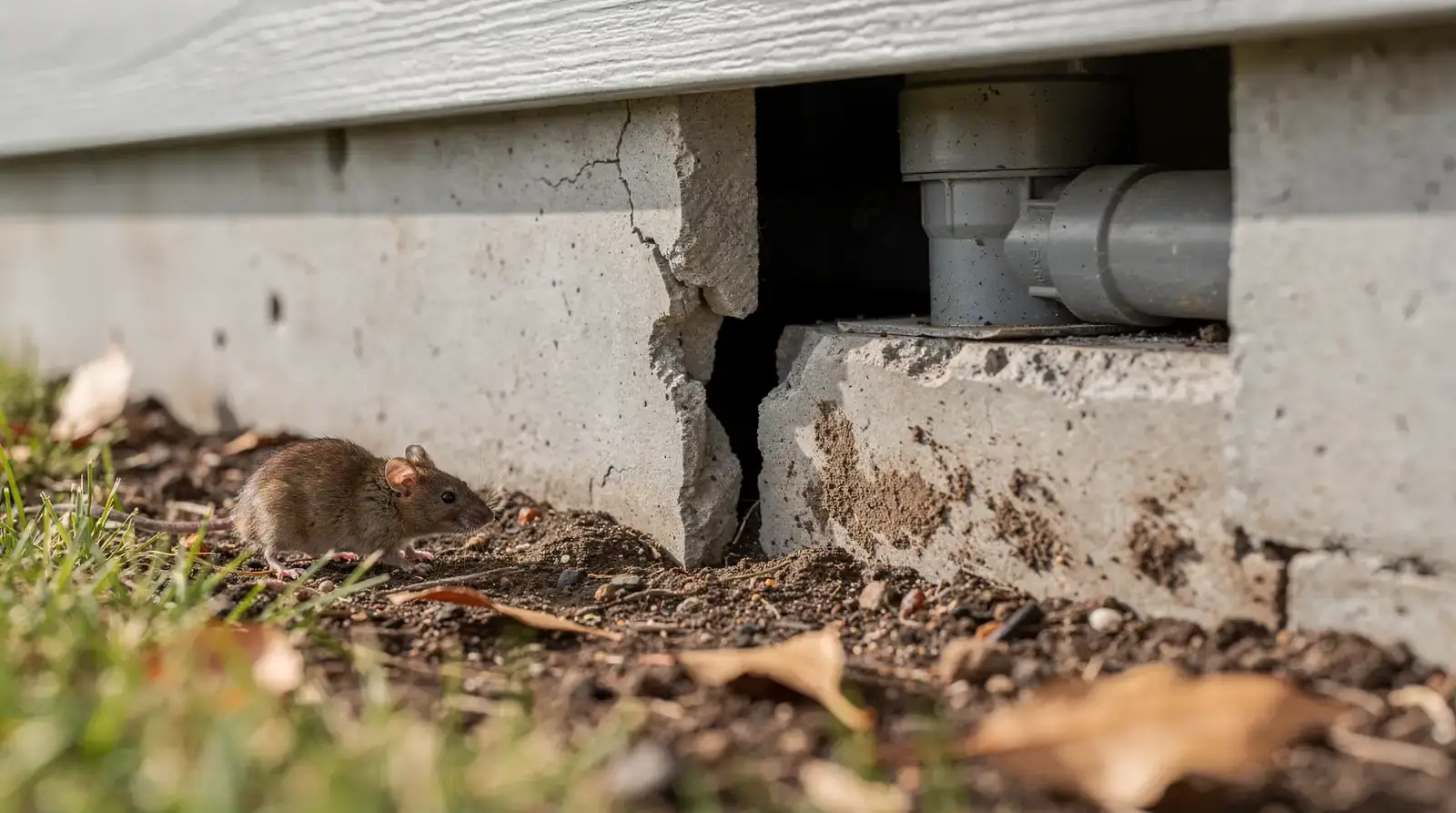
Foundation cracks, damaged doors, gaps around utility lines, roof openings, and ventilation systems account for the majority of pest access points in homes and commercial buildings. Left unaddressed, these gaps invite repeat infestations no matter how many traps or sprays a property owner tries. Recurring rodent or insect activity almost always traces back to an unsealed opening somewhere in the building envelope.
A thorough entry point assessment examines the full building envelope while considering specific vulnerabilities based on species and season. Utility penetrations — where pipes, cables, or vents pass through exterior walls — rank among the most overlooked gaps. Roofing seams and soffit vents create high-access routes that ground-level inspections often miss entirely.
How small an opening can pests actually use?
Mice require only a dime-sized gap to squeeze through walls or foundations. Their climbing ability makes matters worse: mice reach openings well above ground level that other pests simply cannot access, including rooflines and upper-story vents.
Why does guessing at entry points fail?
Sealing one visible crack rarely solves a recurring infestation. A forensic pest inspection Enfield property owners can trust traces activity back to its true structural root cause instead of treating symptoms. This root-cause method separates a lasting fix from a temporary patch.
Because Nukingstreet operates out of Enfield, CT, technicians recognize the foundation styles and seasonal wear patterns typical of homes across Northern CT and Western MA. That regional familiarity shapes how findings get documented.
Common gap categories worth inspecting:
- Foundation cracks and settling gaps
- Damaged or poorly sealed doors and windows
- Utility line penetrations
- Roof openings and soffit gaps
- Ventilation systems and exhaust vents
Every finding gets documented in a detailed inspection report, giving property owners a clear roadmap for permanent exclusion rather than a guessing game.
What Tools And Signs Reveal Hidden Entry Points?
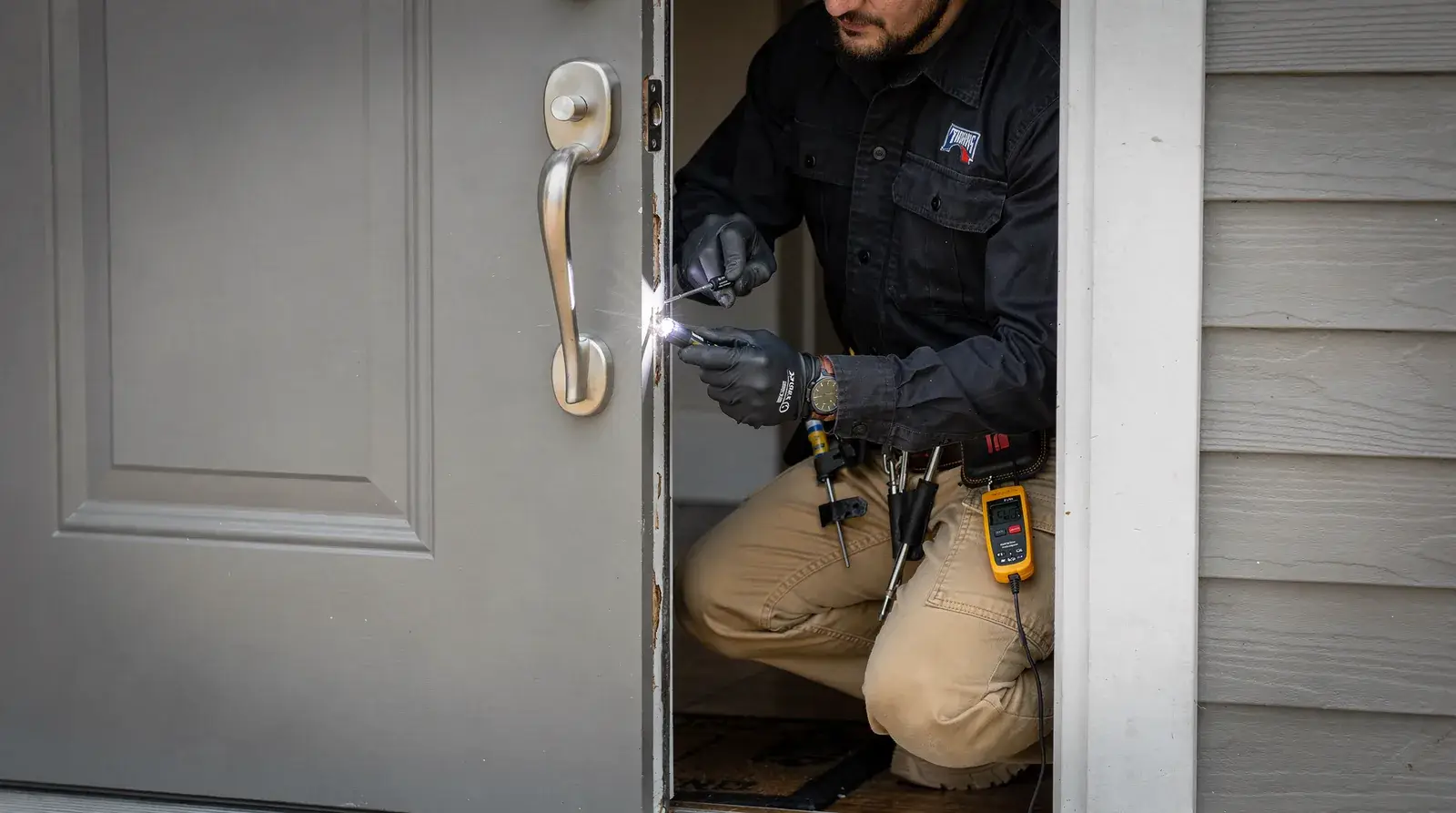
Flashlights, mirrors, moisture meters, and thermal cameras expose the gaps that rodents and insects use to slip inside. Standard walk-arounds miss these vulnerabilities because most homes and commercial buildings look structurally sound from the ground. A forensic pest inspection Enfield property owners trust goes further, combining hands-on tools with a trained eye for subtle warning signs.
Structural damage rarely announces itself. Small gaps hide behind siding, under eaves, and around utility penetrations — spots a casual glance skips right past. That’s why a thorough entry point assessment relies on more than a walk around the perimeter.
What tools do inspectors actually use?
Technicians carry flashlights and mirrors to check dark corners, crawlspaces, and rooflines. Safety gear allows safe access to attics, foundations, and utility chases where damage often starts. Moisture meters detect water intrusion that softens wood and invites pests. Thermal cameras reveal temperature shifts that expose gaps invisible to the naked eye.
How does ongoing monitoring catch what a single visit misses?
One inspection captures a moment in time; pest activity doesn’t stop there. Nukingstreet layers AI-powered remote monitoring technology onto every assessment, tracking movement and activity near suspected entry points long after the technician leaves. This continuous data stream flags recurring pressure points before they turn into full infestations, giving property managers an early warning instead of a surprise.
Every finding gets documented in a detailed inspection report, giving clients a clear record of vulnerabilities and recommended fixes. Reports carry extra weight because Jeffrey Davis, an Associate Certified Entomologist, oversees the inspection process. That credential backs the accuracy of every entry point identified, from a hairline foundation crack to a gap behind a dryer vent.
Common findings worth flagging in any assessment:
- Cracks along foundation lines and mortar joints
- Gaps around utility penetrations, vents, and pipes
- Damaged weatherstripping on doors and windows
- Roofline openings from missing flashing or worn shingles
What Should Your Pest Inspection Report Include?
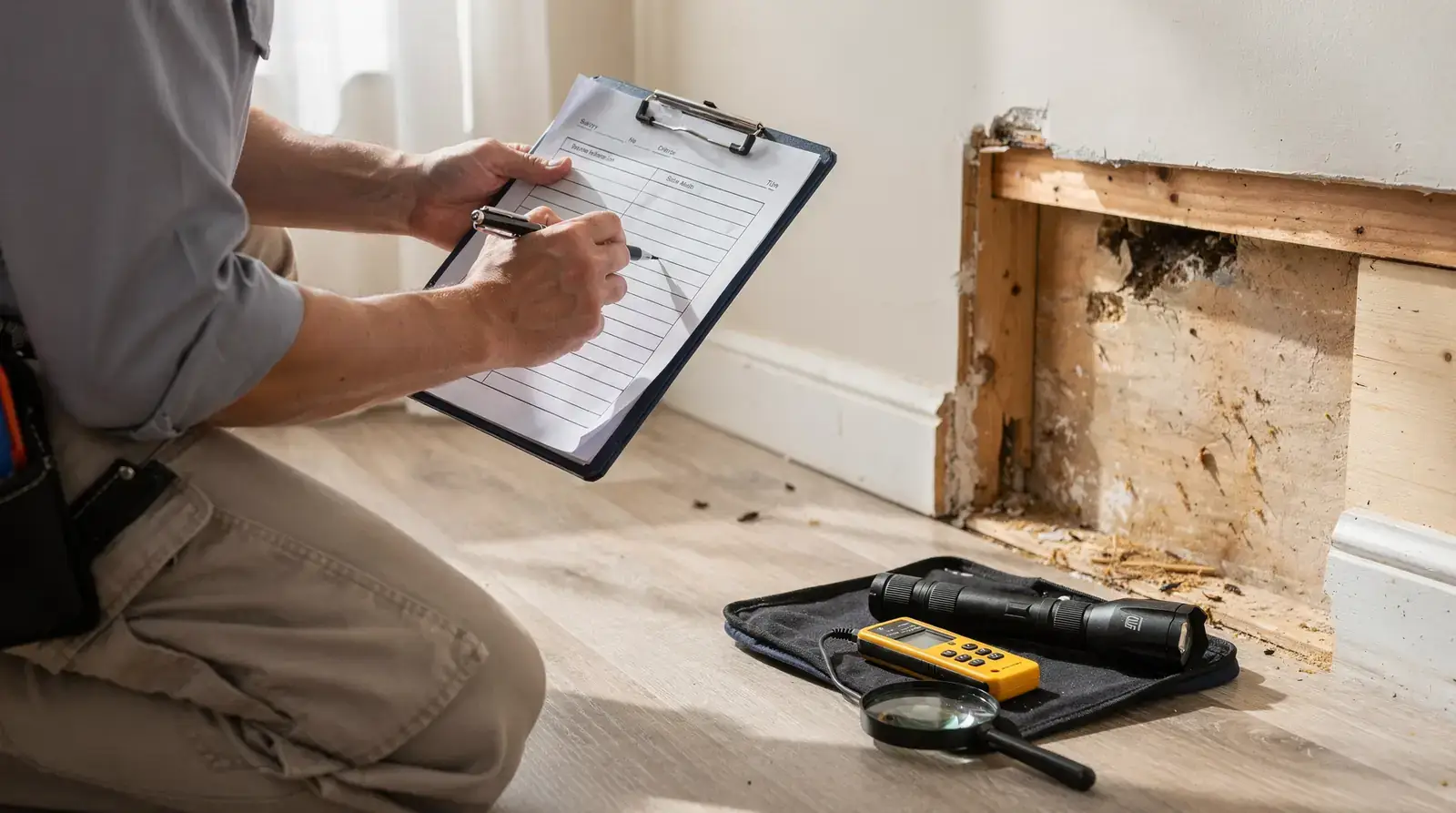
A complete inspection report documents every structural vulnerability a technician finds, not just the pests visible on the day of the visit. Specialized pest assessment goes deeper than a standard home inspection, which covers general structure and systems. A forensic pest inspection Enfield property owners rely on zeroes in specifically on entry points, moisture problems, and conditions that invite infestation.
What makes a pest report different from a home inspection?
A home inspection checks the roof, foundation, plumbing, and electrical systems broadly. A pest report narrows that focus to conditions that attract or shelter insects and rodents. That distinction matters for property managers deciding whether an existing inspection already covers pest risk — it likely does not.
Why does entry point documentation matter so much?
Unsealed gaps and cracks let pests slip in silently, often for weeks before anyone notices damage. An entry point assessment tracks these access areas over time, turning a one-time snapshot into an ongoing management tool. Monitoring entry points consistently is considered essential to any smart, long-term pest strategy.
A thorough report typically includes:
- Documented structural vulnerabilities, even when the findings are unwelcome news for the property owner
- Photographic or written evidence of active entry points and conducive conditions
- Root-cause identification, not just a list of symptoms
- Treatment recommendations tied directly to what the inspection uncovers
That last point separates a real diagnostic process from guesswork. Findings drive a targeted treatment plan, built around the specific pests and access points found on-site. Never a generic, blanket application chosen because it’s cheap. Property managers get a plan grounded in evidence, not assumption.
How Does Exclusion Permanently Seal Entry Points?
Exclusion permanently seals entry points by physically closing every gap, crack, and utility penetration before any chemical ever touches the property. Nukingstreet technicians apply exclusion and mechanical repairs first, once a thorough entry point assessment identifies where pests are getting in. Chemical treatment comes last, and only when a structural fix alone won’t solve the problem.
This mechanical-first, chemical-last method skips second-generation anticoagulant rodenticides and neonicotinoid pesticides entirely. Families, pets, and local wildlife stay protected because the fix targets the opening itself, not just the pest inside it. A sealed crack doesn’t come back next season; a bait station just gets refilled.
What Makes an Exclusion Repair “Permanent”?
Permanent exclusion means the repair material and installation method match the property’s real vulnerabilities, not a generic patch job. Owner Jeffrey Davis holds Associate Certified Entomologist and NWCOA certifications, covering proper exclusion product installation as well as bat, bird, and wildlife zoonosis standards. That training shapes which materials go where — copper mesh, galvanized flashing, or sealant. Depending on the pest species and entry type documented in the property’s inspection report.
Why Does Skipping Exclusion Cost More Later?
Unsealed entry points don’t just invite repeat visitors. Left unaddressed, they cause structural damage, expose occupants to health risks, and can trigger regulatory issues for commercial properties. A forensic pest inspection Enfield property owners request often uncovers:
- Foundation cracks widened by freeze-thaw cycles
- Deteriorated door sweeps and window seals
- Unsealed utility line penetrations
- Roof and soffit gaps invisible from ground level
Addressing these findings once, correctly, costs far less than treating the same infestation year after year.
A thorough forensic pest inspection identifies the vulnerabilities that invite unwanted visitors into your home or business. By systematically assessing entry points and understanding pest behavior, you gain the knowledge needed to implement targeted, effective solutions. Professional inspection transforms guesswork into strategy, protecting your property and peace of mind through informed prevention and control.
Related Services in Connecticut
Homeowners and businesses who need forensic pest inspections often ask about these services too. See every Nukingstreet service, or check our Hartford County service areas.
FAQ
What causes pests to keep returning after treatment?
Recurring infestations trace back to an unfound entry point, not bad luck. Treating visible symptoms without addressing the access route through cracks, gaps, or openings guarantees pests return.
Why can’t homeowners locate entry points on their own?
Entry points sit in overlooked spots like sill plates, utility line gaps, roof-to-wall joints, and foundation hairline cracks. Homeowners often seal obvious gaps around doors and windows yet miss the actual access route.
What does a forensic pest inspection in Enfield involve?
Nukingstreet examines the full building envelope, from foundation to roofline, before any treatment begins. Findings go into a detailed inspection report mapping vulnerabilities so exclusion, not repeated chemical masking, resolves the issue.
Facts
- Nukingstreet Pest & Wildlife Control, LLC is located in Enfield, CT.