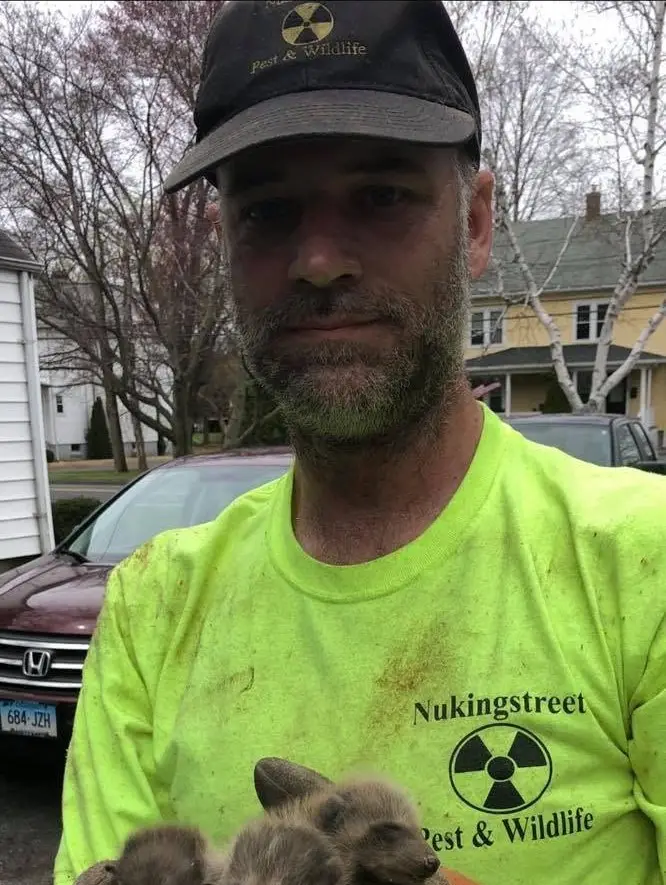

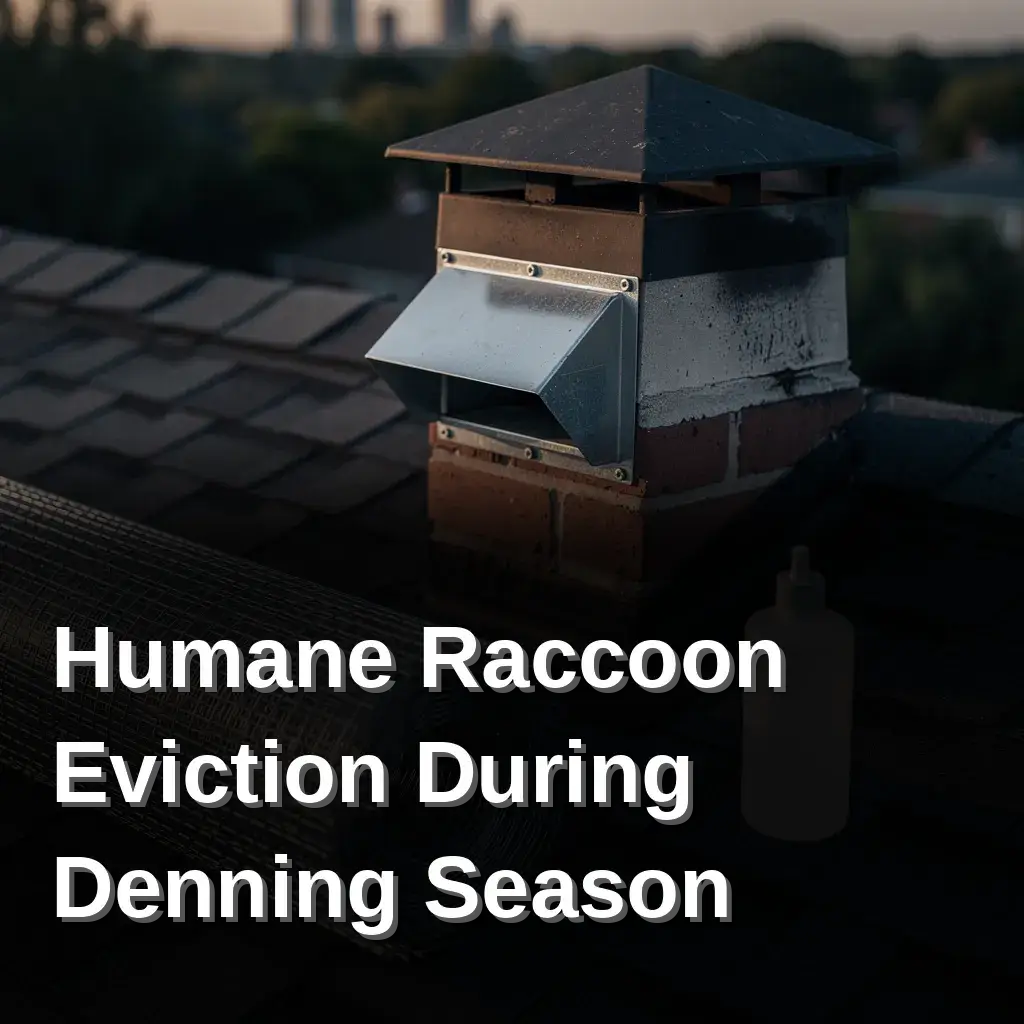
By Nukingstreet Pest & Wildlife Control LLC Editorial Team · Updated 2026-09-03
Humane raccoon eviction relies on the “eviction, exclusion, removal, reunion” method, timed for when kits reach 8 weeks and begin following the mother. Nukingstreet uses a mechanical-first approach, waiting until mom exits at night, sealing entry points, and safely reuniting kits nearby—never harming the family during denning season.
Key Takeaways
- Raccoons breed December through June, with most babies born in April or May in litters of 2-5.
- Young raccoons leave the den at 8 weeks old and follow their mother to a new location.
- Kits become weaned at 12 weeks and disperse in fall or early winter after denning season.
- Nukingstreet Pest & Wildlife Control in Enfield, CT offers humane eviction methods for mother raccoons and babies.
What Does Humane Raccoon Eviction Require Before You Start?
Successful, humane raccoon eviction requires timing knowledge, patience, and a plan for sealing the entry point once the raccoon family departs. Homeowners in Enfield, CT and the surrounding Northern Connecticut and Western Massachusetts region face a narrow window each spring when eviction must be handled correctly, or a mother raccoon and her litter get trapped, orphaned, or driven deeper into the structure. Skipping the prep work turns a manageable wildlife issue into a costly repair job.
When is the riskiest time to attempt eviction?
Raccoons breed from December to June, with most litters conceived in February. That timing pushes den activity into March, April, and May, exactly when homeowners are most likely to discover a raccoon in a chimney, attic, or crawlspace. Attempting exclusion too early risks leaving dependent young trapped inside.
Before starting any eviction, homeowners should confirm the following:
- Identify whether babies are present by listening for chirping or scratching sounds during the day.
- Locate the primary entry point and any secondary escape routes.
- Avoid blocking access until the mother has clearly relocated the litter.
- Rule out do-it-yourself chemical repellents as a full solution, since industry practice too often leans on quick chemical fixes instead of addressing the root cause.
A mechanical-first, eco-friendly strategy favors physical exclusion and targeted techniques over broad chemical treatments. Nukingstreet Pest & Wildlife Control, LLC, based in Enfield, CT, applies that standard to spring denning calls across the service area. Local expertise matters here. Raccoon behavior shifts with regional weather patterns, and a nearby resource can time exclusion work correctly the first time.
How Do You Confirm a Mother Raccoon Is Denning Nearby?
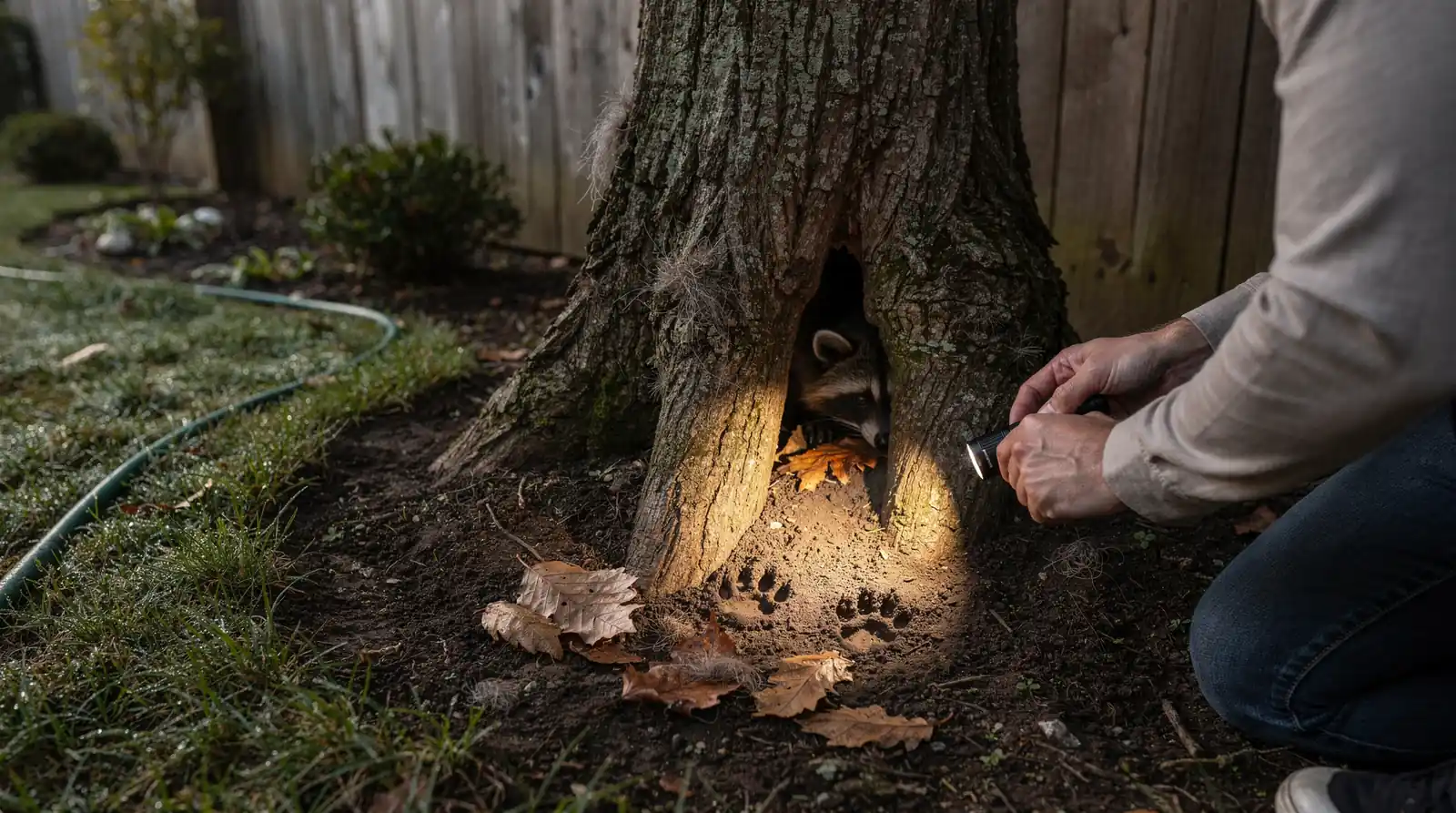
Nighttime scratching, thumping, or chittering overhead confirms raccoon activity fast, since raccoons are strictly nocturnal animals. Silence during the day does not mean the attic is empty. It means the mother is resting before her evening rounds. For homeowners in Northern Connecticut and Western Massachusetts, spring and early summer are peak season for this exact scenario. Finding a raccoon family in the attic, a crawlspace, or a raccoon in chimney flues catches most property owners off guard, and the situation quickly turns into a logistical challenge rather than a simple pest call.
Homeowners must confirm a den site before attempting a humane raccoon eviction. Follow these steps in order:
- Listen after dusk for scratching, low growls, or high-pitched chittering — the chittering often signals kits, not an adult alone.
- Check chimney caps, roof soffits, and vent gaps for fresh dirt smudges, matted insulation, or torn screening.
- Look for a single, consistent entry point rather than several scattered holes; raccoons typically reuse one access route.
- Note any strong, musky odor near the suspected den, which points to accumulated droppings and urine.
How Can Property Owners Tell If Babies Are Present?
Persistent chittering, especially in daylight hours when the mother briefly leaves to feed, signals kits are denning inside. Timing matters here, since litters typically arrive in spring and stay dependent on the mother for weeks. Confirming babies before any action changes the entire removal approach.
A trained inspection identifies the exact entry point and reports findings directly, rather than guessing at symptoms from the ground. Nukingstreet has served Simsbury and Hartford County for years, giving technicians the field experience needed to read these signs accurately and recommend next steps.
How Do You Safely Evict a Raccoon Family?
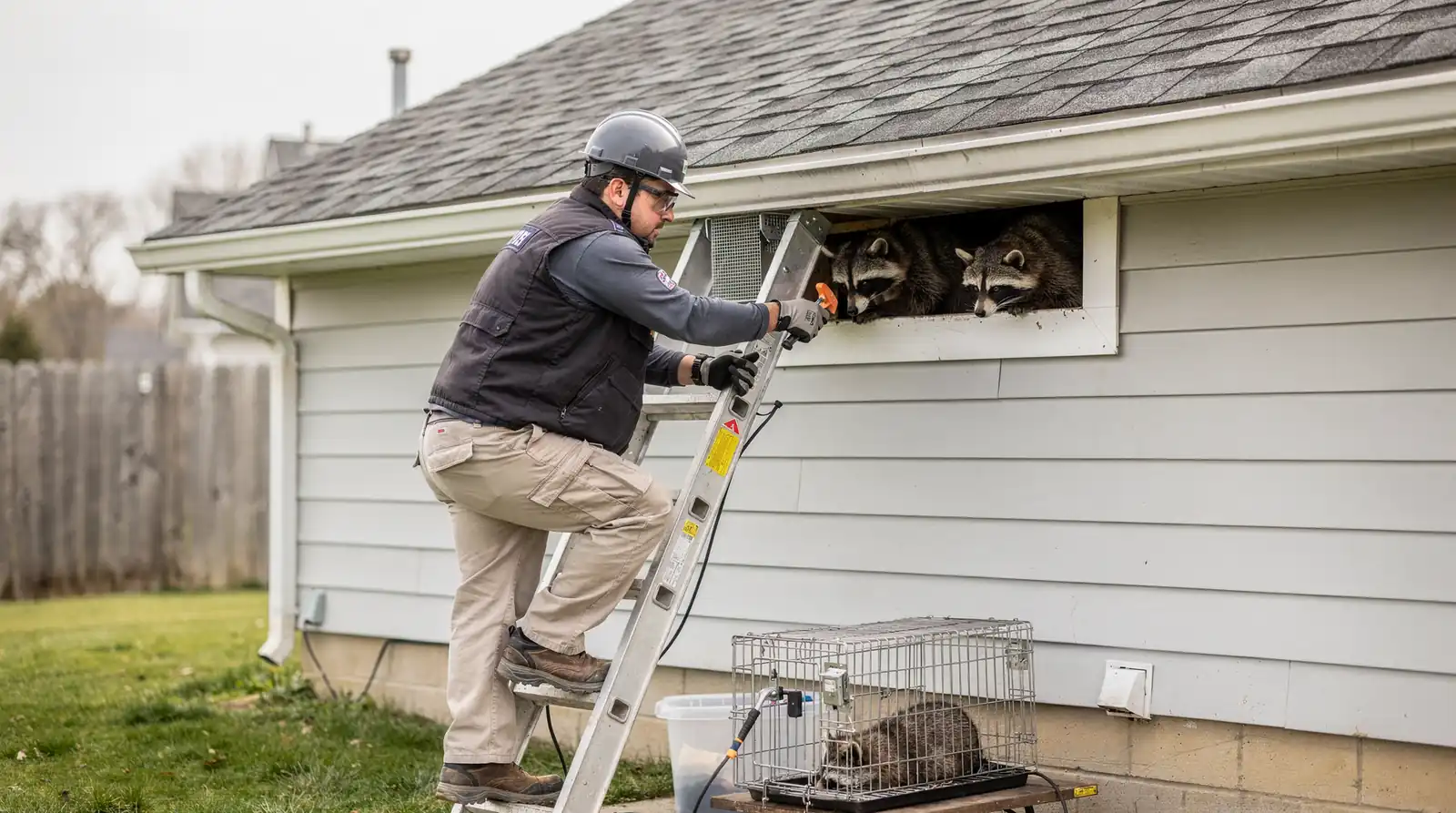
Safe eviction of a raccoon family follows a specific sequence, not a single quick fix. Skipping steps risks orphaned kits trapped in a wall void, dead animals, and a lingering odor problem that costs far more to fix later. A proper humane raccoon eviction protects both the homeowner’s property and the animals involved. Nukingstreet approaches each case as targeted work, never a blanket application of whatever product happens to be cheapest or fastest.
The process moves through distinct stages:
- Confirm the den location and timing. Technicians identify exactly where the mother and kits are nesting, since raccoons den in attics, crawlspaces, and — commonly across Northern Connecticut homes — a raccoon in the chimney.
- Apply eviction fluid to signal danger. This liquid scent, made from the gland secretions and urine of a dominant male raccoon, convinces the mother her den site is no longer safe.
- Wait for the mother to leave voluntarily. Once she exits to relocate her litter, technicians block that specific entry point so she cannot return to it.
- Verify the family has fully relocated. No animal — adult or kit — should remain before closing off access points permanently.
Does eviction fluid alone solve the problem?
No. Eviction fluid persuades the mother to move, but it does nothing to fix the opening that let her in. Without addressing that entry point, another raccoon finds the same gap the following season.
Why does the root cause matter more than the raccoon itself?
Removing raccoons without fixing the structural cause guarantees repeat visits. Effective eviction work identifies why the animal chose that spot — a loose vent, a damaged flue cap, a gap in soffit trim — and corrects it, rather than treating only the symptom on the surface.
How Do You Seal a Raccoon in Chimney for Good?
Permanent sealing requires confirming the den is empty before closing any opening. A raccoon in chimney flues often shares space with kits tucked deep in eaves or wall voids, spaces homeowners cannot see or reach, so a technician must verify the entire family has relocated before capping anything shut.
Nukingstreet follows a sequence built for lasting results, not a quick patch job:
- Confirm full family removal. Complete a humane raccoon eviction using proven exclusion timing, then inspect for lingering vocalizations or movement.
- Install a one-way door at the primary entry point so any straggler exits but cannot re-enter.
- Wait 48-72 hours to confirm no activity remains before permanent work begins.
- Cap the chimney with a professional-grade mesh cover, and seal secondary gaps around flashing, soffits, and vents.
- Skip poisons entirely. Sealing relies on mechanical barriers, not baits or repellent chemicals, protecting pollinators, neighborhood wildlife, and the broader ecosystem.
This mechanical-first, eco-friendly method leads with exclusion and targeted repairs rather than broad-spectrum chemical treatments. Families, cancer survivors, and pet owners benefit most from this approach. Chimney and attic exclusion work happens without harsh residue lingering near living spaces.
Is It Safe to Seal a Chimney Myself?
DIY sealing risks trapping raccoons inside, which creates odor, structural damage, and desperate attempts by the mother to claw her way back to her young. Professional inspection confirms the den sits empty first.
How Long Does Chimney Exclusion Take?
Most jobs finish within a few days once the waiting period after one-way door installation ends. Weather and litter age can extend the timeline slightly, since younger kits move more slowly toward the exit.
What Mistakes Should You Avoid During Denning Season?
Trapping the mother raccoon alone ranks as the most costly mistake homeowners and property managers make during denning season. Trapping the mother raccoon without confirming the presence of her young can lead to orphaned kits left behind in the attic with no way to survive on their own. From March through May, the vast majority of raccoon-in-attic calls involve a mother with a litter, so rushing the process backfires more often than not. Sealing an entry point before confirming the den is empty causes the same problem: orphaned young trapped inside a wall or ceiling void.
What should property managers do instead?
Follow a sequence that protects both the structure and the animals inside it:
- Confirm whether a raccoon has denned in the attic, chimney, or crawlspace before sealing anything.
- Locate the litter and verify the mother’s activity pattern rather than acting on a single sighting.
- Time the eviction and exclusion work around her movements, not a fixed calendar date.
- Seal entry points only after every raccoon, including all babies, has left the structure.
Humane raccoon eviction relies on this exact order, and a raccoon in chimney situations demands the same discipline since kits often nest just out of reach. Nukingstreet approaches every case with a relentless standard for doing things right, from first inspection through final exclusion, so the goal stays the same throughout: a wildlife-free home families feel good about long after the raccoons are gone.
FAQ
When do raccoon kits leave the den and follow their mother?
Young raccoons leave the den at 8 weeks old and begin following their mother to a new location. This marks the timing point Nukingstreet uses for humane eviction efforts.
How does Nukingstreet safely evict a raccoon family?
Nukingstreet uses a mechanical-first approach: waiting until mom exits at night, sealing entry points, and safely reuniting kits nearby. This “eviction, exclusion, removal, reunion” method avoids harming the family.
How can homeowners tell if raccoon babies are present?
Homeowners identify babies by listening for chirping or scratching sounds during the day. The mother rests before her nocturnal rounds. Nighttime scratching, thumping, or chittering overhead also confirms raccoon activity.
Conclusion
In closing, humane raccoon eviction during denning season requires patience, timing, and professional expertise to protect both mother and kits while safeguarding your property. By understanding raccoon behavior and working with experienced wildlife control specialists, you ensure a solution that respects animal welfare and prevents future conflicts. Nukingstreet Pest & Wildlife Control brings certified knowledge and proven methods to handle these sensitive situations with care and effectiveness.