
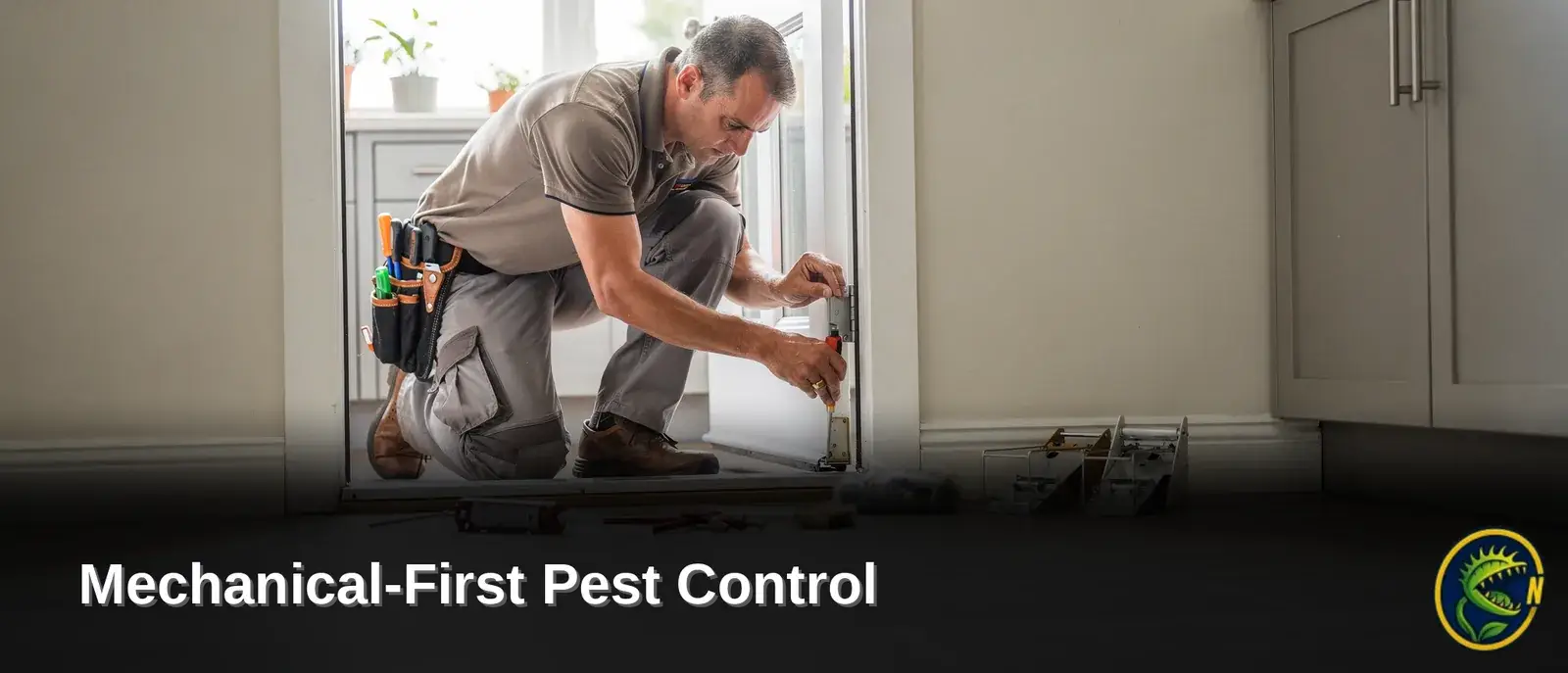
Mechanical-First Pest Control: A Safer Approach
By Nukingstreet Pest & Wildlife Control LLC Editorial Team · Updated 2026-08-07
Mechanical-first pest management prioritizes physical exclusion, trapping, and habitat correction over pesticide application, reducing chemical exposure for families and pets. Nukingstreet Pest & Wildlife Control, founded in Enfield, Connecticut, applies this approach under Associate Certified Entomologist Jeffrey Davis, avoiding SGARs and neonicotinoids while delivering lasting protection through prevention rather than reactive chemical treatment.
Understanding Mechanical Pest Control Benefits
- Mechanical pest control uses physical methods to manage pest populations without relying on chemical treatments.
- Nukingstreet Pest & Wildlife Control, LLC in Enfield, CT offers comprehensive pest management solutions for homes.
- Physical control methods prevent pest damage and health risks through direct intervention techniques.
- Mechanical pest control provides eco-friendly alternatives to traditional chemical-based pest management approaches.
What Is Mechanical-First Pest Control?
Mechanical-first pest control solves pest problems through physical removal and structural exclusion before any product touches a property. Physical control means blocking entry points, trapping, sealing gaps, and removing pests by hand or device rather than reaching for a sprayer. Nukingstreet builds its entire service model around this sequence: inspect, exclude, monitor, and only then treat if treatment is truly necessary.
At Nukingstreet, chemicals are used only as a last resort, never as the first option. Technicians avoid leading with pesticide applications, choosing instead to identify why pests entered a home or business in the first place. This approach reflects a commitment to keeping SGARs and neonicotinoids out of Connecticut homes, businesses, and yards across our pest control service areas.
Why Does Root-Cause Inspection Matter?
Guessing at a treatment plan wastes money and leaves the real problem untouched, which is why residential pest control starts with an inspection. Nukingstreet relies on forensic pest inspections to trace infestations back to their source. A gap under a foundation, a gnawed vent screen, moisture drawing in insects. Finding that root cause determines whether exclusion work alone solves the issue or whether targeted treatment becomes necessary.
Does This Mean No Chemicals at All?
Not entirely, but chemicals become a last resort, not a first move. When treatment is warranted, Nukingstreet applies targeted, eco-responsible products instead of broad, indiscriminate spraying. This philosophy rejects the industry habit of blanket-treating every property the same way regardless of the actual pest present.
The distinction matters for families with young children, pet owners, and anyone managing a commercial kitchen or storefront. Fewer chemical applications mean fewer exposure risks indoors and less environmental impact outdoors — without sacrificing long-term pest prevention.

Why Does Exclusion Come Before Chemicals?
Sealing entry points, repairing structural gaps, and physically blocking pests solve the root problem before any spray or bait touches a property. Nukingstreet’s core service philosophy applies mechanical-first pest control, treating exclusion and other physical barriers as the first line of defense rather than a backup plan. Chemicals only enter the picture when mechanical solutions can’t fully close the gap.
This sequence matters because dependence on short-term chemical applications creates a cycle. Spray today, pests return next season, spray again. Closing off entry points instead breaks that cycle at the source, protecting a property for years rather than weeks.
Physical control methods also carry an environmental advantage that chemical-only approaches can’t match. Among standard pest management strategies, physical control stands out as a more environmentally responsible option. It removes pest access without introducing toxins into the surrounding soil, water, or air.
Does This Approach Protect Pets and Local Wildlife?
Yes. Nukingstreet actively avoids second-generation anticoagulant rodenticides (SGARs). Neonicotinoid pesticides, both known to harm wildlife and pollinators, well ahead of what regulations currently require. That decision reflects a broader commitment to protecting pollinators, backyard wildlife, and the wider Connecticut ecosystem that families and business owners depend on.
What Does Exclusion Work Actually Involve?
Exclusion work looks different on every property, but the goals stay consistent:
- Sealing foundation cracks, utility penetrations, and gaps around doors and windows
- Installing screens, vents, and barriers that block rodents and insects without blocking airflow
- Repairing structural vulnerabilities identified during forensic pest inspections
- Monitoring sealed areas to confirm long-term effectiveness
Each step reduces future infestation risk while keeping chemical exposure to a minimum for families, pets, and employees alike.
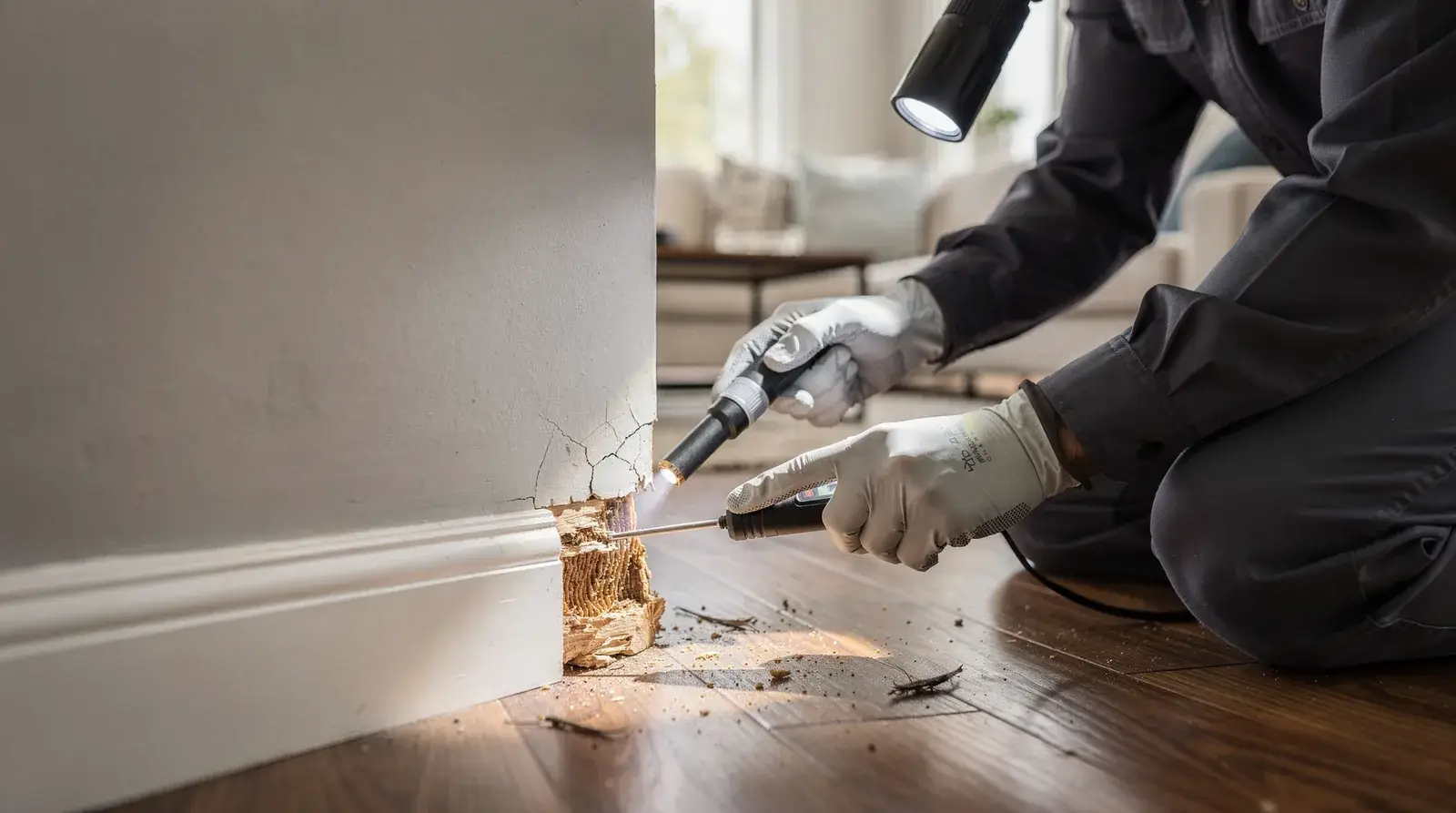
How Do Forensic Pest Inspections Find Root Causes?
Forensic pest inspections trace an infestation back to its structural source rather than stopping at the visible damage. Technicians document cracks, moisture points, and entry gaps that will keep inviting pests long after a single treatment ends. Skipping this step leaves homeowners and business owners paying for repeat visits instead of a lasting fix.
Nukingstreet’s approach stays proactive from the first walkthrough. Rather than spraying where pests are seen. Calling it done, the inspection hunts for the reason they showed up in the first place. That distinction separates a real solution from a temporary patch.
Owner Jeffrey Davis leads these inspections personally. As an Associate Certified Entomologist (ACE), he brings credentialed pest biology knowledge to every property assessment. Davis also holds NWCOA credentials in Bat Standards, Bird Standards, Wildlife Zoonosis, and Exclusion Product Installation, giving inspections a wildlife-trained eye alongside insect expertise.
What does a forensic inspection actually look for?
Inspectors examine the building envelope for the conditions pests exploit, not just the pests themselves. Findings typically include:
- Foundation cracks and gaps around utility lines
- Moisture accumulation near siding, soffits, or crawl spaces
- Vegetation or debris creating harborage against exterior walls
- Vent, chimney, and roofline openings used for wildlife entry
Reports include unwelcome findings honestly, even when the news is inconvenient for a property owner.
Why does fixing the cause matter more than treating the symptom?
A property with sealed entry points and corrected moisture problems resists reinvasion far better than one treated on symptoms alone. Addressing structural root causes builds long-term resilience against pest and wildlife pressure. That resilience protects the investment homeowners and commercial owners have already made in their properties.

What Makes This Approach Safer For Families?
Safety starts with method, not marketing. Nukingstreet builds every treatment plan around mechanical-first pest control, prioritizing physical removal and structural fixes over chemical applications whenever possible. Families in Connecticut homes gain protection from pests without the tradeoff of heavy pesticide exposure indoors.
This matters most for households with extra vulnerability. Cancer survivors, chemically sensitive individuals, and homes with young children or pets need a different standard of care than a standard spray-and-go visit offers. Nukingstreet built its service model specifically around these needs, treating health-conscious pest management as a core operating belief rather than an add-on feature.
Does eco-friendly pest control still work as well as chemical treatments?
Yes — when the underlying cause gets addressed first. Technicians identify entry points, moisture issues, and food sources before reaching for any product, which reduces the need for repeat chemical treatments altogether.
Pest problems create real anxiety for property owners, not just physical risk. Nukingstreet’s approach factors in that stress, aiming to elevator the emotional weight of an infestation alongside the pests themselves.
Who handles the actual pest inspections and treatments?
Certified, trained technicians perform every service call. A qualified team stays current on treatment techniques. Safety protocols, the same standard families should expect from any reputable provider.
Technology adds another safety layer. Nukingstreet deploys AI-powered remote monitoring to track pest activity continuously, catching problems early without requiring constant chemical reapplication. Combined with careful diagnostic work, including forensic pest inspections that trace infestations to their root cause, families get protection built on evidence — not guesswork.
How Do You Choose A Mechanical-First Provider?
Credentials separate a genuine mechanical-first pest control company from one that merely advertises green promises. Property owners in Connecticut face real financial exposure when an unlicensed or under-qualified provider misdiagnoses an infestation. Verification matters before any contract gets signed.
Start with licensing. Connecticut regulates pest control businesses through the Department of Energy and Environmental Protection. Any legitimate operator should hold a current state license number posted on invoices and marketing materials. Nukingstreet Pest & Wildlife Control, LLC operates out of Enfield, Connecticut under License B-2565, a detail any prospective client can ask to see.
What credentials should a homeowner ask about?
Beyond state licensing, third-party accreditation signals accountability. A BBB Accredited business with an A+ rating has a track record of resolving customer complaints fairly. Certification through Bed Bug Central shows specialized training in one of the hardest pests to eliminate correctly. Membership in the National Pest Management Association (NPMA) reflects ongoing commitment to industry standards.
Does mechanical-first mean no chemicals at all?
Not exactly — it means chemicals come last, not first. Many providers still follow conventional integrated pest management, blending cultural, biological, mechanical, and chemical tactics without prioritizing the least invasive option. A true mechanical-first approach reverses that order, exhausting exclusion, trapping, and sanitation-based fixes before any product touches a property.
Response speed matters too. Same-day and fast-response service prevents a minor sighting from becoming a structural infestation. Before hiring, property owners should confirm:
- State license number and current standing
- BBB rating and any Bed Bug Central or NPMA credentials
- Willingness to perform forensic pest inspections before treatment
- Documented exclusion first pest management protocols
- Realistic response-time commitments
Mechanical-first pest management represents a fundamental shift toward sustainable, effective control that prioritizes your family’s safety and environmental responsibility. By addressing root causes through exclusion, sanitation, and physical removal before considering chemical interventions, this approach delivers lasting results without unnecessary toxins. Professional implementation ensures thorough, lasting protection for your home and business while respecting the ecosystem we all share.
FAQ
What is mechanical-first pest control?
An approach that prioritizes physical exclusion, trapping, and habitat correction over pesticides. Nukingstreet inspects, excludes, monitors, and only treats chemically when truly necessary.
Does Nukingstreet use chemicals at all?
Chemicals become a last resort, not a first move. When treatment is warranted, technicians apply targeted, eco-responsible products and avoid SGARs and neonicotinoids.
Why does inspection matter before treatment?
Forensic inspections trace infestations to their root cause, like a foundation gap or gnawed vent screen. This determines whether exclusion alone solves the issue or targeted treatment becomes necessary.
Facts
- Nukingstreet Pest & Wildlife Control, LLC is located in Enfield, CT.