

How to Prepare for Bed Bug Treatment
By Nukingstreet Pest & Wildlife Control LLC Editorial Team · Updated 2026-08-07
Effective bed bug treatment preparation involves laundering all fabrics on high heat, bagging clean items separately from unlaundered ones, decluttering hiding spots, and vacuuming thoroughly before disposing of the bag outside. Beds should be stripped and pulled away from walls. Nukingstreet Pest & Wildlife Control LLC recommends completing these steps beforehand to speed treatment and improve results.
Key Takeaways
- Reduce clutter throughout your home to improve treatment access and effectiveness for Nukingstreet Pest & Wildlife Control professionals.
- Make your bed an island by moving it away from walls and other furniture by at least 12 inches.
- Empty all closets completely and place unlaundered items into plastic bags before the treatment visit begins.
- Clean all items in your home to eliminate hiding spots and prepare surfaces for professional bed bug treatment application.
What Should You Do Before Your Visit?
Proper preparation determines how quickly a bed bug problem gets resolved. Homeowners who prepare for bed bug treatment correctly give technicians better access to hiding spots. Reduce the number of follow-up visits needed. Nukingstreet Pest & Wildlife Control schedules fast, same-day response across Northern CT and Western MA, so a resident calling today can often start prep the same afternoon.
A short bed bug treatment checklist keeps the process organized and prevents wasted time on arrival:
- Clear clothing and bedding into sealed plastic bags before the technician arrives.
- Pull furniture a few inches away from walls to expose baseboards.
- Remove items from under beds and inside nightstands.
- Leave bagged items in a central room rather than moving them between areas of the house.
What kind of treatment approach should homeowners expect?
Nukingstreet does not lead with chemicals. Technicians perform a mechanical-first inspection, identifying harborage points before deciding whether any product application is necessary. This approach means preparation should focus on access and visibility, not just clearing rooms for spraying.
Is preparation still necessary for a professional visit?
Yes. Whether a household hires a licensed exterminator or attempts control independently, preparing the home is an essential first step. Skipping this step slows down inspection, hides active infestations, and often forces a second appointment.
Following these bed bug prep tips protects the household’s schedule and budget. A prepared space lets technicians work faster, spot problem areas sooner, and set realistic expectations for follow-up treatment.
How Do You Declutter To Remove Hiding Spots?
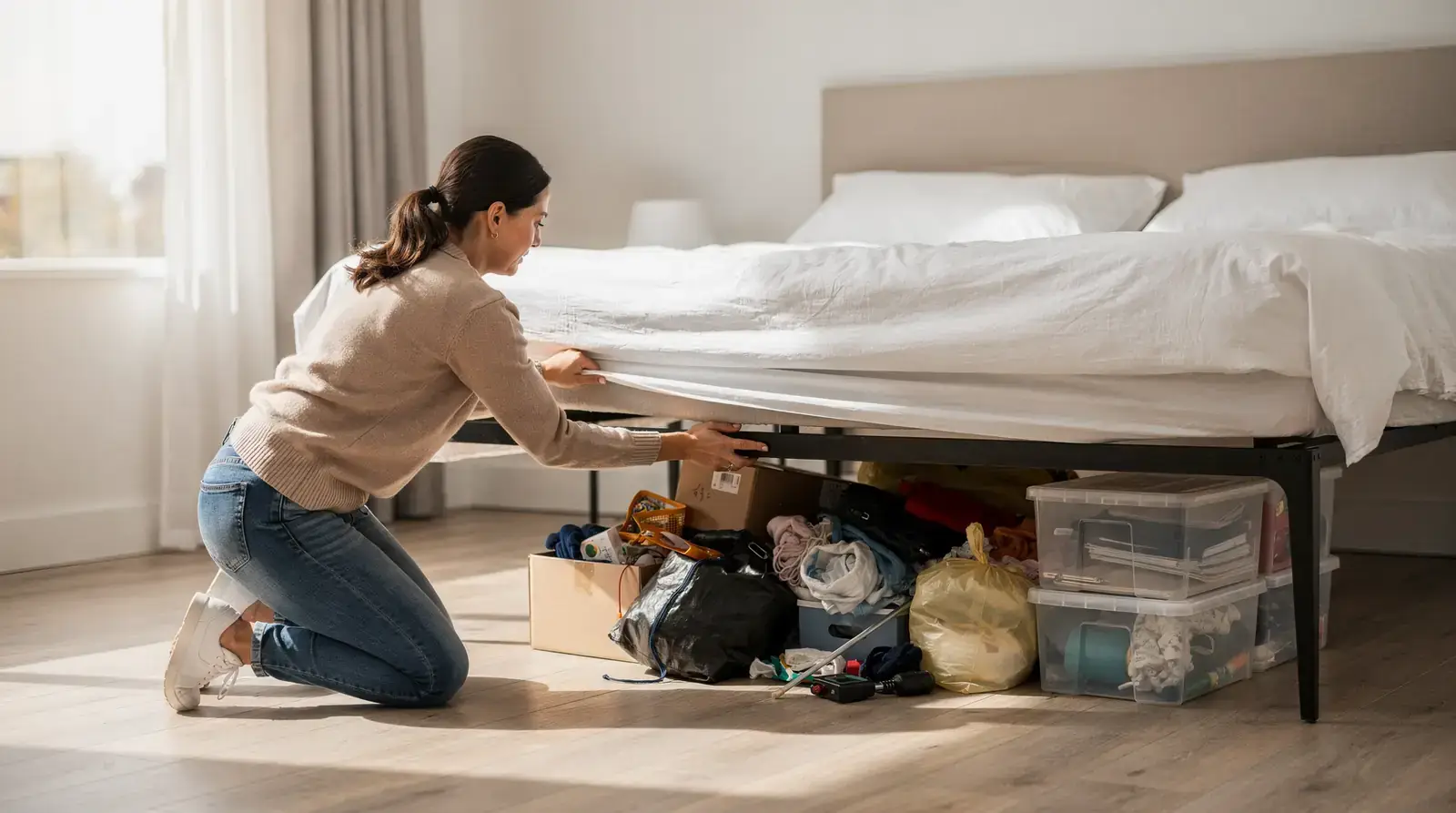
Removing clutter exposes the seams, folds, and gaps where bed bugs hide during the day. Nukingstreet’s technicians rely on forensic-level inspections to trace an infestation back to its source, and that process depends on clear sightlines. A cluttered bedroom hides evidence the way it hides bugs. Piles of clothes, stacked boxes, and loose papers all become blind spots a technician cannot fully evaluate.
Homeowners preparing to prepare for bed bug treatment should follow a specific order rather than tackling rooms at random.
- Sort belongings by room first, keeping items in their original location rather than shuffling them between spaces.
- Skip moving anything from a known infested room into a room that hasn’t shown signs of bugs — this single misstep spreads the problem instead of solving it.
- Bag loose clothing, linens, and soft items for laundering rather than leaving them stacked on furniture or floors.
- Set aside anything that can’t be laundered or inspected easily, and flag it for the technician rather than tucking it away.
Should Clutter Be Thrown Out or Just Moved?
Trash should leave the home entirely, sealed in bags, rather than sitting in a hallway or garage. Items still in use can stay, but only once they’ve been checked and placed away from walls and furniture edges.
Families with young children, pets, or a member sensitive to chemicals benefit most from this careful sorting. Nukingstreet designs its bed bug treatment checklist around that reality, favoring mechanical and low-chemical methods wherever possible. Following these bed bug prep tips in sequence gives the inspection team a clear, honest look at every hiding spot before treatment begins.
How Should You Prepare Bedding, Furniture, And Closets?
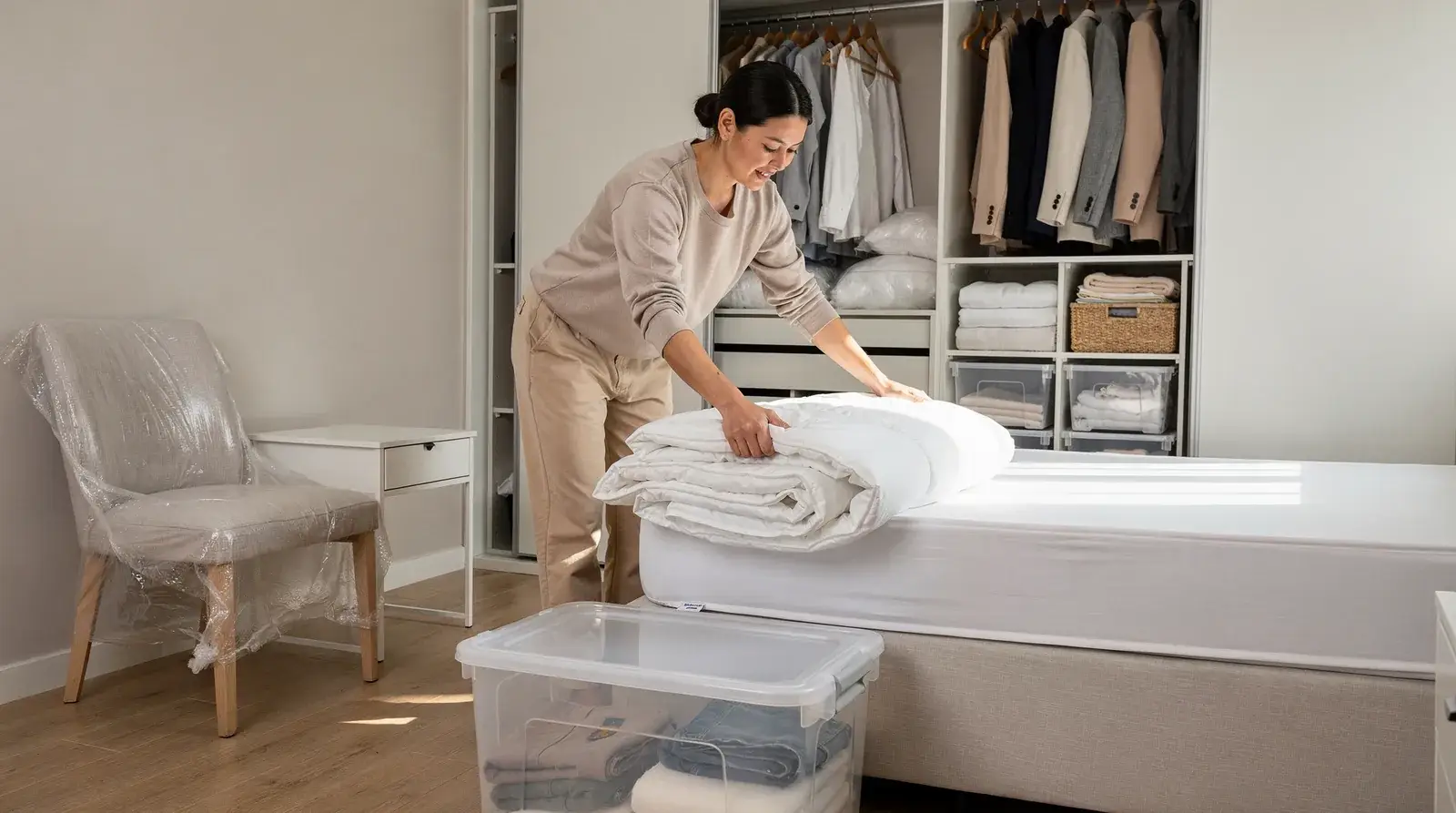
Bedding, furniture, and closets need deliberate, room-by-room preparation before a technician arrives. Skipping this step lets bed bugs scatter into untreated corners, stretching out the infestation and driving up follow-up visit costs. Following a structured bed bug treatment checklist keeps the process organized. Protects the areas where families spend the most time. Beds, couches, and closets.
What order should closets and furniture be prepared in?
Closets come first because they hold the most overlooked hiding spots. Every remaining unlaundered item and stored box should come out of the closet, get sealed in a plastic bag, and move to the center of the living room where it stays visible and contained. This single step prevents bugs from riding along in clothing that gets moved elsewhere later.
Furniture preparation follows a similar logic:
- Pull cushions, throw pillows, and loose covers away from couches and chairs so surfaces stay exposed.
- Strip bedding down to the mattress and box spring; bag linens separately from closet items.
- Pull furniture a few inches from the walls to give technicians full access to baseboards and corners.
- Leave bagged items sealed until after treatment is complete.
Why does safer product use matter for bedroom prep?
Bedrooms deserve extra caution, since children and pets often sleep there. Nukingstreet actively avoids SGARs, or second-generation anticoagulant rodenticides, along with neonicotinoid-based products, which supports safer preparation around beds and nurseries. That approach means families can follow the prep steps without worrying about harsh residues settling into fabric or carpet.
Once furniture and bedding sit ready, Nukingstreet deploys AI-powered electronic monitoring technology to confirm activity around treated areas after service. This high-tech verification step gives homeowners, renters, and property managers confidence that preparation paid off and the infestation is truly under control.
Should You Remove Items From Infested Rooms?
No. Bed bug specialists advise leaving every item exactly where it sits inside an infested room until treatment begins. Moving boxes, clothing, or furniture out of a treatment zone spreads bed bugs to unaffected rooms, closets, or vehicles, turning a contained problem into a house-wide infestation. This single rule sits at the top of any solid bed bug treatment checklist. Skipping it undoes most other prep work.
Nukingstreet Pest & Wildlife Control LLC holds recognition as a Bed Bug Central Certified Bed Bug Free Company, a credential that reflects verified industry standards for how technicians manage infested belongings. Owner Jeffrey Davis, an Associate Certified Entomologist (ACE), guides item-handling decisions using that same standard, so homeowners aren’t guessing about what stays put and what gets cleaned. Following a credentialed expert’s direction removes much of the anxiety that comes with a first-time treatment.
Is it safe to relocate furniture during prep?
Relocating furniture before a technician arrives is not safe practice. Bed bugs cling to fabric seams, drawer joints, and wood frames, and shifting these pieces carries them into new areas of a home. Keep furniture in place and let the treatment plan address it directly.
For homeowners building their own bed bug prep tips, the safest approach follows this order:
- Confirm the treatment date and specific rooms involved.
- Leave all furniture, boxes, and clothing inside those rooms untouched.
- Avoid carrying items through hallways or into other bedrooms.
- Contact the technician with questions rather than improvising a fix.
Homeowners who prepare for bed bug treatment this way protect the rest of their property. Give the treatment team a clean, contained space to work within.
What Mistakes Should You Avoid During Prep?
Skipping instructions, mixing prep philosophies, and waiting until the last minute top the list of avoidable errors before a bed bug appointment. Each mistake adds stress to an already difficult situation. Stress is exactly what a professional visit should eliminate, not create. Nukingstreet Pest & Wildlife Control removes the emotional burden of pest problems rather than adding to it. Clear preparation keeps that promise intact.
Why does mismatched prep guidance cause problems?
Confusion often starts when homeowners follow generic online checklists instead of the technician’s actual method. Pest management companies generally follow one of two philosophies: prep or no-prep, and each carries different requirements. Applying a heavy prep checklist to a no-prep treatment wastes hours. Skipping prep before a conventional treatment delays results and drives up cost. Always confirm which approach the assigned technician uses before lifting a single box.
Common mistakes to avoid include:
- Moving cluttered items from an infested room into clean areas, which spreads bed bugs further through the home.
- Laundering and bagging items too far in advance, then setting bags back in infested rooms.
- Ignoring dressers, nightstands, and closets while focusing only on the bed.
- Assuming every company’s checklist matches the one being used for the current appointment.
- Waiting until the technician arrives to ask basic prep questions.
Who should homeowners call with last-minute prep questions?
Local accountability matters when a treatment date is approaching fast. Nukingstreet Pest & Wildlife Control, LLC operates out of Enfield, CT, serving Northern CT and Western MA homeowners with direct, local access to expert guidance. A quick call before treatment day resolves confusion faster than guessing from an unrelated checklist.
FAQ
What steps should you take before the technician arrives?
Launder all fabrics on high heat, bag clean items separately from unlaundered ones, declutter hiding spots, and vacuum thoroughly, disposing of the bag outside. Strip beds and pull them away from walls by at least 12 inches.
Does Nukingstreet spray chemicals immediately during the visit?
No, technicians perform a mechanical-first inspection to identify harborage points before deciding on any product application. Preparation should focus on access and visibility rather than clearing rooms for spraying.
Is preparing your home really necessary before a professional visit?
Yes, preparation is essential whether a household hires a licensed exterminator or attempts control independently. Skipping this step slows inspection, hides active infestations, and often forces a second appointment.
Facts
- Nukingstreet Pest & Wildlife Control, LLC is located in Enfield, CT.