


Woodchuck Removal Enfield: Humane Control Methods
By Nukingstreet Pest & Wildlife Control LLC Editorial Team · Updated 2026-08-07
Groundhog and woodchuck control requires professional trapping. Exclusion, ideally timed between early July and late September to avoid disturbing dependent young. Nukingstreet Pest & Wildlife Control, LLC, based in Enfield, CT, removes nuisance groundhogs and seals entry points with buried fencing at least 12 inches deep to prevent re-entry.
Groundhog and woodchuck removal requires professional trapping combined with burrow assessment near decks, sheds, and foundations, since these diggers create structural risks. Nukingstreet Pest & Wildlife Control, under ACE-certified owner Jeffrey Davis, applies a mechanical-first approach targeting active burrows and food sources rather than defaulting to chemical deterrents.
Key Takeaways
- Groundhogs and woodchucks invade yards searching for food, water, and shelter sources.
- Woodchucks dig extensive burrows that damage home foundations and threaten structural integrity.
- Evict groundhogs between early July and late September for optimal removal success.
- Nukingstreet Pest & Wildlife Control, LLC in Enfield, CT provides professional removal services.
What Do You Need Before Removing a Groundhog?
A groundhog rarely shows up in a yard by accident. Its presence usually means a reliable food source sits somewhere on the property, drawing the animal back day after day. Left unchecked, that food supply turns one visitor into a repeat tenant, and repeat tenants dig burrows that undermine sheds, decks, and foundations.
Homeowners searching for groundhog removal near me need a plan built on observation, not guesswork. Nukingstreet Pest & Wildlife Control, LLC operates out of Enfield, CT, giving Northern Connecticut and Western Massachusetts property owners a local resource for these exact concerns. Owner Jeffrey Davis, an Associate Certified Entomologist, brings expert-level wildlife assessment to every property before a removal plan ever begins.
Why does a groundhog keep coming back to the same yard?
Food access, plain and simple. A groundhog that finds an easy meal near a garden bed or compost pile has little reason to leave. It will keep returning until that supply disappears or gets protected.
When is the best time to watch for groundhog activity?
Groundhogs hibernate through winter, then become highly active outdoors across spring, summer, and fall. Most feeding happens in the early morning. Evening hours, making those windows the best time to confirm activity before scheduling removal.
Before requesting woodchuck removal Enfield service, property owners should complete a few preparation steps:
- Watch the yard during early morning and evening hours to confirm active feeding.
- Note burrow entrances near sheds, decks, or foundation lines.
- Identify the food source causing the visits, whether it’s a garden bed or fallen fruit.
- Document any visible woodchuck garden damage to share with a wildlife control specialist.
- Schedule a professional assessment before attempting removal alone.
How Can You Spot Groundhog Damage and Burrows?
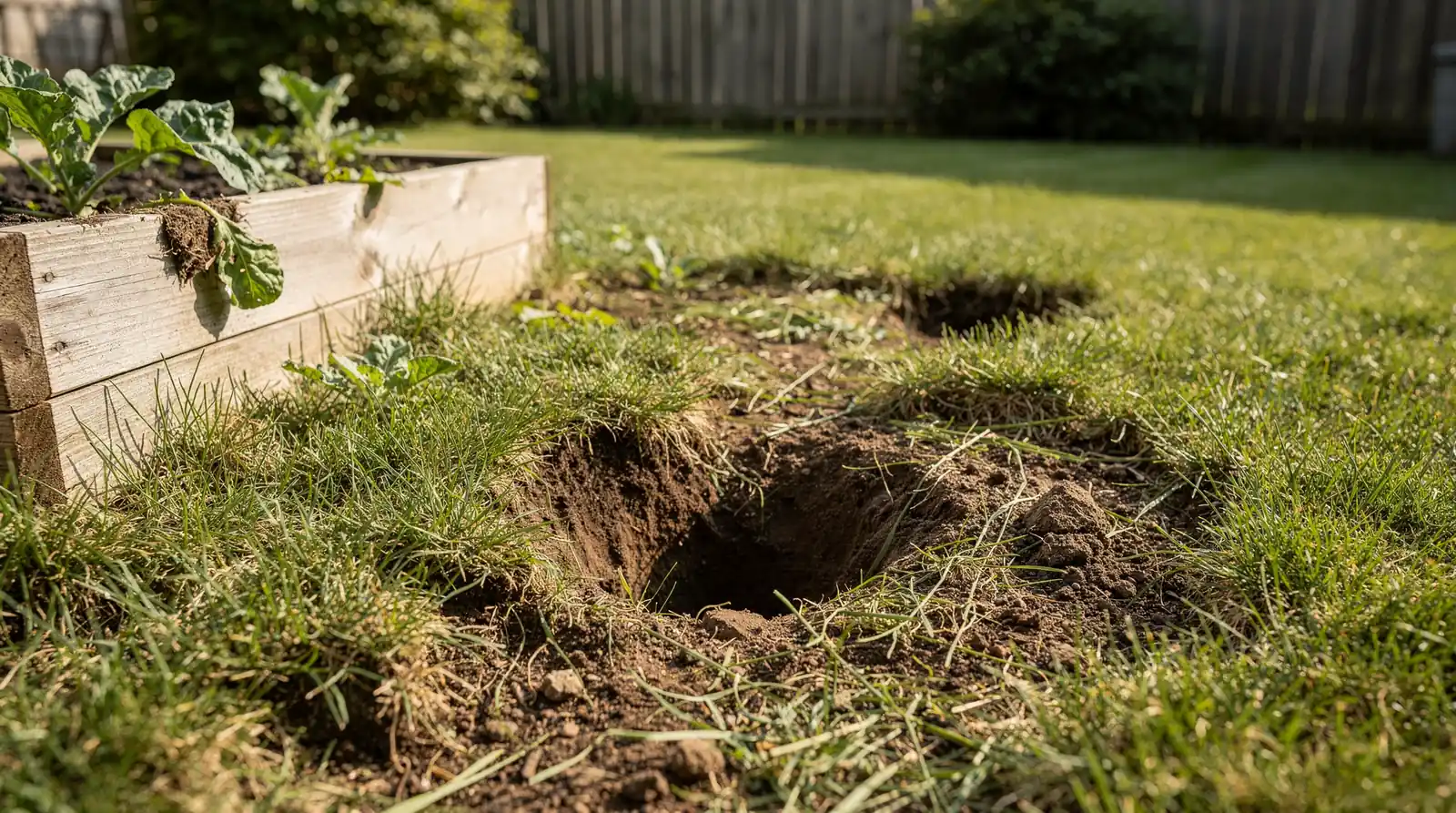
Sunken tunnel entrances near sheds, decks, driveways, and foundations mark the clearest sign of groundhog activity on a property. Cracked driveway sidewalk and a shifting foundation often follow weeks of unnoticed burrowing, turning a minor yard nuisance into a costly repair bill. Woodchucks build connected tunnel systems underground, using them like highways to travel between food sources scattered across a yard. That network frequently surfaces right where homeowners least expect it — under a deck ledge or along a foundation wall.
Property owners who know what to look for catch these signs early. A methodical walk-through helps:
- Walk the perimeter of sheds, decks, and foundations looking for fresh mounds of loose soil.
- Check garden beds and vegetable rows for stripped leaves, chewed stems, or flattened plants — classic woodchuck garden damage.
- Note any cracks forming in driveways, patios, or foundation walls near suspected burrows.
- Look for multiple burrow openings connected by shallow surface trails in the grass.
What Does a Groundhog Burrow Entrance Look Like?
A burrow entrance typically appears as a wide, freshly dug hole with a mound of excavated dirt fanned out in front of it. Secondary entrances nearby, hidden under brush or along a fence line, usually connect to the same tunnel system.
Should Homeowners Search for the Root Cause, Not Just the Hole?
Yes — treating only the visible hole invites repeat digging. Effective woodchuck removal Enfield homeowners trust starts by identifying why the animal chose that spot, not just filling in the entrance. Jeffrey Davis, an Associate Certified Entomologist with additional NWCOA wildlife certifications, applies that same root-cause approach when property owners search groundhog removal near me for lasting results.
When Is the Right Time to Evict Groundhogs?
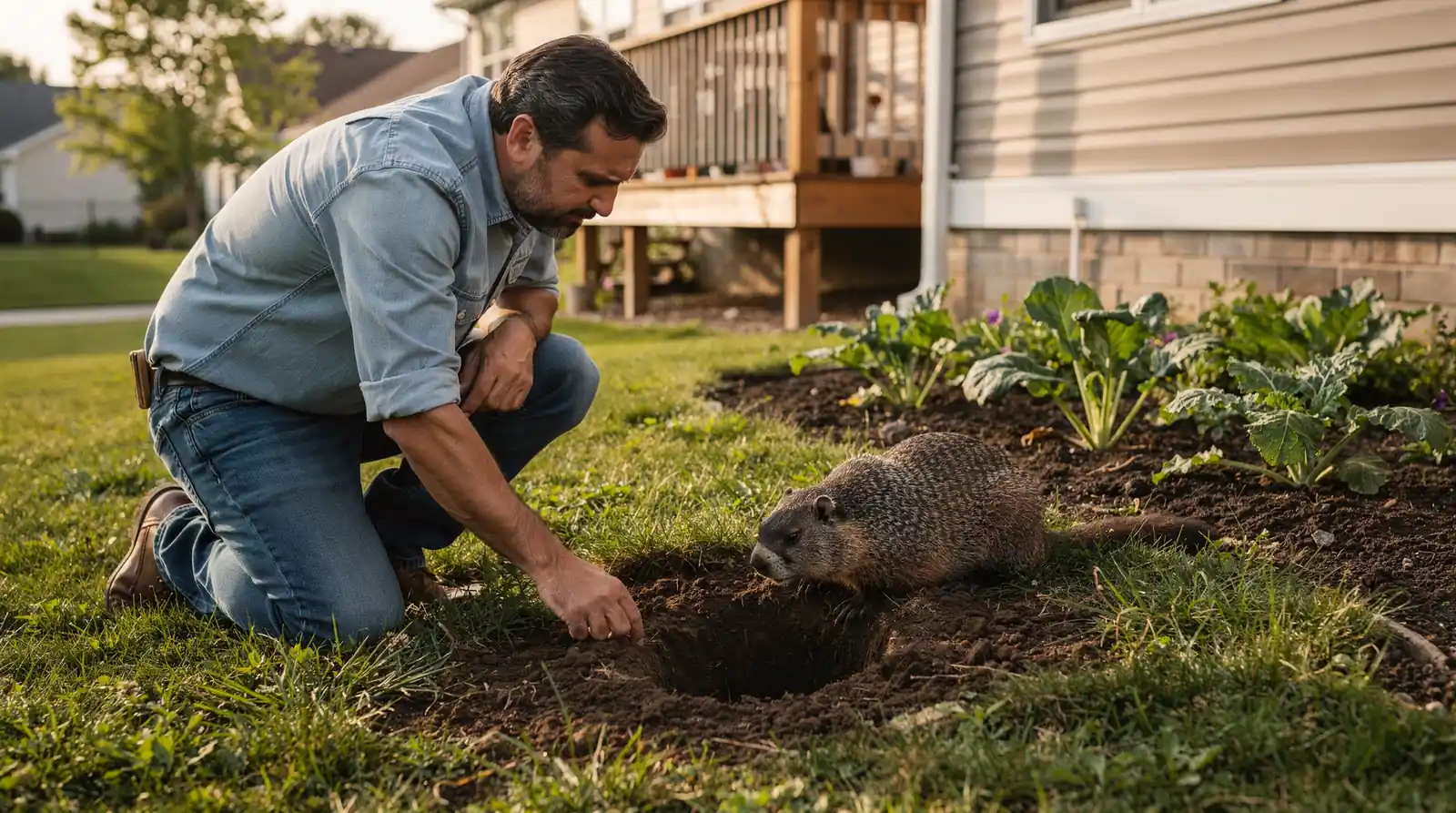
Early July through late September marks the safest window for evicting groundhogs from an active burrow system in most regions. Timing matters more than most property owners realize, and a poorly timed removal creates bigger problems than the burrow itself. Nukingstreet approaches every job requiring woodchuck removal enfield homeowners rely on with this seasonal calendar in mind.
Spring eviction attempts carry hidden risk. Breeding females keep dependent young in the burrow from late winter through early summer. Disturbing the den during this stretch separates mothers from pups still too young to survive alone. Waiting until summer avoids that outcome entirely while still catching groundhogs before they pack on fall weight and dig deeper winter dens.
Why not just call for groundhog removal near me right away?
Speed matters less than accuracy. A technician searching “groundhog removal near me” results still needs to confirm the burrow’s occupancy status before touching it. Guessing wrong risks orphaning young or missing a secondary entrance.
Nukingstreet builds every job around a forensic-level inspection that identifies the burrow’s true root cause. Feeding patterns, denning stage, and structural risk — before any exclusion work begins. That inspection also flags woodchuck garden damage already underway. Vegetable beds and foundation plantings get protected as part of the same visit.
- Inspect the property for active burrow entrances and feeding trails.
- Confirm the season falls within the July-through-September eviction window.
- Verify no dependent young remain inside before any exclusion device goes in.
- Begin humane eviction and exclusion, without leading with chemical treatments.
This mechanical-first sequence keeps removal effective and humane in equal measure.
How Do You Exclude and Seal Entry Points?
Exclusion stops groundhogs before they establish new burrows near a deck, shed, or garden bed. Property owners searching for reliable groundhog removal near me need a plan that blocks re-entry, not just a one-time trap. A sealed foundation and a buried barrier work together to close off the paths groundhogs use to reach food, shelter, and denning sites.
The following steps outline the exclusion process used for woodchuck removal Enfield properties, from inspection through final sealing.
- Inspect the foundation, skirting, and porch areas for gaps, holes, or loose siding that offer access underneath structures.
- Seal any openings found with durable materials such as hardware cloth or metal flashing, since these resist chewing and digging far better than wood or plastic patches.
- Install sturdy fencing around sheds, decks, and similar structures, burying it at least 12 inches deep to prevent groundhogs from tunneling underneath.
- Trim back vegetation near the fence line and foundation to remove cover that conceals burrow entrances.
- Recheck the perimeter seasonally, since freeze-thaw cycles and soil erosion can open new gaps over time.
Does exclusion prevent woodchuck garden damage?
Yes. Fencing buried below the digging depth of a groundhog keeps them out of raised beds. Vegetable rows, cutting off the access that leads to woodchuck garden damage. Combined with sealed foundation gaps, this barrier approach addresses both structural risk and crop loss in one plan.
Nukingstreet builds every exclusion plan around a mechanical-first, chemical-last standard, skipping SGARs and neonicotinoids that can harm pets and non-target wildlife. That same standard protects pollinators and the surrounding ecosystem while entry points get sealed for good.
What Mistakes Undermine DIY Groundhog Removal Efforts?
Homeowners undermine DIY groundhog removal by grabbing the cheapest generic trap or repellent instead of building a targeted plan. Recurring burrow damage near decks, sheds, and foundations returns within weeks when the food source or entry point stays unaddressed.
A blanket, one-size-fits-all treatment rarely stops woodchuck garden damage to vegetable beds, flower borders, and young shrubs. Groundhogs simply relocate a few feet away and dig a new tunnel. Skipping health-conscious methods creates another costly error, especially for households with children, cancer survivors, or pets that spend time in the yard. Harsh chemical repellents and poorly placed traps put those family members at unnecessary risk without solving the underlying burrow problem.
Nukingstreet grew from a single technician serving multifamily properties into a full-service wildlife control company built on a simple belief: the industry could do better than quick fixes. That mission centers on actually solving the customer’s groundhog problem and protecting both health and property, not applying a temporary patch.
Why does a groundhog keep coming back after trapping?
A groundhog returns because the burrow system, not just the visible animal, stays intact. Multiple entrance and exit points allow new woodchucks to move in once the original resident leaves. Effective removal requires mapping the full tunnel network before sealing anything.
Avoid these common missteps:
- Set traps without first locating all active burrow entrances.
- Skip fencing buried at least 12 inches deep around sheds and decks.
- Choose a groundhog removal near me search result based on price alone.
- Ignore the seasonal timing window and attempt eviction while dependent young remain in the den.
Homeowners researching dependable woodchuck removal enfield services benefit most from a plan built around burrow biology, not guesswork.
Groundhog and woodchuck control requires a strategic approach that balances effective removal with humane treatment and environmental responsibility. By understanding their behavior, securing your property, and enlisting professional wildlife management services, you protect your landscape and structures from costly damage. Nukingstreet Pest & Wildlife Control brings certified expertise. Proven removal methods to resolve groundhog problems comprehensively, ensuring your property remains protected year-round.
FAQ
When is the best time for groundhog removal?
Nukingstreet times removal between early July. Late September, avoiding disruption to dependent young while targeting active burrows for effective, humane control.
How does Nukingstreet prevent groundhogs from returning?
Nukingstreet seals entry points with buried fencing at least 12 inches deep. Targets active burrows and food sources using a mechanical-first approach.
What signs indicate groundhog activity in a yard?
Sunken tunnel entrances near sheds, decks, driveways, and foundations signal burrowing. Cracked sidewalk and shifting foundations often follow weeks of unnoticed activity.
Facts
- Nukingstreet Pest & Wildlife Control, LLC is located in Enfield, CT.