
Early warning signs in New England homes include rustling sounds inside walls, small piles of coarse sawdust-like frass, and winged swarmers near windows in spring. Carpenter ants tunnel rather than eat wood, so nests hide behind walls. Nukingstreet Pest & Wildlife Control locates colonies through mechanical-first inspections targeting moisture-damaged framing and void entry points.
Key Takeaways
Carpenter ants tunnel through wood to build nests, unlike termites that consume wood entirely.
Four distinct infestation stages progress from initial sightings to severe structural damage in homes.
Nukingstreet identifies hidden colonies behind walls before they cause extensive damage to your property.
New England homeowners must act immediately upon spotting carpenter ants to prevent costly structural repairs.
Why do New England homes attract carpenter ants?
Moisture-damaged wood draws carpenter ants into Connecticut and Massachusetts homes more than any other single condition. Coastal humidity, spring snowmelt, and New England’s freeze-thaw cycles keep roof edges, porches, and foundation sills damp for weeks at a time. That dampness, not the wood itself, is what these ants are after.
A single ant crossing a Cape Cod deck or a Litchfield County kitchen floor rarely raises alarm. [Carpenter ant damage Connecticut](https://nukingstreet.com/carpenter-ant-structural-damage-vs-termites-in-western-ma-ct/) homeowners eventually discover often starts exactly that quietly. One or two scouts, easy to dismiss, before a colony ever gets noticed.
Unlike termites, carpenter ants don’t consume wood for food. They excavate it, carving smooth galleries to house growing colonies. That distinction matters because it explains where damage shows up first: not fresh framing, but wood already softened by leaks.
Homes with existing water damage give carpenter ants the easiest foothold. Common entry points across New England properties include:
Leaky roof flashing around chimneys and skylights
Rotted porch posts and deck ledger boards
Damp sill plates near foundation cracks
Poorly ventilated crawl spaces and attics
Activity peaks in spring and summer, when colonies expand and forage most aggressively, favoring moist or decaying wood over sound, dry lumber.
Which parts of a New England home are most at risk?
Bathrooms, attics, and any framing near old roof leaks carry the highest risk. Older New England housing stock, with decades of freeze-thaw stress on rooflines and foundations, tends to hide these vulnerable areas longest. A licensed carpenter ant exterminator can identify moisture-damaged framing before it leads to structural issues.
What are the early warning signs of carpenter ant damage?
A few stray ants crossing a kitchen counter in a Litchfield County farmhouse rarely means much on its own. Trouble starts when those wandering scouts belong to a carpenter ant colony already nesting deep inside a wall cavity. Even a handful of sightings can point to a much larger population working unseen behind drywall or framing. By the time that activity becomes obvious, the colony has often had months to establish itself.
Connecticut and Massachusetts homes built with wood-frame construction face steady exposure to this risk, especially near moisture-prone areas like basements, sills, and porch supports. Left unaddressed, tunneling activity slowly weakens structural wood throughout the property, and repair costs climb the longer the colony goes untreated. Ongoing burrowing can compromise the integrity of framing members over time, turning a manageable pest issue into a genuine safety concern for the household.
What do carpenter ants actually look like?
Identifying the pest matters as much as spotting the damage. Carpenter ants typically measure between 1/4. 3/4 inch long, distinctly larger than the odorous house ants common in New England kitchens. Coloring ranges from solid black to red. A mix of both, which helps homeowners distinguish them from other household ants during a visual check.
Where should homeowners look first?
Start with areas exposed to moisture or wood-to-ground contact, since carpenter ants favor damp, softened wood for excavation. Watch for:
Small piles of fine sawdust-like shavings near baseboards or window frames
Faint rustling sounds inside walls, particularly at night
Winged ants appearing indoors during spring, a sign of an established nest
Hollow-sounding or slightly damaged trim around doors, sills, and porches
A prompt inspection catches these signs before tunneling spreads further into load-bearing wood.
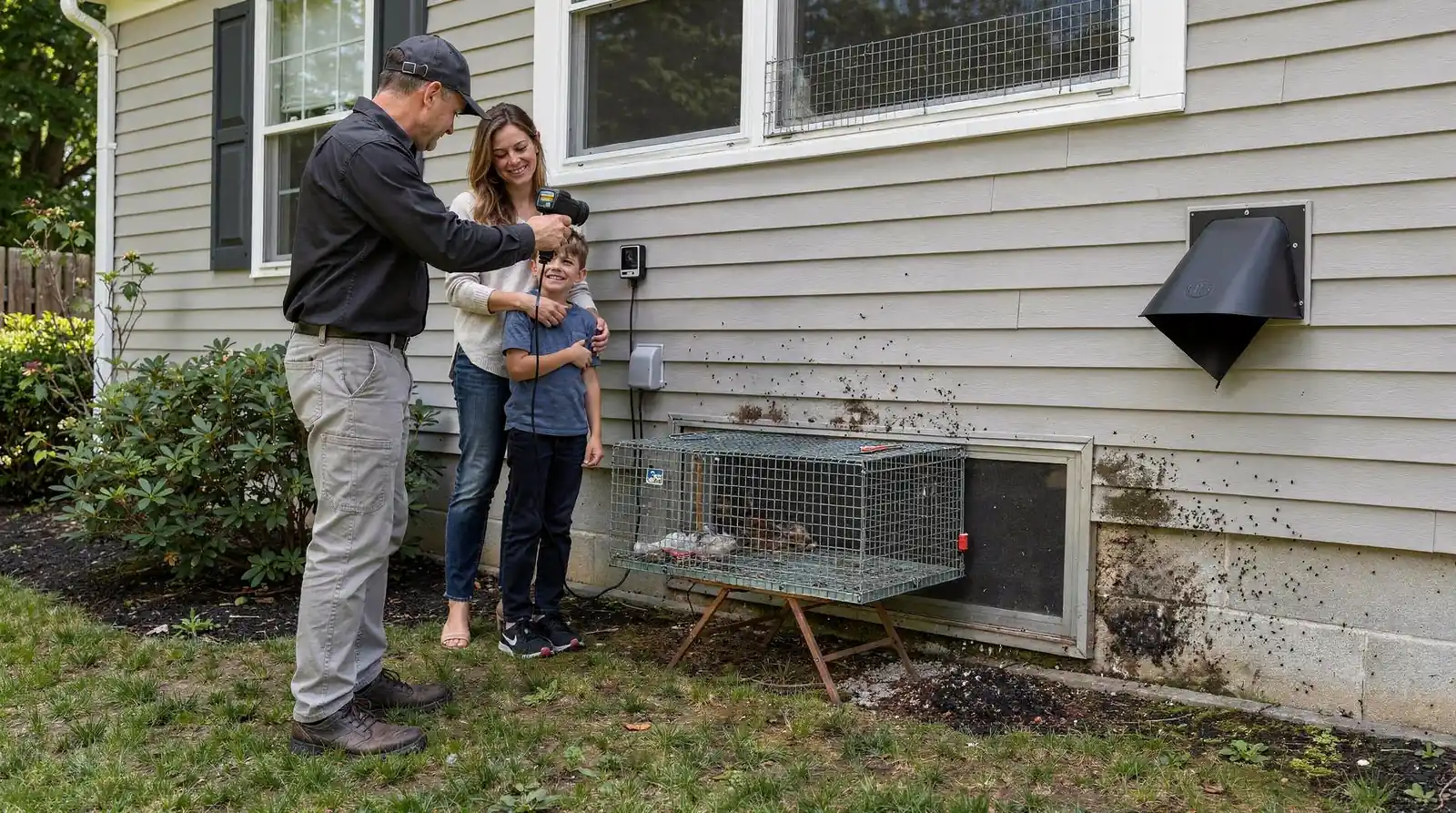
How can you spot signs of carpenter ants in walls?
Faint rustling behind drywall, small piles of shavings on a windowsill, and winged ants near a window in early spring all point toward an active colony. Signs of carpenter ants in walls rarely show up as obvious chewed marks on the surface. These insects tunnel through the inside of framing lumber rather than gnawing visible grooves where a homeowner might notice them right away. That hidden pattern is exactly why New England homeowners often miss early warnings until damage has already spread through wall voids and structural framing.
Carpenter ant infestations progress through recognizable stages, moving from scattered sightings to smooth internal galleries and, eventually, weakened wood. Catching the problem early matters most in older New England homes. Moisture-damaged sills and porch framing give colonies an easy foothold.
Watch for these early indicators inside a home:
Small, sawdust-like debris (frass) collecting near baseboards or window frames
Faint rustling sounds inside walls, especially at night
Winged ants appearing indoors during late winter or spring
Doors or window frames that suddenly feel soft or hollow when tapped
What does carpenter ant damage look like inside a wall?
Rather than eating wood for food, carpenter ants excavate it, carving smooth tunnels and nesting galleries that hollow out framing from within. This distinguishes true carpenter ant damage connecticut homeowners find from termite damage, which typically shows mud tubes and rougher, soil-packed tunneling.
When should a homeowner call a professional?
Tapping on suspicious wood and hearing a hollow or papery sound signals it’s time to bring in a **carpenter ant exterminator hartford county** families trust for thorough inspection. A trained technician traces activity back to the nest location, rather than treating only the ants visible on the surface, preventing repeat colonies from rebuilding in the same weakened framing.
How do you locate the nest before damage spreads?
Finding a carpenter ant nest starts with visual confirmation, not guesswork. Carpenter ants rank among the largest ants found inside New England homes, which makes them easier to spot during a careful walk-through than smaller pests. Size alone offers a first clue: a black or reddish ant measuring roughly a quarter to half inch crossing a kitchen counter in Massachusetts or Connecticut deserves closer attention, not a shrug.
Behavior tells the rest of the story. These ants don’t eat wood for nutrition. Instead, they tunnel through it to carve out nesting galleries and expand their colonies, which means any wood-boring activity signals an active, growing problem rather than a one-time visitor.
Where do carpenter ants typically nest inside a house?
Once carpenter ants move indoors, they gravitate toward specific vulnerable areas. Homeowners across New England should prioritize checking these locations first:
Window and door frames exposed to moisture
Bathroom walls near plumbing leaks
Attic rafters and roof eaves
Porch posts and deck ledger boards
Basement sill plates and foundation wood
Moisture is the common thread. Softened, water-damaged wood is far easier to excavate than dry lumber, so these damp zones deserve the closest inspection.
When should a homeowner call in professional help?
Frass piles, faint rustling sounds inside walls, or winged ants appearing indoors during spring warrant a professional inspection before damage spreads further. Locating an active carpenter ant exterminator hartford county homeowners trust matters, since pinpointing a nest hidden inside a wall cavity or roofline often requires specialized tools and experience.
Nukingstreet Pest & Wildlife Control operates from Enfield, CT and serves carpenter ant investigations throughout Connecticut and Massachusetts, bringing that reach to homeowners across the wider New England region. Owner Jeffrey Davis is an Associate Certified Entomologist, a credential that reflects verified technical mastery of pest biology and control methods and backs every inspection with a science-based standard. Acting early protects the structural wood that keeps a home standing for decades to come.
When should you call a carpenter ant exterminator?
Rustling sounds inside a wall, discarded wings on a windowsill, or a trail of large black ants near a deck all warrant a call to a carpenter ant exterminator in Hartford County and across New England without delay. Waiting can worsen pest issues, which may lead to more significant structural damage than seasonal weather effects. Storms and sun damage siding and roofing gradually. A colony working inside wall studs for months can compromise framing before anyone notices a problem.
New England pest professionals routinely rank carpenter ants among the most destructive pests homeowners face, right alongside termites and rodents. That reputation exists for a reason: colonies expand quietly, and by the time damage is visible, the tunneling has often been underway for a long stretch.
How urgent is a carpenter ant sighting?
A single ant outdoors isn’t an emergency. Multiple large ants indoors, especially near moisture-damaged wood, deserves prompt professional attention.
What should a homeowner do while waiting for an inspection?
Avoid spraying visible ants with store-bought products. Disturbing a colony can scatter it into new areas of the structure, making the eventual inspection and treatment harder.
Homeowners across Connecticut and Massachusetts get the most value from scheduling an inspection as soon as any of these signs appear:
Winged ants emerging indoors during spring or early summer
Faint rustling or clicking noises inside walls, especially at night
Small piles of wood shavings near baseboards, window frames, or attic beams
Consistent ant trails leading toward moisture-prone areas like bathrooms or basements
FAQ
What early warning signs indicate carpenter ant damage?
Homeowners notice rustling sounds inside walls, small piles of coarse sawdust-like frass, and winged swarmers near windows in spring. These signs point to hidden colonies tunneling through moisture-damaged wood behind walls.
Why do carpenter ants target New England homes specifically?
Moisture-damaged wood draws carpenter ants more than any other condition. New England’s freeze-thaw cycles keep roof edges, porches, and foundation sills damp for weeks. Carpenter ants tunnel through this softened wood to build nests rather than eating it.
How does Nukingstreet Pest & Wildlife Control locate hidden carpenter ant nests?
Nukingstreet Pest & Wildlife Control, LLC, based in Enfield, CT, uses mechanical-first inspections that target moisture-damaged framing and void entry points. This approach identifies hidden colonies behind walls before they cause extensive structural damage.
Conclusion
In closing, early detection of carpenter ant activity protects your New England home from costly structural damage and the stress of a full-scale infestation. By recognizing the warning signs—hollow wood, sawdust trails, and audible sounds within walls—you catch the problem when intervention remains most effective. A thorough professional inspection identifies not just visible activity but the hidden nests. Conditions that allow these destructive pests to thrive, giving you the peace of mind that comes with comprehensive, long-term protection.