
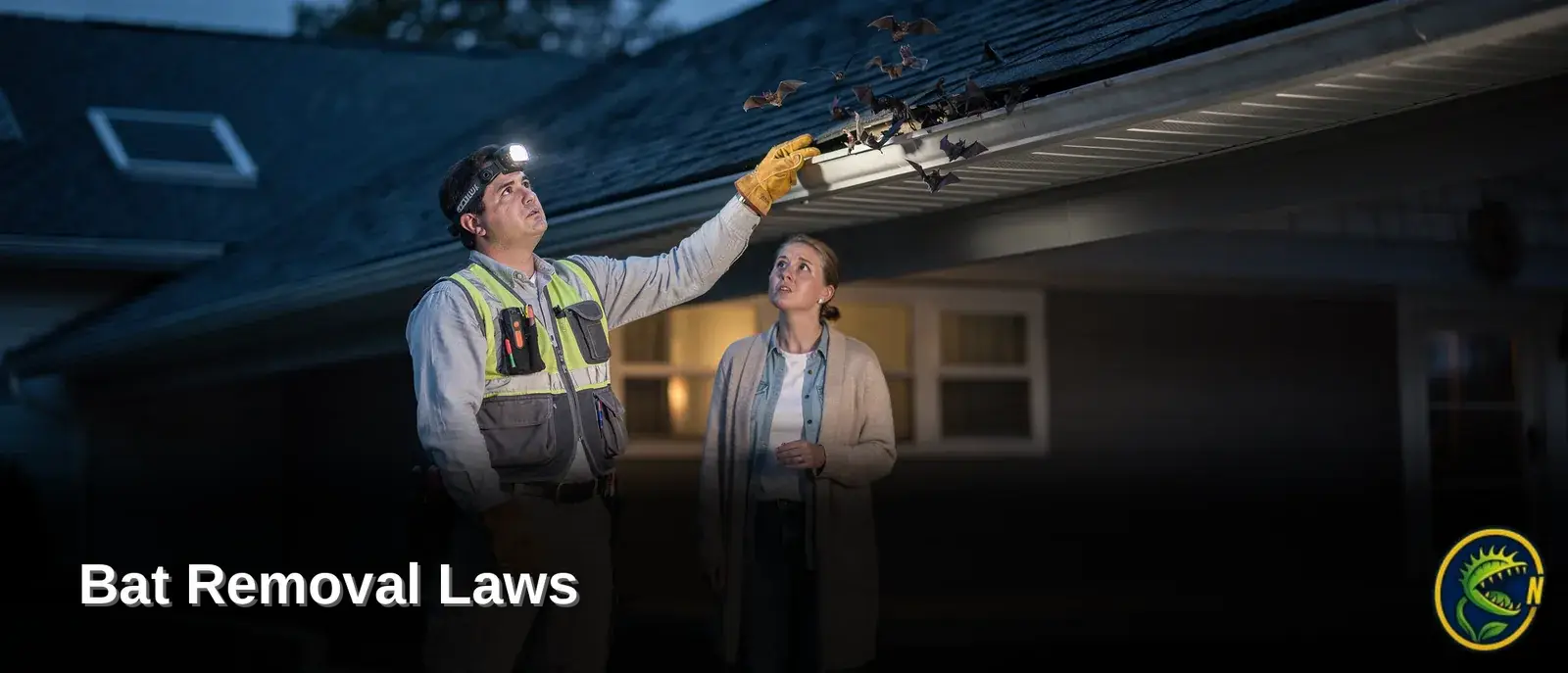
Connecticut and Massachusetts protect bats during maternity season, roughly early May through mid-August, when full exclusion work is illegal and inhumane because flightless pups can’t leave with adults. Eight of Connecticut’s nine bat species are protected under the state’s Endangered Species Act, with the big brown bat being the only unprotected species. Nukingstreet schedules bat removal outside this window, using humane, code-compliant methods.
Key Takeaways
Connecticut protects 8 of 9 bat species under the Endangered Species Act during maternity season.
Bat maternity season occurs when female bats establish colonies in warm spaces like attics.
Massachusetts provides homeowners with identification guides for all 9 bat species and eviction methods.
White Nose Syndrome causes catastrophic bat mortalities, prompting wildlife agencies to monitor colonies closely.
Why Can’t You Exclude Bats In Summer?
Summer exclusion traps baby bats inside walls and attics, creating a crisis instead of a solution. Connecticut and Massachusetts homeowners who seal entry points during maternity season risk sealing pups inside the structure. They cannot survive without their mothers. Both states enforce bat removal laws that prohibit full exclusion work during this window, and for good reason: flightless pups left behind die inside walls, causing odor, insect activity, and far worse problems than the original bat issue.
Nukingstreet’s founder, Jeffrey Davis, holds the Associate Certified Entomologist designation along with NWCOA Bat Standards certification. That credential matters here — it means the timing of an exclusion job gets evaluated against real regulatory standards, not guesswork. Properties across Northern Connecticut and Western Massachusetts each carry different risk factors depending on colony size. Roost location, and proper certification helps determine when sealing is legal and when it isn’t.
When is it safe to exclude bats from a home?
Safe exclusion happens outside maternity season, once pups can fly and the whole colony can leave together. Technicians assess the property first, tracing entry points back to their root cause rather than patching symptoms. This proactive approach protects the structure long after the bats are gone.
Humane bat exclusion relies on one-way devices that let bats leave at dusk but block their return, timed to avoid trapping young. Nukingstreet treats this work as an environmental responsibility, protecting local wildlife populations alongside the property itself. Property managers overseeing multiple buildings benefit especially from this planning, since colony timing varies site to site across the region.
When Does Bat Maternity Season Happen Here?
Early May through mid-August marks bat maternity season across Connecticut and Massachusetts. Property owners who schedule exclusion work during this window risk trapping flightless pups inside attics, chimneys, or wall voids — a costly and inhumane mistake. Timing matters more than most homeowners realize, and getting it wrong creates both legal and moral problems.
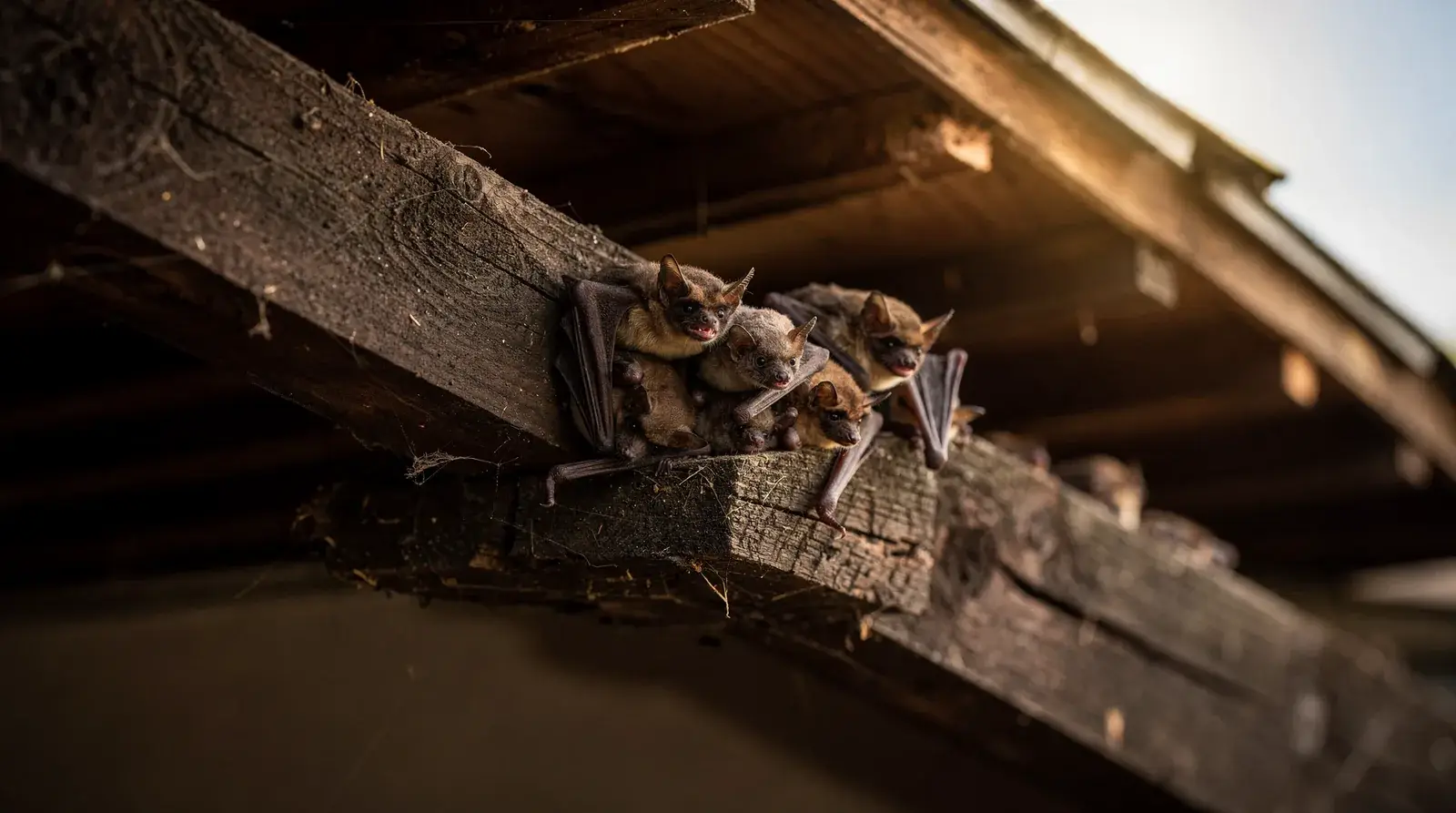
During these months, female bats gather in warm, sheltered spots to raise their young. Attics and soffits in older Connecticut homes and Massachusetts commercial buildings offer exactly the conditions they seek.
How can property owners tell if bats are already roosting?
Watch the exterior of the structure at dusk. Bats leaving the roost to feed often become visible exiting through eaves, vents, or gaps behind siding and shutters. Staff at Nukingstreet, who have served Simsbury and greater Hartford County communities with a mechanical-first, eco-friendly approach, look for these same exit patterns during onsite evaluations.
Facility managers overseeing multiple buildings should watch for:
Bats emerging from roofline gaps or vent openings around sunset
Dark staining or droppings near suspected entry points
Faint scratching or chittering sounds from attic spaces
What happens after maternity season ends?
Once pups can fly, typically by late summer, full exclusion becomes possible again. Nukingstreet’s forensic inspections identify structural weak points — attic gaps, unsealed vents, deteriorated flashing — that invite bats back year after year. Humane bat exclusion relies on this kind of root-cause reporting rather than guesswork, giving property owners a clear, documented path toward permanent, lawful resolution once the season allows it.
What Do Connecticut And Massachusetts Bat Laws Require?
Connecticut and Massachusetts both restrict how property owners handle bats on-site, and the rules favor the animal over convenience. Eight of Connecticut’s nine bat species carry Endangered, Threatened, or Special Concern status, leaving the big brown bat as the only species without protected standing. That status matters because it triggers legal safeguards, not just conservation talking points.
Which bats are legally protected in Connecticut?
Most Connecticut bat species fall under the Connecticut Endangered Species Act, which limits how colonies can be disturbed or removed. Bat removal laws built around this statute prohibit harming or killing listed species. Restrict sealing structures while young or breeding bats are present. Violations carry legal consequences beyond property damage, since the state treats these species as a conservation priority.
What does Massachusetts require for removing bats from a building?
Massachusetts addresses bat removal through official guidance rather than a single blanket ban, but the expectations are just as specific. The state’s homeowner’s guide to bats outlines lawful eviction. Relocation methods, including approved one-way door designs that let bats exit but not re-enter. That same guide covers bat house plans, giving displaced colonies a legal place to resettle nearby.
Property owners in both states face a similar bottom line: exclusion has to happen on the bat’s terms, not a convenient calendar date. Humane bat exclusion methods rely on one-way devices and careful timing rather than sealing entry points outright. Nukingstreet’s technicians hold NWCOA Bat Standards, Wildlife Zoonosis, and Exclusion Product Installation certifications, credentials built to keep every removal aligned with Connecticut and Massachusetts wildlife protections. For homeowners, commercial property managers, and facility managers, that certification matters most when a violation could mean regulatory exposure on top of an active bat problem.
How Does Humane Bat Exclusion Actually Work?
Physical barriers and mechanical means come first, always before any chemical treatment enters the conversation. Humane bat exclusion relies on sealing entry points, installing one-way devices, and letting bats leave a structure on their own timeline rather than trapping or poisoning them inside. For a Massachusetts colonial attic or a Connecticut commercial roofline, this mechanical-first approach protects both the building and the bat colony living in it.
Chemical shortcuts have no place in this process. Rodenticides and neonicotinoid pesticides pose real risks to wildlife and pollinators across New England’s fields and waterways. A properly run exclusion project skips them entirely. That eco-responsible standard matters for property managers overseeing land near wetlands or wooded buffers common throughout Hartford County and the Pioneer Valley.
Is every bat exclusion job handled the same way?
No. Treatment gets tailored to the property, the entry points, and the season, not applied as a one-size-fits-all fix. A single bat roosting in a bedroom calls for a different response than a maternity colony in a barn attic.
What happens when a bat is found inside a living space?
Removal typically follows a remove-and-release approach whenever possible, since bats provide real benefit to the surrounding neighborhood through insect control. Trained technicians capture the animal safely and release it outdoors rather than resorting to lethal methods.
A complete exclusion project generally includes:
Inspection — locating every gap, vent, and soffit where bats enter or exit
One-way devices — allowing bats to leave at dusk but blocking re-entry
Sealing — closing gaps once the colony has fully vacated
Follow-up monitoring — confirming no bats remain before final closure
Who Should Handle Your Bat Removal Safely?
Licensed wildlife professionals with documented bat removal laws training should handle any bat colony discovered in a Connecticut or Massachusetts attic. Federal and state protections cover most bat species in this region, and mishandling an active colony risks legal penalties and incomplete removal that leaves families exposed to health hazards.
Credentials matter more than a quick internet search suggests. Jeffrey Davis, who leads Nukingstreet Pest & Wildlife Control, holds the Associate Certified Entomologist (ACE) designation along with extensive certifications from the National Wildlife Control Operators Association, including their Bat Standards program. That combination positions the company to handle bat cases across Hartford County. Western Massachusetts with real regulatory knowledge, not guesswork.
Why does experience in the region matter for bat jobs?
Local building styles, climate patterns, and bat species behavior vary across Northern Connecticut and Western Massachusetts. Nukingstreet has served Enfield, Connecticut and Hartford County, applying a mechanical-first, eco-friendly approach built on genuine field credentials rather than shortcuts.
What should a homeowner expect from an honest inspection?
A trustworthy technician reports every structural vulnerability found, even findings a property owner may not want to hear. This transparency matters because bat entry points often hide in soffits, rooflines, or chimney gaps that untrained eyes miss.
Property managers should also know this:
Maternity season triggers strict regulations designed to protect flightless pups and nursing mothers.
Full-scale sealing during this window can trap young bats inside walls, creating odor and secondary pest problems.
Compliant humane bat exclusion timing avoids these outcomes while still solving the infestation.
FAQ
When does bat maternity season occur in Connecticut and Massachusetts?
Bat maternity season runs from early May through mid-August. During this window, female bats gather in warm, sheltered spots like attics and soffits to raise their young.
Why do Connecticut and Massachusetts prohibit bat exclusion during maternity season?
Flightless pups cannot leave with adults during this period, so sealing entry points traps them inside walls or attics. This causes death, odor, insect activity, and legal violations under Connecticut’s Endangered Species Act protections.
How does Nukingstreet determine when bat exclusion is legal?
Jeffrey Davis holds Associate Certified Entomologist and NWCOA Bat Standards certifications, evaluating each property against real regulatory standards. Nukingstreet schedules exclusions outside maternity season using humane, code-compliant, one-way device methods.
Conclusion
In closing, bat exclusion during Connecticut and Massachusetts maternity season requires balancing legal compliance with humane wildlife management. Understanding your state’s specific protections and timing ensures you protect your property without harming vulnerable bat populations. Professional guidance from experienced wildlife control specialists helps you navigate these regulations confidently. Achieve lasting results that respect both your home and local ecosystems.