
By Jeffrey Davis, ACE, Nukingstreet Pest & Wildlife Control, LLC
Holiday bed bugs usually come home in luggage: travel is one of the most common ways bed bugs get into a home. They also ride in backpacks and used furniture and on visitors, then hide in the seams of mattresses and furniture. A few minutes of checking when you arrive and a careful routine when you get home greatly reduce the risk. If bed bugs do follow you back, get a professional inspection early, before they spread to other rooms. Nukingstreet Pest & Wildlife Control treats bed bugs from its base in Enfield, CT. Call (866) 553-5538.
Why bed bug problems follow the holidays
Bed bugs travel with people and their belongings. The holidays put more people and suitcases on the move, and much of that travel ends in a hotel, a rental or a relative’s guest room. A bed bug problem says nothing about how clean a home or hotel is; it says where someone has been.
- More trips. Airports, bus stations and train terminals are busier, and bed bugs latch onto clothing, luggage and other belongings to move from one place to another.
- More places to sleep. Hotels, rentals and family homes host more overnight guests. Some are well kept and some may unknowingly harbor bed bugs.
- Guests in your home. Bed bugs also arrive on visitors and in used furniture.
- Late discovery. Bed bugs hide well and not everyone reacts to their bites, so an infestation can go unnoticed until it has multiplied.
Enfield sits on I-91, a short drive from Bradley International Airport, so luggage is a common way bed bugs reach homes in town.
How to check a hotel or guest room for bed bugs
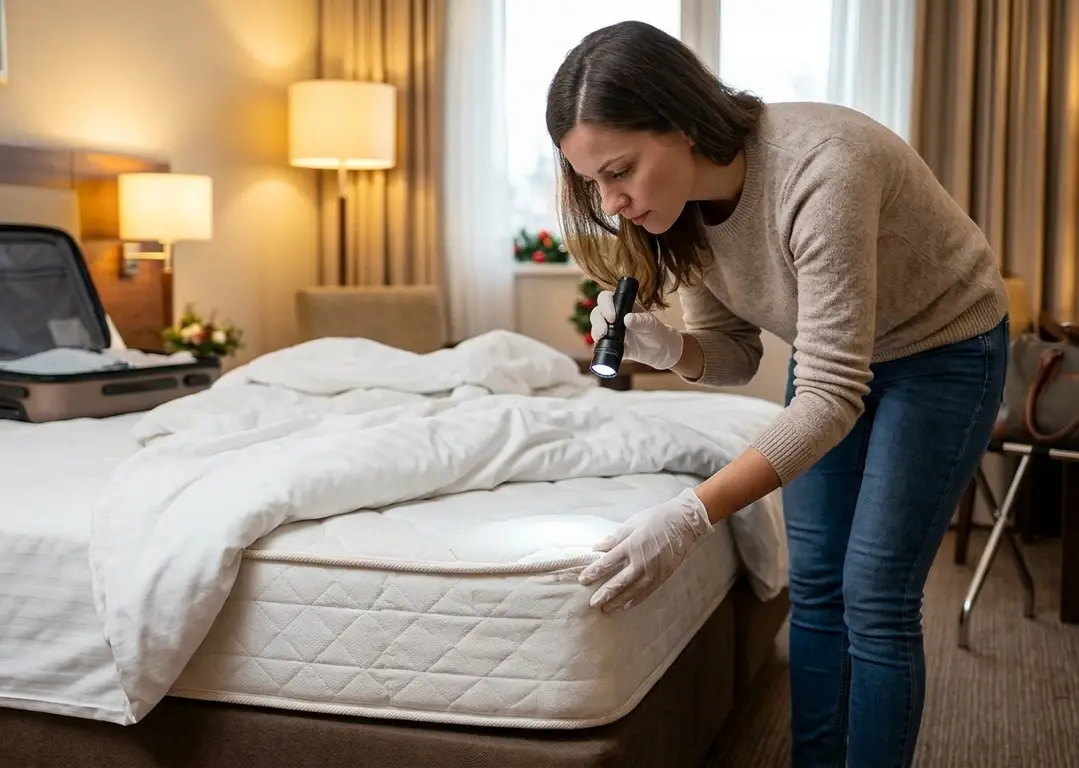
Do this when you arrive, before you unpack.
- Check the seams and folds of the mattress and the mattress tag.
- Look behind the headboard and along the bed frame.
- Check upholstered furniture in the room, especially the seams.
You are looking for small, flat, reddish-brown insects about the size of an apple seed, tiny black spots (digested blood) on the sheets or mattress tag, and pale shed skins.
Bed bugs on holiday: how to protect your luggage
- Keep luggage elevated and away from beds and upholstered furniture.
- Consider a luggage encasement designed to keep bed bugs out of the bag.
What to do when you get home
- Wash travel clothes right away and dry them on high heat. Do the same for anything else that traveled with you and can go in the dryer.
- Look over your luggage, especially the seams, for the signs above.
- Keep an eye on mattress seams and the bed frame. If you see signs of bed bugs, book an inspection early, before they spread to other rooms.
Hosting family? Protect your guest room
Bed bugs also arrive with visitors and on used furniture. When guests stay over, the hotel rule applies at home too: keep their luggage elevated and off beds and upholstered furniture. After they leave, check the guest bed’s mattress seams for the signs above.
Signs bed bugs came home with you
- Small, flat, reddish-brown insects about the size of an apple seed in mattress seams, box springs and headboards
- Tiny black spots (digested blood) on sheets, mattress tags and the bed frame
- Pale shed skins and eggshells in seams and furniture joints
- Itchy bites in a line or cluster after sleeping. Not everyone reacts, so no bites does not mean no bed bugs.
Many calls turn out to be something else, such as carpet beetles, bat bugs or fleas. If you can, save a specimen in a sealed bag or take a clear photo. It speeds up the inspection.
Why store sprays and foggers make it worse
Bed bugs hide deep in seams, outlet boxes, baseboards and furniture joints, where foggers do not reach. Over-the-counter products often scatter them into new rooms and the walls, which makes professional treatment harder. If you suspect bed bugs, leave the room as it is and book an inspection.
Holiday bed bug treatment: what to expect
Our bed bug removal service starts with an inspection to confirm bed bugs and map how far they have spread. Treatment is mechanical removal first, then targeted products applied only where bed bugs hide and travel, chosen to limit exposure for your family and pets. You get a short, specific prep checklist rather than bagging everything you own, and we come back to inspect and treat any remaining activity before closing out the job. Catching bed bugs early keeps the treatment to one or two rooms.
In Enfield we are based at 9 Moody Rd and accredited through Bed Bug Central. See bed bug treatment in Enfield, CT. We give a written quote after the inspection.
Frequently asked questions
Are bed bugs more of a risk around the holidays?
The holidays put more people and luggage on the move and into shared beds, which gives bed bugs more chances to hitch a ride. The risk comes from where you sleep and what you bring home.
Is a clean hotel safe from bed bugs?
Not necessarily. Travelers carry bed bugs in, so a problem says nothing about how clean a room is. Check every room you stay in.
Should I use a bug bomb if I find bed bugs at home?
No. Foggers do not reach where bed bugs hide and often scatter them into other rooms and the walls. Leave the room as it is and call for an inspection.
How many visits does bed bug treatment take?
Most homes need a treatment visit and at least one follow-up a couple of weeks later to catch bugs that hatch from eggs. Heavier infestations and apartment buildings may need more.
Will throwing out my mattress get rid of bed bugs?
Usually not. Bed bugs also hide in the frame, nightstands, baseboards and outlets, so a new mattress gets reinfested. Most mattresses can be treated and then sealed in an encasement.
Do I have to leave my home during treatment?
Usually for a few hours while we treat and the treated areas dry. We tell you exactly how long before the service date, including when pets can come back.
Think you brought bed bugs home? Call (866) 553-5538 or email info@nukingstreet.com to book an inspection.