

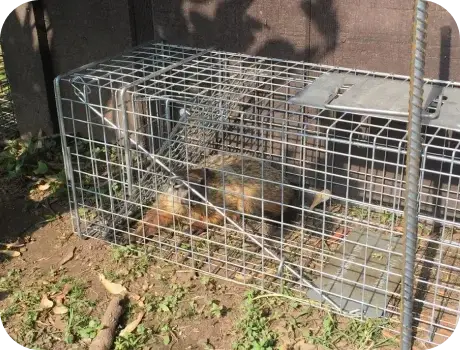
Woodchucks, also called groundhogs, are common across Connecticut, and the state’s own wildlife biologists say they are more plentiful now than in colonial times, because farms, lawns and roadside fields give them exactly the open, grassy edges they like. Most of the time they are harmless. The trouble starts when one digs a burrow under a shed, deck, porch, patio or foundation, or works through a vegetable garden. The lasting fix is to get the animal out and then block it from digging back in, ideally in early spring before young are born or in late summer once they have left. This guide covers how to tell you have a woodchuck, why they settle in Connecticut yards, what you can do yourself, what state rules say, and when to call for help.
How to tell you have a woodchuck
According to the Connecticut Department of Energy and Environmental Protection (CT DEEP), the woodchuck is the largest member of the squirrel family in the state: a stocky, brown animal with short legs, long curved front claws, small rounded ears and a short, bushy tail. Its fur often looks frosted because of lighter-tipped guard hairs.
You will more often see the signs than the animal:
- A large hole with a mound of fresh dirt beside it, usually along a fence line, under a shed or deck, beside a stone wall, or at the edge of a garden. CT DEEP describes the main entrance as the most obvious one, with a big pile of dug soil.
- One or two smaller holes nearby without a dirt pile. These are escape exits from the same burrow.
- Garden damage: vegetables, clover, flowers and young plants eaten down, often close to the burrow.
- Gnawing or claw marks on fruit trees, deck posts or the bottom of wooden siding.
- Settling or soft spots in a lawn, patio or walkway where a tunnel runs underneath.
- Daytime sightings, usually early morning or late afternoon. Woodchucks are active by day, unlike skunks and raccoons.
Not sure it is a woodchuck? A skunk usually moves into an existing hole rather than digging a big one, and leaves a smell. A chipmunk hole is small and neat with no dirt pile. If the burrow is under a structure, it is worth having it looked at either way, because an old woodchuck burrow is often reused by skunks, raccoons, foxes and rabbits.
Why woodchucks show up in Connecticut yards
Woodchucks need two things: soft soil to dig in and plenty of green plants to eat. Connecticut suburbs and farm towns offer both.
- Edges. Woodchucks live where open ground meets cover: lawns that back onto woods, field edges, stone walls, hedgerows, highway shoulders and utility corridors. That describes a lot of Connecticut properties.
- Food. CT DEEP lists clover, alfalfa, dandelion, grasses and garden crops as favorites, plus leaves, bark and newly planted flowers. A garden or a clover-heavy lawn is a draw.
- Shelter under structures. A shed, deck or porch gives a burrow a roof. It is dry, hidden and close to food, which is why so many woodchuck calls involve something built.
- Farm and river land. Towns with fields and river meadows, such as the farm edges of East Windsor and Windsor, see a lot of woodchuck activity. So do wooded suburban lots, like the west side of West Hartford, and even city yards near the larger parks in Hartford.
The woodchuck year in Connecticut
Timing matters more with woodchucks than with most wildlife, because they hibernate and raise one litter a year. Based on CT DEEP’s fact sheet:
- March: woodchucks come out of hibernation and the breeding season starts.
- April to May: young are born, usually 2 to 6 in a single litter, in a nest chamber at the end of the burrow.
- About 5 to 6 weeks later: the young start foraging outside, and soon after they leave to find their own dens.
- Late summer: adults feed heavily to put on fat for winter. Garden damage often peaks here.
- By the end of October: most woodchucks have sealed themselves into a burrow below the frost line for 4 to 5 months.
What that means for you: early spring, before the young are born, and late summer, after they have left, are the best times to deal with a woodchuck under a structure. CT DEEP recommends holding off on removal until all of the woodchucks, adults and young, can be removed together. Sealing a burrow in May can trap young underground.
How much damage can a woodchuck do?
CT DEEP says most burrows are 25 to 30 feet long and 2 to 5 feet deep, with at least two entrances, depending on the soil. That is a lot of earth moved. When the tunnel runs under a slab, patio, walkway, shed floor or foundation, the soil underneath can settle and crack what sits on top of it over time. Burrows along fence lines can loosen posts, and open holes in a lawn or pasture can catch a foot, a mower wheel or a horse’s leg. Woodchucks also gnaw and claw at wood, including fruit trees, deck posts and siding.
What you can do yourself
If a woodchuck is eating the garden or digging near the yard but not under a structure, these steps from CT DEEP’s guidance often help:
- Fence the garden. A sturdy fence at least 3 feet high, buried another 1.5 to 2 feet underground so the woodchuck cannot dig under it. Bend the top foot outward, or leave the top loose so it bends when the animal tries to climb.
- Protect the base of sheds, decks and porches before they move in. Galvanized wire mesh along the openings, buried at least 1.5 to 2 feet deep and bent outward, keeps them from digging underneath.
- Make the area less inviting. Clear brush and woodpiles near structures, keep grass mowed, and do not leave fallen fruit or vegetables lying around.
- Try harassment on a fresh burrow. CT DEEP notes that taste or odor repellents, motion-activated sprinklers, or even a radio left playing near the burrow for a few days can sometimes push a woodchuck to leave. These work best early, before the animal is settled.
- Watch before you block. Loosely stuff the entrance with leaves or newspaper. If it stays undisturbed for several days in warm weather, the burrow may be empty. If it is pushed open, the animal is still using it.
What not to do: do not seal a burrow you have not confirmed is empty, especially in spring, and do not trap and drive an animal somewhere else. In Connecticut, CT DEEP says a trapped woodchuck may be released on-site after exclusion or humanely euthanized. It must not be released on state land, and not on anyone else’s private property without the owner’s permission. Traps must follow state trapping laws, need checking several times a day in summer because woodchucks are prone to heat stress, and should be closed at night so you do not catch a skunk. Our guide to Connecticut wildlife removal regulations explains the wider rules.
When to call a professional
Call for help when:
- The burrow is under a foundation, slab, patio, deck, porch or shed.
- It is spring and there may be young in the burrow.
- You have tried fencing or harassment and the woodchuck is still there.
- Another animal, such as a skunk, may be using the burrow.
- You would rather not handle a trapped wild animal yourself.
Connecticut allows homeowners to hire a licensed Nuisance Wildlife Control Operator for this work, and Nukingstreet holds a Connecticut nuisance wildlife control license. Our woodchuck and groundhog removal service works the same way as the rest of our wildlife work: inspect first, time the job around the young, use one-way exclusion so the animal leaves on its own where that is possible, and then install buried wire mesh along the structure so a woodchuck cannot dig back in. Any animal we do have to remove is handled in accordance with state law.
Frequently asked questions
Is a woodchuck the same as a groundhog?
Yes. Woodchuck and groundhog are two names for the same animal, Marmota monax. CT DEEP notes that the name “woodchuck” comes from an Algonquin word, not from chucking wood.
When do woodchucks come out in Connecticut?
They wake from hibernation during March and are active until about the end of October. During the warm months they are usually out early in the morning and late in the afternoon.
Can I trap a woodchuck and release it in the woods?
Not on state land, and not on someone else’s private property without their permission. CT DEEP’s guidance is that trapped woodchucks are either released on-site after exclusion or humanely euthanized, following state trapping laws.
Are woodchucks dangerous?
They usually run for the burrow when they see people, but they can fight hard when cornered, so do not try to grab or corner one. Like any mammal they can carry rabies, so keep pets and children away from a woodchuck that is acting strangely and call CT DEEP or your local animal control.
Will the woodchuck leave on its own in winter?
No. It will hibernate in the burrow and come back out in March. Late summer and early fall, before hibernation, is a good window to get it out and seal the structure.
Get help with a woodchuck in Connecticut
If a woodchuck is digging under your shed, deck or foundation anywhere in the Hartford area or Northern Connecticut, call Nukingstreet Pest & Wildlife Control at (866) 553-5538. See our woodchuck removal service, or our pages for pest control in Hartford and pest control in West Hartford.