Hartford Pest Control Services for Wildlife in Hartford, Connecticut
By Nukingstreet Pest & Wildlife Control LLC Editorial Team · Updated 2026-08-07
Wildlife removal in Hartford, CT addresses nuisance animals like squirrels, groundhogs, and birds invading homes and properties. Nukingstreet Pest & Wildlife Control LLC, led by Associate Certified Entomologist Jeffrey Davis, uses a mechanical-first, chemical-last approach for safe, humane trapping and exclusion serving Hartford County homeowners and property managers.
Key Takeaways
- Woodchucks, also called groundhogs, have coexisted with North Americans for centuries despite occasional conflicts.
- Hartford County Animal Services provides free wildlife removal assistance at (860) 569-0722 for residents.
- Connecticut Wildlife Commission handles wildlife control inquiries and can be reached at 860-424-3011.
- Nukingstreet Pest & Wildlife Control, LLC operates from Enfield, CT serving the Hartford area.
Why Are Hartford Homes Vulnerable To Wildlife?
Connecticut’s seasonal temperature swings drive Hartford-area homes toward structural weak points that wildlife exploit year-round. Cold winters and hot, humid summers force building materials to expand and contract repeatedly. That constant movement stresses siding, foundations, and rooflines, opening cracks and gaps that never existed the year before. Left unaddressed, these small openings become highways for raccoons, squirrels, and other animals seeking a warm attic or a quiet wall cavity.
The Connecticut River Valley adds another layer of risk. Spruce-fir forests and floodplain habitats near Hartford support a wide range of species, including bats, porcupines, bears, white-tail deer, and beavers. Bats and porcupines, in particular, often seek shelter inside structures when natural habitat pressures push them toward human dwellings. This proximity means Hartford homeowners face wildlife pressure that many suburban or city residents elsewhere simply don’t encounter.
Professional Hartford pest control services address these vulnerabilities by inspecting for the specific gaps seasonal expansion creates, rather than treating symptoms after animals have already moved in.
What Time Of Year Do Wildlife Intrusions Peak In Hartford?
Temperature swings between winter and summer create the most structural movement. Cracks tend to widen during transitional seasons like early spring and late fall. Wildlife activity often spikes when animals search for denning sites before winter or nesting spots in spring.
Which Hartford Neighborhoods Face The Highest Wildlife Risk?
Properties bordering wooded areas, floodplains, or green corridors connected to the Connecticut River Valley see more frequent contact with bats, porcupines, and other habitat-dependent species. Effective city pest management accounts for this proximity when assessing entry-point risk. Comprehensive urban pest solutions combine seasonal inspection timing with habitat awareness to keep wildlife out before damage occurs.
What Makes This Hartford Wildlife Removal Different?
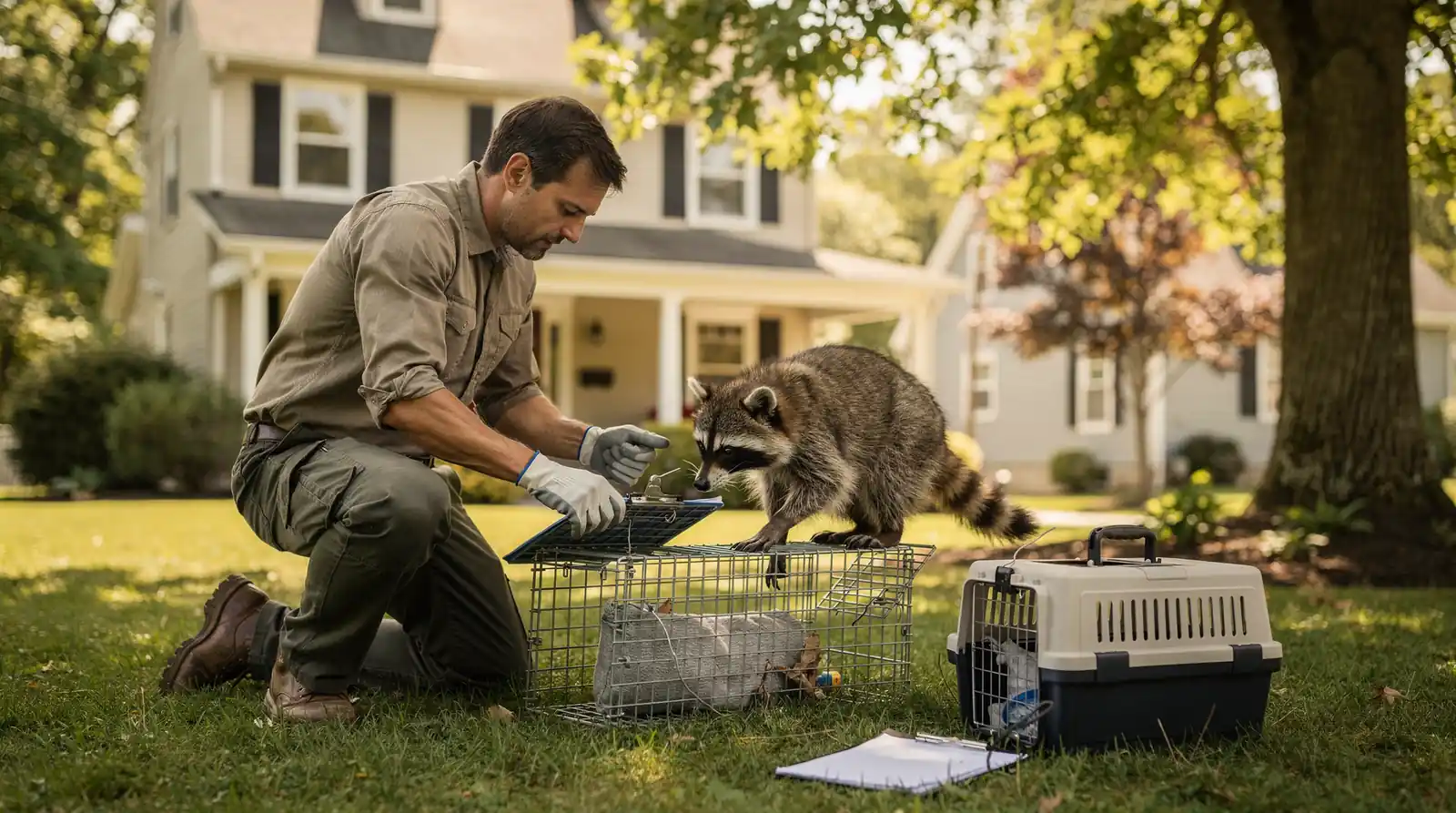
Wildlife problems in Hartford County homes rarely start with the animal itself. They start with a company reaching for the same chemical spray it uses on every job, regardless of the actual cause. Many providers default to blanket treatments instead of tracing a raccoon in the attic or squirrels in the soffit back to the entry point that let them in. That habit costs homeowners repeat visits and repeat bills.
Hartford pest control services built on a different model start with targeted methods, not the cheapest product on the truck. A technician working a colonial in West Hartford or a triple-decker near downtown treats each structure on its own terms rather than applying a one-size-fits-all spray.
Why does the inspection process matter so much?
Inspections drive everything that follows. A proactive inspection hunts for the root cause. A gap under a Hartford porch, a chimney cap missing on a Bloomfield rental. Instead of just chasing symptoms like droppings or scratching noises. Skipping this step almost guarantees the wildlife returns within weeks.
Families raising kids near Elizabeth Park, pet owners in Frog Hollow, and cancer survivors managing chemical sensitivity all need service that respects their household. That’s the thinking behind health-conscious wildlife removal: methods chosen with vulnerable residents in mind, not just efficiency.
City pest management in a dense area like Hartford also means protecting what lives alongside the neighborhood — pollinators in community gardens, birds along the Connecticut River corridor, and the broader urban ecosystem. Environmentally responsible removal keeps that balance intact.
Compare the two approaches side by side:
That combination — targeted, proactive, health-conscious, and environmentally responsible — defines genuine urban pest solutions for Hartford properties.
How Does Local Hartford Experience Help You?
Proximity matters when raccoons nest in an attic or ants invade a kitchen overnight. Nukingstreet Pest & Wildlife Control operates out of nearby Enfield, Connecticut, positioning technicians close to homeowners throughout Hartford County. That closeness translates into faster response and a working knowledge of the pest. Wildlife pressures unique to Connecticut’s fourth largest city. Delayed treatment lets infestations spread room to room. Having a provider nearby shortens the gap between the first call and the first inspection.
Hartford’s mix of dense, older neighborhoods and newer developments creates constant opportunity for nuisance wildlife. Aging housing stock, tight lot lines, and mature tree cover give raccoons, squirrels, and rodents easy access points into attics, chimneys, and crawl spaces. Urban pest solutions built for this kind of layered, diverse community differ from generic suburban treatment plans. They account for shared walls, alleyways, and older construction gaps that modern homes rarely have.
What Makes Hartford Different From Other Connecticut Towns?
Hartford’s neighborhoods vary block by block, from historic multifamily buildings to single-family streets bordering green space. That diversity demands city pest management that adapts to each property type rather than applying one blanket approach.
Nukingstreet’s roots reflect that adaptability directly. The company began as a one-person operation focused on multifamily properties before expanding into full-service Hartford pest control services covering both pests and wildlife. The original standard hasn’t changed:
- One technician assigned per visit
- One truck, fully equipped for inspection and treatment
- A consistent commitment to doing the job correctly the first time
That founding discipline still shapes every appointment scheduled in Hartford County today.
Can Free Or DIY Options Solve Wildlife Problems?
Free wildlife assistance exists in Hartford, but coverage stops well short of most homeowner emergencies. Government agencies list wildlife-related contacts, yet their mandate rarely extends beyond narrow categories of animal complaints. A raccoon in the attic or bats behind the siding often falls outside what these programs actually handle.
Will Animal Control Remove A Raccoon Or Squirrel From My House?
Rarely. County animal services agencies typically focus on domestic animal issues involving dogs. Cats, not nuisance wildlife entering a home’s structure. A homeowner calling about a squirrel in the walls or a raccoon denning in the chimney usually gets referred elsewhere, leaving the actual removal and exclusion work unaddressed.
That gap matters because DIY traps, poisons, and improvised sealants create risk without solving the root problem. Wildlife often re-enters through the same gap. Worse, dies inside a wall cavity and creates odor and pest issues weeks later.
Is DIY Pest Or Wildlife Control Safe For My Family?
Not always. Urban pest solutions that rely on over-the-counter chemicals pose real exposure risk for households with young children, cancer survivors, or pets who spend time on treated floors and yards. A health-conscious approach to Hartford pest control services matters most for these residents. Store-bought products don’t account for individual vulnerability.
Professional, city pest management also protects what’s outside the home. Environmentally responsible methods safeguard pollinators, backyard wildlife, and the surrounding ecosystem. Outcomes that careless trapping or poison-based DIY fixes routinely undermine.
Comparing the options side by side:
How Do You Get Started With Removal?
Removal starts with a single call and a scheduled inspection, not a guessing game involving store-bought traps. Many companies in this industry react only after damage appears, leading with chemicals and treating callers like account numbers instead of neighbors with a real problem. Hartford homeowners searching for dependable Hartford pest control services deserve a first step: a technician who investigates the root cause before proposing a fix.
What happens during the first inspection?
A proactive inspection maps entry points, nesting sites, and property vulnerabilities before wildlife causes structural damage. That root-cause approach is what separates lasting city pest management from short-term patchwork repairs.
Should Hartford residents try free wildlife agencies first?
Local agencies sometimes help, depending on the nature of the conflict, but coverage stays inconsistent for ongoing infestations. A dedicated wildlife removal call remains the more reliable next step for homeowners facing repeat encounters with raccoons, squirrels, or other unwelcome visitors.
Getting started typically looks like this:
- Contact a licensed provider and describe the pest or wildlife activity observed.
- Schedule an on-site inspection focused on entry points and root causes.
- Review a removal and exclusion plan built on environmentally responsible methods.
This founding commitment to environmentally responsible urban pest solutions shapes every removal. Exclusion job across Hartford-area properties, giving homeowners a plan grounded in prevention rather than repeated reaction.
Wildlife removal in Hartford, CT requires the expertise of professionals who understand both the biology of local wildlife and the legal requirements for humane relocation. Nukingstreet Pest & Wildlife Control brings years of specialized knowledge to every removal situation, prioritizing safe, effective solutions that protect your property and the animals involved. When wildlife threatens your home or business, partnering with experienced professionals ensures the problem is resolved thoroughly and responsibly, giving you the peace of mind that comes from knowing your property is in capable hands.
Understanding Wildlife Resources in Hartford, CT
Where is Nukingstreet Pest & Wildlife Control located?
Nukingstreet Pest & Wildlife Control, LLC operates from Enfield, CT, serving Hartford County homeowners and property managers with humane wildlife removal services.
What approach does Nukingstreet use for wildlife removal?
Nukingstreet uses a mechanical-first, chemical-last approach, prioritizing humane trapping and exclusion methods over blanket chemical treatments to address squirrels, groundhogs, and birds.
When does wildlife activity peak in Hartford homes?
Wildlife intrusions peak during transitional seasons like early spring. Late fall, when temperature swings widen structural cracks and animals search for denning or nesting sites.
Facts
- Nukingstreet Pest & Wildlife Control, LLC is located in Enfield, CT.