
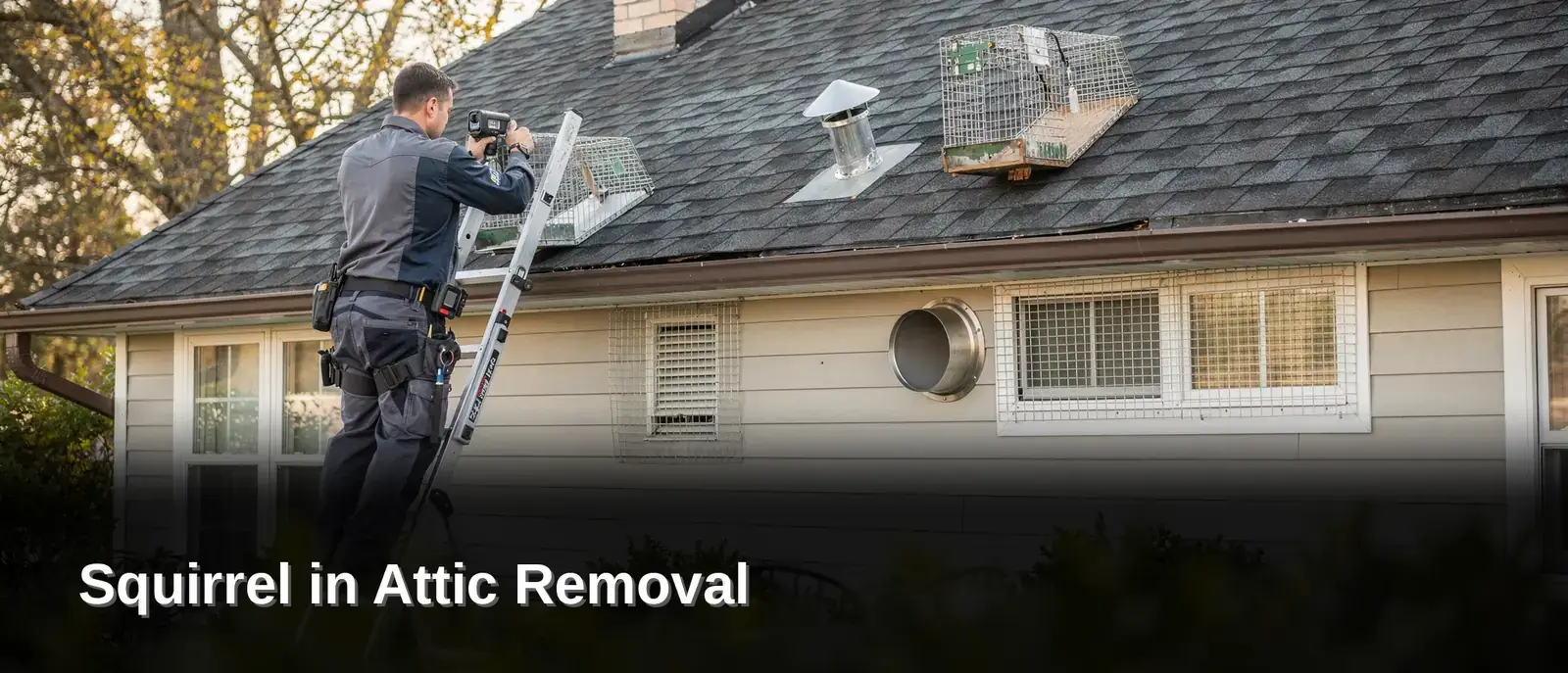
Attic sanitization and pheromone trail removal eliminate the urine, droppings, and scent markers that raccoons, squirrels, and rodents leave behind — chemical signals that attract new wildlife even after exclusion work is complete. Thorough attic decontamination is what separates a temporary fix from lasting wildlife removal in Windsor, CT. Nukingstreet Pest & Wildlife Control, LLC proudly serves Windsor, CT and the surrounding area.
Key Takeaways
- Wildlife-contaminated attics contain urine, feces, parasites, and bacteria that pose serious health risks.
- Pheromone trails left behind actively attract new rodents and wildlife to your home.
- A single mouse pair produces dozens of offspring within months, escalating infestation severity rapidly.
- Nukingstreet’s post-removal sanitization eliminates biohazards and structural damage that persist after animal trapping.
Why Isn’t Wildlife Removal Complete When Animals Leave?
Trapping the last squirrel or raccoon marks a milestone, not a finish line. Homeowners frequently assume a wildlife job ends the moment the final animal exits the attic. The real work often starts once trapping wraps up. Cleanup, sanitizing, and structural repair all determine whether a property stays protected long after the last trap closes.
A recent case from a Connecticut homeowner illustrates why incomplete inspections cause lasting frustration. After paying another pest control company for a squirrel in attic removal, the animal remained stuck inside, and follow-up calls went unanswered. Nukingstreet’s technician later performed a full inspection of the crawl space and attic, locating the squirrel tucked near the roofline. The exact area the previous company had already been told to check.
What Does a Thorough Squirrel Removal Actually Involve?
Locating an animal requires more than a quick glance at obvious entry points. A proper inspection covers hidden voids like roofline overhangs, soffits, and crawl spaces where squirrels often retreat when pressured.
Effective follow-through generally includes:
- Full inspection of attic, crawl space, and roofline junctions
- Confirmation that the animal has actually left, not just relocated within the structure
- Sanitizing contaminated insulation and nesting debris
- Repairing entry points and structural damage caused during the intrusion
Skipping any of these steps leaves homeowners paying twice. Once for removal, and again when the same animal, or a new one, returns through an unresolved gap.
What Biohazards Do Squirrels Leave Behind in Attics?
Squirrel occupation turns an attic into a biological hazard zone within days. Urine soaks into insulation, droppings accumulate in nesting corners, and shredded nesting material spreads bacteria and parasites across the space. These conditions don’t disappear once the animals leave. They linger, and they attract new wildlife through pheromone trails left behind by the original occupants.
Contamination like this doesn’t stay contained to one corner of the attic. Squirrels, along with rodents, bats, and raccoons, cause measurable damage to insulation while degrading indoor air quality throughout the home. Homeowners in Windsor and surrounding towns often notice a musty odor drifting into living spaces long before they realize the source is overhead.
Is squirrel waste actually dangerous to touch or breathe?
Yes. Dried droppings and urine-soaked insulation release particles into the air when disturbed. Those particles carry bacteria that pose real respiratory risk. Homeowners should never attempt to clean an infested attic without protective gear, since airborne contamination spreads easily through HVAC systems.
Can wildlife droppings cause illness beyond respiratory problems?
Raccoon feces present a separate risk worth knowing about, even in a squirrel-focused cleanup. Raccoon roundworm eggs are microscopic and remarkably hardy, and accidental exposure can trigger severe illness in people and pets. Attics with mixed wildlife activity — squirrels alongside raccoons — raise the stakes considerably.
Beyond biological contamination, the physical damage compounds the problem. Common consequences include:
- Torn and displaced insulation that no longer holds its shape
- Crushed or damaged ductwork from repeated animal movement
- Flattened insulation that loses thermal performance, driving up energy costs
Squirrel in attic removal addresses only half the problem if the space is never decontaminated afterward. Left untreated, the biohazards left behind outlast the animals themselves, quietly undermining a home’s air quality and structural integrity.
Why Do Pheromone Trails Invite More Wildlife Back?
Scent markings left behind in nesting material act as a homing beacon for the next animal searching for shelter. Nesting debris, droppings, and urine trails don’t just create a mess. They signal “safe den site” to squirrels, raccoons, and other wildlife scouting a neighborhood for winter cover. A property that has hosted one intruder often becomes a magnet for the next, unless that contaminated material gets fully removed.
This pattern shows up clearly with raccoons. These animals adapt well to suburban life, treating chimneys and attic gaps as reliable denning spots. When entry points aren’t sealed correctly, raccoons return to the exact same location year after year, drawn back partly by the residual scent of previous visits.
Bats behave differently, but the underlying principle holds. Proper squirrel in attic removal — and wildlife exclusion generally — relies on one-way devices that let animals exit freely but block re-entry. That approach matters because it keeps a scent-marked opening from turning into a repeat entry point for bats or any other displaced animal.
Does leaving old nesting material behind cause repeat infestations?
Yes. Leftover nesting material carries pheromone trails that continue attracting animals long after the original occupant leaves. Removing the material — not just trapping the animal — is what actually breaks the cycle.
Why pheromone contamination matters:
- Signals a proven den site to new wildlife
- Persists after the original animal is gone
- Works alongside unsealed entry points to invite repeat visits
- Requires physical removal, not just trapping, to eliminate the draw
Addressing both the scent trail and the structural opening gives a property real, lasting protection against round two.
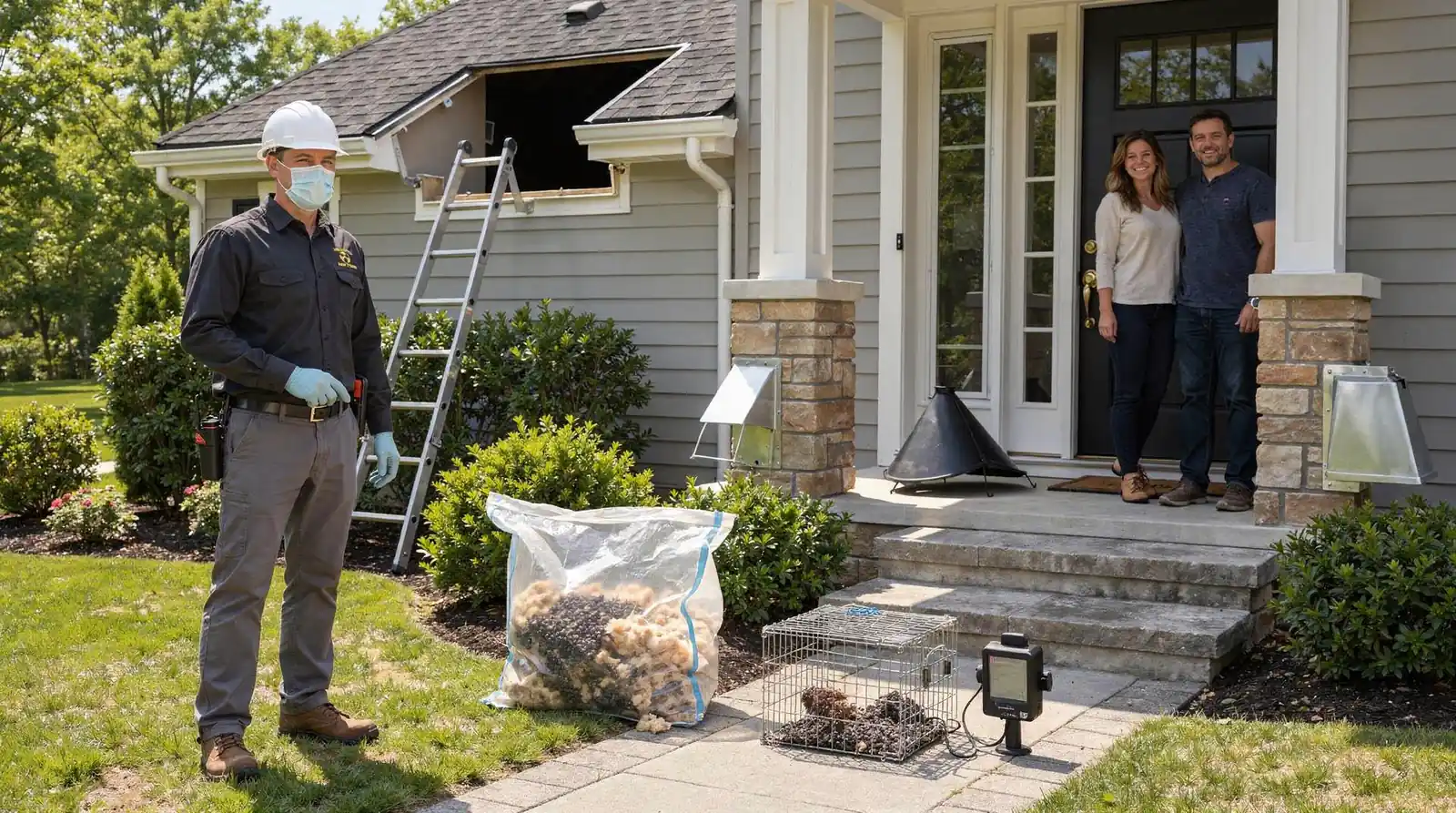
How Does Attic Contamination Harm Air and Energy?
Contaminated insulation degrades indoor air quality long before homeowners notice a smell. Rodent droppings, raccoon feces, and bat guano carry pathogens capable of becoming airborne the moment insulation gets disturbed. A homeowner pulling boxes out of storage or an HVAC technician working near ductwork can release these particles straight into the home’s breathing air.
Squirrel in attic removal doesn’t end the exposure risk on its own. Waste left behind after the animals are gone keeps producing airborne contaminants and lingering odor for as long as it sits untreated.
Does raccoon urine pose a specific health risk?
Raccoon urine carries leptospirosis, a bacterial infection that stays viable in moist insulation the same way it survives in damp soil around den sites. Attic insulation, often humid and poorly ventilated, gives the bacteria a stable environment to persist. This risk exists separately from any structural damage the raccoon may have caused. It doesn’t resolve on its own once the animal leaves.
Why does the smell stick around after the animals are gone?
Waste odors soak into insulation fibers and wood framing, and they can linger for months without intervention. Masking the smell with sprays or fans only buys time. Removing it permanently requires cleaning and deodorizing the contaminated material at its source, not just the surface.
Beyond health, contaminated insulation loses its ability to regulate temperature effectively:
- Compressed, soiled insulation traps less air, weakening its thermal barrier
- Matted fibers allow heat to escape in winter and enter in summer
- Reduced efficiency pushes heating and cooling systems to work harder
Left unaddressed, an attic contaminated by wildlife becomes a year-round source of higher energy bills, poor air quality, and lingering odor that no amount of cleaning outside the attic will fix.
What Does Complete Squirrel Removal Actually Involve?
Complete squirrel removal involves inspection, trapping over time, and permanent sealing of entry points — not a single quick visit. Speed matters at the start: one Nukingstreet customer reported a technician arriving within three hours of the initial call, confirming that fast response makes a real difference once wildlife noise is heard overhead. From there, the process slows down on purpose.
Traps get placed directly inside the attic space where activity has been confirmed. Patience becomes part of the job. In one documented case, traps stayed set for roughly two to three weeks before the squirrel was finally caught. A timeline that reflects animal behavior, not technician effort. Rushing this stage often means leaving an animal, or its young, still inside the structure.
Why does squirrel trapping take weeks instead of days?
Squirrels don’t follow a schedule, and neither does trapping success. Wildlife removal demands specific expertise, precise timing, and the right equipment to work correctly and hold up long-term. Expertise backed by credentials such as an Associate Certified Entomologist on staff. A technician familiar with squirrel behavior knows when to adjust trap placement rather than repeat the same setup for weeks.
Does removal mean the squirrel problem is solved for good?
Not automatically. Squirrels and other wildlife return to the exact same attic entry points year after year if those gaps aren’t properly sealed once the animal is out. Effective squirrel in attic removal requires:
- Confirming the animal has been fully removed, not just relocated
- Identifying every gap, vent, or soffit used as entry
- Sealing those points with materials built to withstand chewing
- Monitoring the area for renewed activity in following seasons
Skipping the sealing step guarantees a repeat call, often from the same attic.
FAQ
Why does attic sanitization matter after wildlife removal?
Sanitization removes urine, droppings, and pheromone trails that attract new wildlife even after exclusion work finishes. Without it, chemical signals left behind draw in new squirrels, raccoons, and rodents to the same attic.
What does thorough squirrel removal include beyond trapping?
It includes full inspection of the attic, crawl space, and roofline junctions, confirming the animal actually left, sanitizing contaminated insulation and nesting debris, and repairing entry points and structural damage.
Is squirrel waste in attics actually dangerous?
Yes, dried droppings and urine-soaked insulation release airborne particles carrying bacteria that pose respiratory risks. Homeowners should never clean an infested attic without protective gear due to these biohazards.
Conclusion
In closing, attic sanitization after wildlife removal represents far more than cosmetic cleanup—it’s a critical step in reclaiming your home’s safety and integrity. By addressing pheromone trails, biohazards, and structural vulnerabilities, you eliminate the conditions that invite reinfestation and protect your family’s health. Professional wildlife removal combined with thorough sanitization delivers the complete solution your property deserves, transforming your attic from a liability into a secure, protected space once again.