Audit standards for warehouse and logistics pest management require documented root-cause inspections, mechanical-first exclusion methods, and traceable treatment records for every dock door, penetration, and storage zone. A commercial IPM warehouse audit built on this framework gives logistics facility pest control programs the documentation trail compliance officers expect. Nukingstreet Pest & Wildlife Control has served Enfield, CT and surrounding communities and applies this exact framework, identifying vulnerabilities and delivering written findings that satisfy compliance officers and food grade warehouse pest management requirements alike.
Key Takeaways
Warehouses face highest pest risk due to constant inbound and outbound shipments requiring continuous monitoring.
Food-grade warehouse compliance includes mandatory pest prevention programs as non-negotiable regulatory requirements.
Distribution facilities need sector-specific pest management protocols aligned with BRC Compliance Guide 2026 standards.
Nukingstreet Pest & Wildlife Control provides Enfield, CT warehouses with specialized logistics facility pest audits.
Why Are Warehouses High-Risk for Pests?
Scale and structure make warehouses and distribution centers some of the highest-risk commercial environments for pest infestation. Size alone creates the problem: a single facility can span acres of open floor space, making complete inspection and treatment far more complex than in a small retail store. Add constant product movement, and the risk multiplies further.
Commercial warehouse pest control exists precisely because these buildings combine so many vulnerabilities in one place. Loading bay doors stay open for hours during shipping cycles. Roof vents, cable penetrations, and pipe chases offer countless small gaps for entry. Heated office and break areas sit next to unheated storage zones, and that temperature contrast attracts rodents, insects, and birds looking for shelter and food. Vast quantities of stored goods compound the issue, offering both harborage and a steady food source for pests that slip inside.
What makes distribution centers more vulnerable than other buildings?
Distribution facilities face a unique layer of risk beyond structural gaps. Constant inbound and outbound shipments, frequent dock door openings, and rotating transportation partners create repeated opportunities for pests to enter or spread. Logistics rodent control becomes especially critical here, since rodents can travel between trailers, pallets, and storage racks unnoticed for weeks.
Why does root-cause inspection matter in high-risk facilities?
Spotting visible pests only addresses part of the problem. A thorough inspection philosophy looks past active infestations to the structural and environmental conditions allowing pests to return. Gaps, moisture, clutter, or unmonitored entry points. Facility managers who understand these underlying vulnerabilities can prioritize repairs and prevention before small issues become widespread contamination risks.
What Do Pest Audit Standards Actually Require?
Pest audit standards demand documented evidence, not just an absence of visible activity. Few sectors carry stricter safety and regulatory expectations than food storage and distribution. A single documentation gap can stall a shipment or trigger a corrective action report. Auditors look for proof that a facility understands its risks. Has a plan to manage them, not just a service contract on file.
That proof starts with inspection reports that name specific vulnerabilities. Nukingstreet’s technicians document structural and environmental conditions that could invite pest activity, from gaps around dock seals to moisture buildup near drains. This produces the kind of paper trail auditors expect to see during a facility walkthrough, rather than a checklist marked “no activity observed” with no supporting detail.
Why do auditors care about chemical use levels?
Auditors increasingly scrutinize how much chemical treatment a facility relies on to stay pest-free. Commercial warehouse pest control programs that lean on mechanical methods, exclusion work, and targeted prevention first demonstrate lower chemical dependency, which strengthens an audit file rather than raising questions about residue risk near stored goods.
What documentation should a facility manager keep on hand?
A ready audit binder should include:
Inspection reports noting specific structural findings
A record of exclusion and prevention work completed
Evidence of logistics rodent control monitoring at entry points
Verified licensing credentials for the servicing pest control provider
Nukingstreet holds a valid Connecticut pest control license, providing facility managers with a verifiable regulatory credential to present when an auditor asks who performs pest management on site. Pairing that credential with detailed inspection records. A mechanical-first treatment history gives auditors a clear picture of vendor accountability, satisfying both regulatory reviewers and internal compliance officers.
How Does Logistics Rodent Control Work Without SGARs?
Rodent programs skip second-generation anticoagulant rodenticides by relying on forensic inspection, mechanical exclusion, and targeted eco-responsible products instead of broad chemical bait stations. Nukingstreet Pest & Wildlife Control has taken a proactive stance against these compounds, known as SGARs. They harm wildlife further up the food chain when a poisoned rat gets eaten by a hawk, owl, or fox. For a warehouse director managing a facility near a wetland or wooded buffer, that distinction matters for site liability and environmental compliance alike.
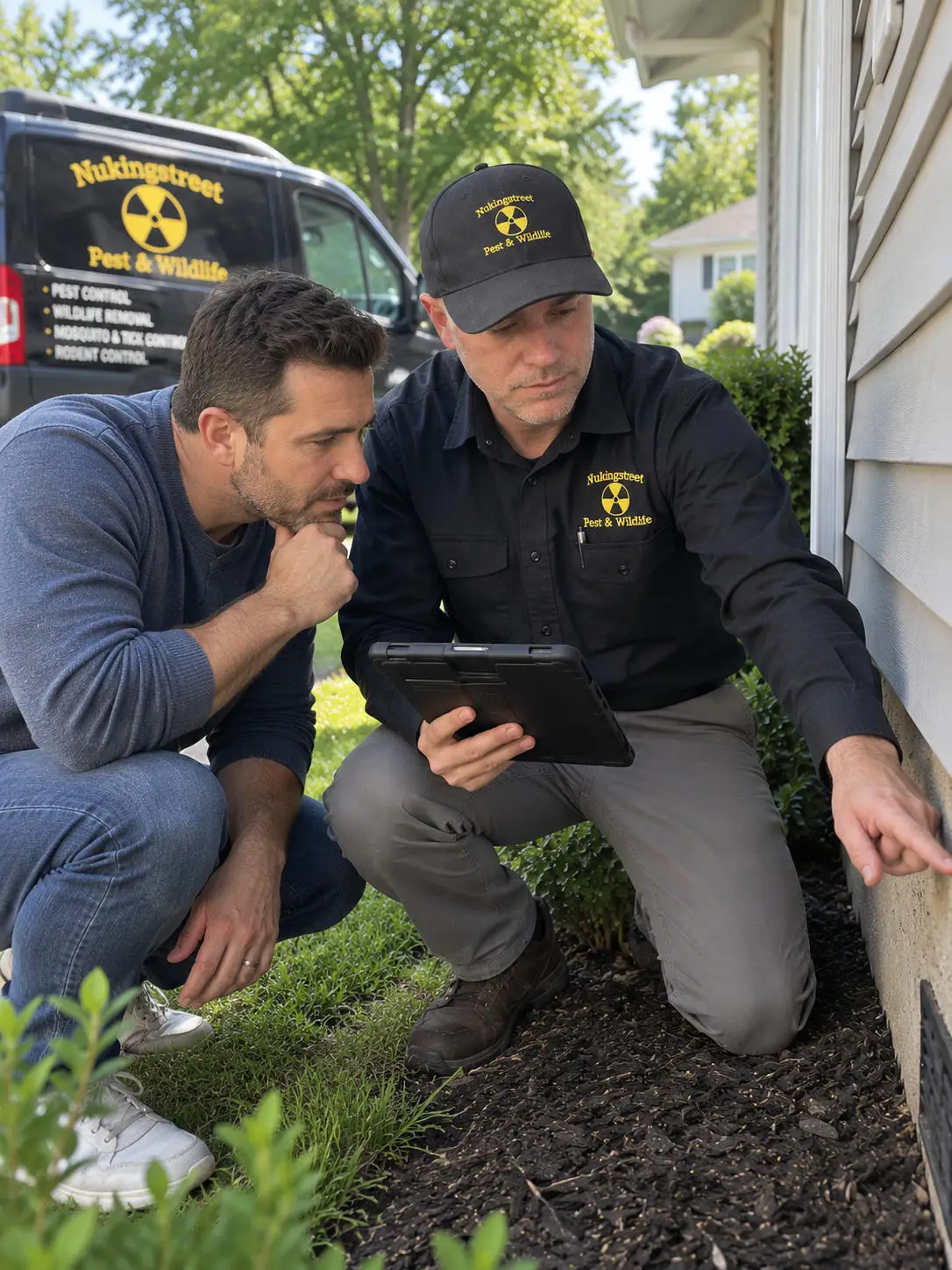
Logistics rodent control starts with the inspection, not the bait. Technicians trace rodent activity to its source — gaps at dock doors, cable penetrations, gaps in roof vents — before deciding what treatment, if any, is warranted. This mechanical-first sequence mirrors the forensic-level inspection model that large-scale rodent programs require, because chasing symptoms without finding the entry point guarantees a repeat call.
Distribution centers face elevated pressure because of their scale. Large stockpiles of goods create harborage and constant food sources. The mix of dock door traffic with multiple shippers means new pest introductions arrive on pallets, not just through walls.
Why avoid SGARs in a warehouse setting?
SGARs persist in animal tissue long after ingestion, creating secondary poisoning risk for predators and scavengers on or near the property. Nukingstreet actively avoids SGARs and systemic neonicotinoid products that damage pollinators, positioning clients ahead of regulatory mandates already reshaping competitor practices.
Commercial warehouse pest control built on exclusion and monitoring, rather than chemical volume, gives compliance officers a defensible, documented alternative when auditors ask what’s being applied and why.
Why Does AI Monitoring Strengthen Audit Readiness?
Continuous electronic monitoring strengthens audit readiness by replacing periodic snapshots with documented, ongoing pest activity data. Facility managers preparing for third-party inspections need evidence of consistent control, not a single technician’s word from a monthly visit. Sensor-based tracking creates that evidence automatically.
Nukingstreet incorporates technology and remote monitoring directly into its pest management programs, extending protection beyond scheduled service dates. This approach matters most for commercial warehouse pest control, where loading docks, mixed-temperature zones, and constant inbound freight create pest pressure between visits. Advanced AI-powered electronic monitoring equipment tracks activity around the clock, a capability many regional providers still don’t offer. Instead of discovering a rodent problem after damage appears on a compliance walkthrough, facility managers receive proactive alerts flagging activity as it happens.
That real-time data complements the inspection work technicians already perform. Detailed inspections paired with preventative maintenance let vulnerabilities — gaps under dock doors, damaged weather stripping, unsealed conduit penetrations — get flagged before they turn into full infestations. Documented monitoring data gives compliance officers a timestamped record to hand auditors, rather than relying on memory or a single visit log. Nukingstreet also documents technician training and monitoring protocols throughout every stage of the process, giving facility teams a documented chain of accountability.
What Does AI Pest Monitoring Actually Track?
Sensor networks record rodent movement, entry attempts, and activity spikes in areas staff rarely check, like above suspended ceilings or behind pallet racking. This data feeds into ongoing logistics rodent control programs rather than one-time trap checks.
Does Continuous Monitoring Replace Regular Inspections?
No. Monitoring supports, not replaces, hands-on inspection. Nukingstreet builds long-term recurring relationships specifically because ongoing coverage — sensors plus scheduled technician review — matches the continuous documentation model logistics audits expect.
How Do You Choose a Commercial Pest Partner?
Credentials separate a reliable commercial warehouse pest control partner from a company that shows up, sprays, and disappears. Facility managers evaluating vendors should look past marketing claims and verify actual industry standing. Membership in respected trade organizations signals accountability; certifications on the technicians themselves signal competence.
Nukingstreet Pest & Wildlife Control holds membership in the National Pest Management Association, the Connecticut Pest Control Association, the National Wildlife Control Operators Association, and the Connecticut Nuisance Wildlife Control Operators Association. The company also carries an A+ rating with the Better Business Bureau. Together, these affiliations highlight professional expertise and credentials that matter when a compliance officer has to defend a vendor choice during an audit.
Does Staff Training Actually Matter for Warehouse Pest Programs?
Training determines whether a technician recognizes early logistics rodent control issues or misses them entirely. Owner Jeffrey Davis holds the Associate Certified Entomologist designation, a credential that reflects tested knowledge of pest biology and control methods. That expertise extends across the organization through manufacturer and industry certifications held by the broader team, not just leadership.
Why Does Location and Track Record Count?
Response time matters when a rodent sighting threatens a food-grade shipment. Nukingstreet operates out of Enfield, Connecticut, putting warehouses and distribution centers across the surrounding service area within practical reach.
Nukingstreet has served Enfield, CT and surrounding communities with a mechanical-first, eco-friendly approach built on documented credentials rather than guesswork. A distinction worth confirming before signing any service agreement.
FAQ
Why are warehouses considered high-risk for pest infestations?
Warehouses combine large open spaces, constant product movement, open loading bay doors, and numerous small entry points like roof vents and pipe chases. These factors, plus temperature contrasts between storage zones, attract rodents, insects, and birds seeking shelter and food.
What makes distribution centers more vulnerable than other commercial buildings?
Distribution centers face constant inbound and outbound shipments, frequent dock door openings, and rotating transportation partners. This creates repeated opportunities for pests to enter or spread, making logistics rodent control especially critical for these facilities.
What do pest audit standards require from a warehouse facility?
Audit standards require documented root-cause inspections, mechanical-first exclusion methods, and traceable treatment records for every dock door, penetration, and storage zone. Auditors expect inspection reports naming specific vulnerabilities, not just proof of a service contract.
Conclusion
In closing, a comprehensive warehouse and logistics pest management audit establishes the foundation for sustained operational integrity and regulatory compliance. By systematically evaluating facility vulnerabilities, treatment protocols, and prevention measures, your organization protects inventory, maintains health and safety standards, and demonstrates accountability to stakeholders. Professional pest management audits transform reactive responses into proactive protection—ensuring your facility remains secure, compliant, and free from the costly disruptions that pest infestations create.