
Subterranean termites in West Hartford, CT do not stop feeding in fall; colonies retreat below the frost line but stay active underground year-round. Cooler temperatures slow above-ground movement, not appetite. Nukingstreet Pest & Wildlife Control conducts thorough, mechanical-first inspections across West Hartford throughout the colder months, since reduced surface activity often masks ongoing structural damage until spring swarms reveal an established infestation.
Key Takeaways
- Subterranean termites remain active year-round in West Hartford, CT, causing structural damage regardless of season or weather conditions.
- Spring triggers swarming season for most subterranean termite species, making it the most visible period of termite activity.
- Fall baiting programs effectively target termites as they prepare for winter, disrupting colonies before cold months arrive.
- Eastern Subterranean Termites (Reticulitermes flavipes) infest West Hartford properties continuously, requiring year-round monitoring and management strategies.
Do Termites Take a Break in Fall?
Cooling temperatures across West Hartford, CT do not stop an existing termite infestation. A structure already housing a colony can sustain damage during any season, regardless of weather conditions or whether a visible swarm has occurred. Homeowners searching for termite treatment near me during October or November often assume the threat has passed until spring. That assumption carries real risk.
Termite colonies survive West Hartford winters by staying below the frost line or tucked inside heated structures. Underground galleries and wall voids shield workers from cold exposure, allowing feeding activity to continue year-round in sheltered locations. A basement sill plate or a moisture-damaged wall stays warm enough to support colony activity long after Hartford County lawns turn brown.
Why does fall feel like a quiet season for termites?
Swarming slows dramatically once temperatures drop, so visible warning signs disappear. That silence misleads many property owners into thinking the risk has ended. Beneath the surface, worker termites keep tunneling and feeding on wood.
What are termites actually eating inside a West Hartford home?
Subterranean termites target wooden framing, sill plates, and other cellulose-based building materials, including drywall paper facing. Left untreated, this feeding pattern can produce thousands of dollars in structural damage.
Fall inspection priorities for West Hartford homes include:
- Checking foundation walls and sill plates for mud tubes
- Inspecting crawl spaces and basements for moisture buildup
- Examining wood-to-soil contact points around decks and porches
- Reviewing prior treatment history for gaps in coverage
Nukingstreet Pest & Wildlife Control conducts thorough, mechanical-first inspections across West Hartford throughout the colder months, identifying active colonies and structural vulnerabilities before winter conceals them further.
When Do West Hartford Termites Actually Swarm?
Spring marks the primary swarm season for most subterranean termite species across West Hartford, CT and the surrounding Connecticut communities. Warm afternoons following a rain shower, paired with calm winds, trigger colonies to release winged reproductives in search of new nesting sites. Homeowners who spot a sudden cluster of Termite Swarmers vs Flying Ants: CT Guide in Connecticut on a windowsill in April or May are seeing this exact event play out.
Not every colony follows the spring calendar, though. Some subterranean termite species delay their swarm until late summer or fall, with activity stretching from August through November in certain populations. That later window catches many West Hartford property owners off guard, since they assume termite season ends once summer temperatures fade.
Do termites swarm in the fall, or is that just spring activity delayed?
Fall swarms are real, not just a late echo of spring activity. While most termites swarm during spring and summer, research confirms certain species swarm again in autumn. West Hartford homeowners should treat any swarm sighting — spring or fall — as a signal worth investigating, not a one-season concern.
What should trigger a call for termite treatment near me search?
A search for termite treatment near me becomes urgent the moment discarded wings, mud tubes, or swarming insects appear near a foundation, deck, or crawlspace. Waiting for visible damage costs homeowners money and structural integrity. A prompt inspection identifies whether a swarm signals an active colony or a passing nuisance.
West Hartford’s swarm timing breaks down into two general windows:
Nukingstreet Pest & Wildlife Control monitors both windows for West Hartford properties, since colony activity rarely respects a single calendar season.
Why Does Colony Activity Continue After Swarms End?
Colonies keep working long after the swarm disappears because swarming only sends out the reproductive members, not the entire workforce. A parent colony can house thousands of workers that stay behind to feed, tunnel, and expand while winged alates fly off to start new colonies elsewhere. West Hartford homeowners who spot a spring swarm near a foundation should treat it as one signal among many, not the whole story of what’s happening underground.
Swarming is a natural part of the termite reproductive cycle. It marks a single event in a much longer pattern of colony growth. The parent colony that produced the swarmers remains fully active in the soil, often undetected, continuing to feed on structural wood throughout the year.
Does Termite Activity Stop When Swarming Season Ends?
No. Activity in West Hartford tends to track the seasons rather than a single event, typically running highest from early spring through late fall. Cooler months slow feeding, but colonies don’t vanish. They retreat deeper into soil and keep working at a reduced pace.
Why Does Swarm Timing Vary From Year to Year?
Swarming depends on temperature and humidity conditions rather than a fixed date on the calendar. A warm, humid stretch in one season can trigger swarms earlier or later than homeowners expect, which is why relying on visual sightings alone leaves gaps in protection.
Because visible swarms represent only a fraction of total colony behavior, homeowners searching for termite treatment near me benefit from inspection-based monitoring rather than reaction to swarm season alone:
- Swarm sightings confirm an active colony but rarely reveal its size or exact location.
- Underground activity continues regardless of season, just at varying intensity.
- Structural wood damage accumulates silently between swarm events.
Nukingstreet Pest & Wildlife Control extends its West Hartford inspection. Monitoring services to homeowners who need year-round assessment beyond swarm-season guesswork.
How Should West Hartford Homeowners Monitor for Termites?
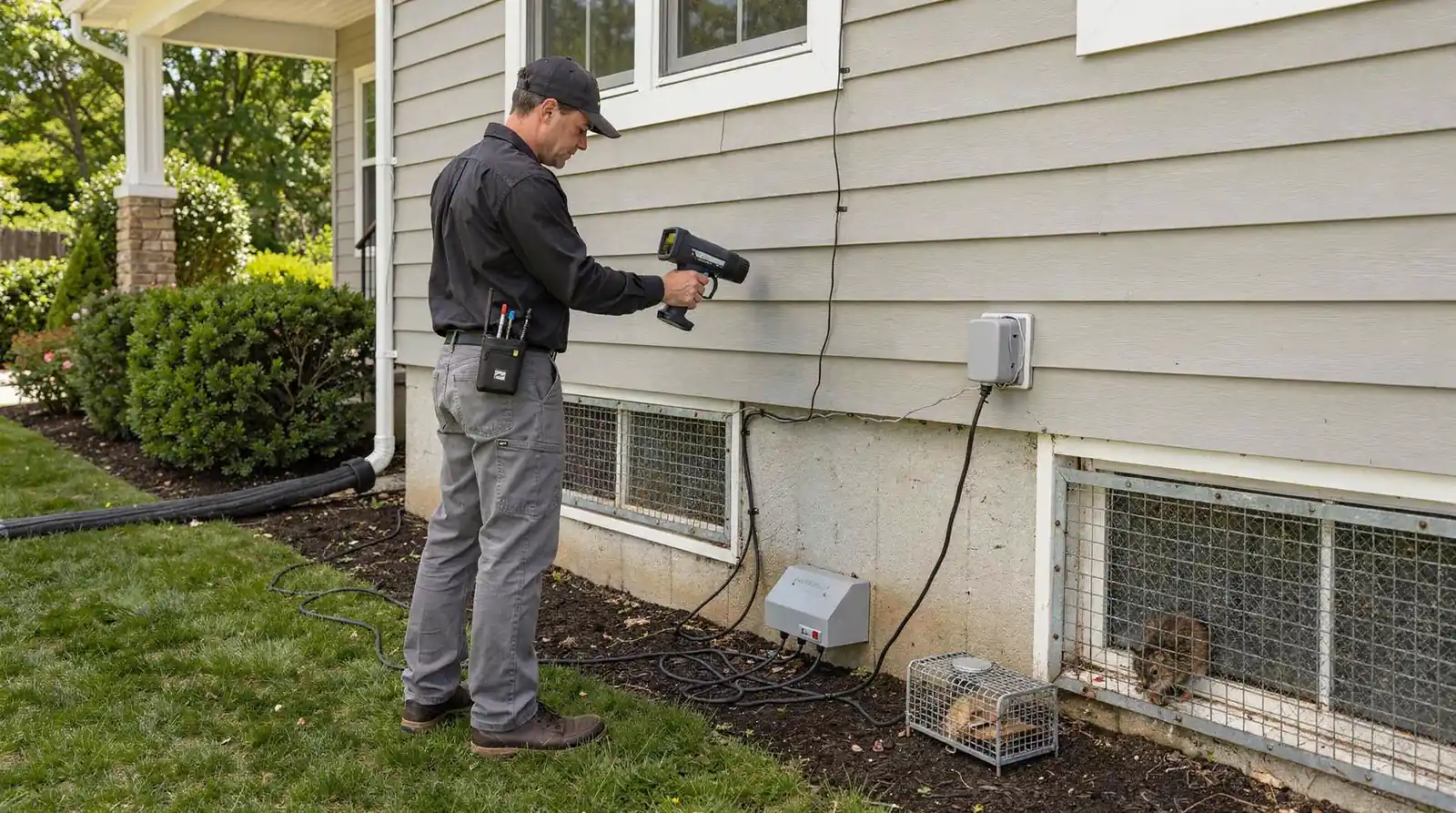
Regular inspection routines catch termite activity before structural damage sets in. West Hartford properties face consistent pressure from the Eastern subterranean termite, a species. Widespread across the region that encountering it is nearly guaranteed for property owners over time. Skipping monitoring does not remove the risk; it only delays discovery until damage is harder and costlier to reverse.
Homeowners searching for termite treatment near me often start the process only after spotting visible damage. Early detection depends on checking specific warning signs on a regular basis. Effective monitoring includes:
- Mud tubes along foundation walls, crawlspaces, or exterior brick
- Wood that sounds hollow when tapped
- Discarded wings near windowsills or doors
- Small holes or blistering in painted or varnished wood surfaces
- Soft or crumbling wood near ground contact
What time of year should West Hartford homeowners check for termites?
Spring inspections matter most, since swarming activity tends to increase as temperatures warm. Homeowners should not wait for swarms, though. Termites already established inside a structure keep feeding and causing damage regardless of season or visible warning signs.
Who provides termite monitoring across West Hartford?
Nukingstreet Pest & Wildlife Control, LLC operates from a base in Enfield, CT, giving the company a central location to respond to termite monitoring and inspection calls throughout West Hartford, CT and the surrounding communities. The company’s owner holds Associate Certified Entomologist credentials, reflecting the technical training behind every inspection. Inspections focus on identifying the root cause of activity rather than masking surface symptoms. Technicians treat the source directly and report exactly what they find, giving homeowners a clear, documented picture of their property’s condition instead of guesswork.
What’s the Best Time to Bait Termites in Fall?
Fall bait placement works best in late September through October, while West Hartford soil temperatures still support termite foraging above ground. Colonies remain active well past the visible swarms that most homeowners associate with termite season. That assumption creates a dangerous blind spot. Many West Hartford homeowners believe termite risk only exists when winged swarmers appear each spring. Colonies keep feeding and expanding through the fall months without any visible warning sign.
Waiting for a swarm before acting means months of undetected structural damage. Fall baiting closes that gap by targeting foragers while they’re still actively searching for food sources near West Hartford foundations, decks, and crawl spaces.
Does cooler fall weather change how termites behave?
Cooler nights slow termite movement but don’t stop it. Subterranean termites in West Hartford retreat deeper into soil as temperatures drop. They keep foraging in insulated areas near foundations, mulch beds, and woodpiles. This makes fall an ideal window for bait stations placed strategically around a property’s perimeter.
Nukingstreet Pest & Wildlife Control has served West Hartford and the surrounding Connecticut communities, including Hartford County, with a mechanical-first, eco-friendly approach to structural pest problems. Rather than defaulting to broad chemical barriers, technicians lead with exclusion work and targeted treatments matched to the pest and the property’s specific conditions.
Homeowners searching for termite treatment near me during fall months should prioritize providers who inspect before they treat. A proper fall inspection checks for:
- Mud tubes along foundation walls
- Moisture buildup near crawl spaces
- Wood-to-soil contact points around decks and porches
Addressing these conditions alongside baiting reduces the odds of a spring surprise.
FAQ
Do termites stop feeding when West Hartford temperatures drop in fall?
No, subterranean termite colonies retreat below the frost line but keep feeding underground year-round, regardless of cooler surface temperatures.
Why does termite activity seem to disappear during West Hartford autumns?
Swarming slows dramatically as temperatures drop, removing the visible warning signs. Worker termites keep tunneling and feeding on wood beneath the surface.
When should West Hartford homeowners expect visible termite swarms again?
Spring marks the primary swarm season. Warm afternoons following rain, paired with calm winds, trigger colonies to release winged reproductives.
Conclusion
In closing, termites do not stop in the fall—they move their activity underground, out of sight but never out of season. Connecticut’s subterranean colonies keep feeding, foraging, and building mud tubes through cooling temperatures, making autumn a critical window for baiting and inspection rather than a time to let vigilance lapse. We approach every property with this year-round biology in mind, prioritizing thorough inspections and targeted, mechanical-first solutions that protect your home’s structure long after the leaves have fallen.