Termite swarmers show straight, beaded antennae, equal-length wings, and thick waists. Flying ants have bent antennae, unequal wings, and pinched waists. Connecticut homeowners spot both each spring as colonies send out reproductive members. Nukingstreet Pest & Wildlife Control identifies the species and roots out the colony’s source in its service areas.
Key Takeaways
Termite swarmers have straight antennae and equal-length wings; flying ants have bent antennae and unequal wings.
Subterranean termite colonies in Connecticut swarm during spring months when flowers bloom and grass sprouts.
Termites cause structural wood damage; flying ants nest in wood but don’t consume it like termites do.
Nukingstreet Pest & Wildlife Control identifies swarmers through physical characteristics to determine if treatment is necessary.
Why Are CT Homes Seeing Swarms This Spring?
Warm afternoons, humid air, and a recent rain shower create the exact conditions that trigger insect swarms across Connecticut in springtime. Established colonies of subterranean termites in Connecticut, along with mature ant colonies, respond to these cues by releasing winged reproductives searching for new nesting sites. These swarmers aren’t random visitors. They’re colony members with one job: mate and establish a fresh colony somewhere nearby, sometimes inside a Simsbury basement or a West Hartford attic space.
For many homeowners, the sight is startling. A cloud of winged insects near a windowsill or foundation crack can look identical whether it’s ants or termites, and that uncertainty is exactly what makes spring swarms so unsettling for Connecticut property owners.
What triggers a termite or ant swarm in spring?
Temperature and moisture drive the timing. Once conditions turn warm and humid — particularly after rainfall — reproductive insects leave the nest en masse to mate and disperse. This pattern repeats every year across Windsor, Canton, Enfield, and neighboring towns whenever weather conditions align.
Does a swarm always mean termites?
Not necessarily. Both flying ant identification in CT and termite swarmer recognition require checking body shape, wings, and antennae before drawing conclusions. Seeing winged insects is only the first clue — distinguishing between termite swarmers vs flying ants in CT determines whether a homeowner faces a cosmetic nuisance or a structural threat worth urgent attention.
Key spring swarm triggers homeowners should recognize:
Rising outdoor and soil temperatures
Elevated humidity levels
Recent rainfall events
Mature, established colonies nearby
What Physical Traits Set Termites Apart From Ants?
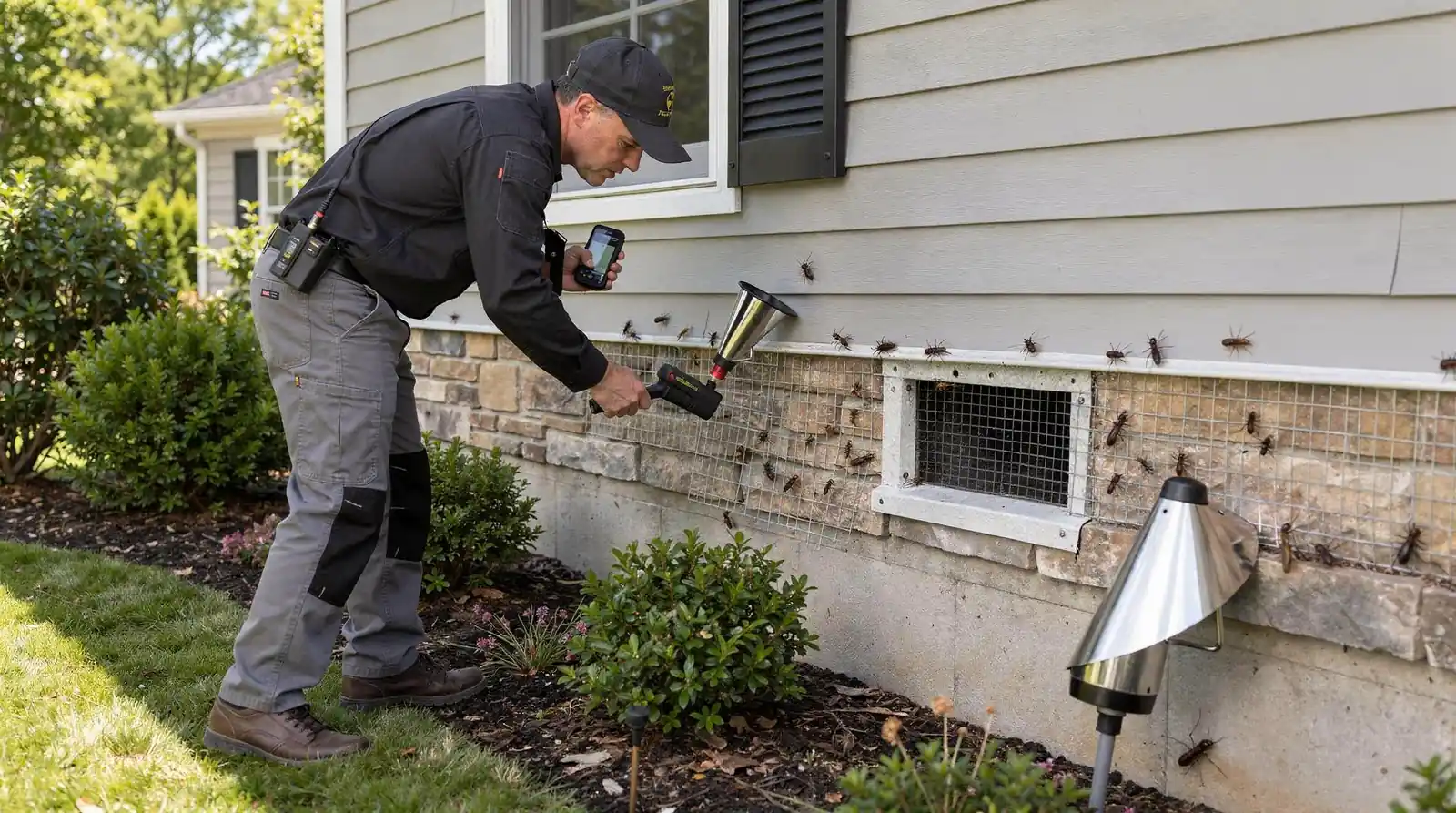
Body shape and wing structure separate a termite swarmer from a flying ant in seconds, once a Connecticut homeowner knows what to check. Termites carry straight antennae and wide, uniform bodies with no pinched waist between thorax and abdomen, and they typically show a dark black or brown color. That thick, cigar-shaped body is the single fastest clue during flying ant identification CT homeowners rely on each spring.
Wings tell the rest of the story. Swarmer termites display four wings, all matched in size and shape, extending well past the body. Flying ants show a very different pattern: their front wing pair runs noticeably larger than the rear pair, creating an uneven, tapered silhouette in flight. Combined with a distinctly pinched waist, that mismatched wing set marks an ant every time.
How can homeowners tell termite swarmers from flying ants in CT quickly?
Distinguishing termite swarmers vs flying ants CT residents encounter comes down to three checkpoints: antennae shape, waist shape, and wing proportion. A straight antenna paired with an unpinched, uniform body and four equal wings points to a termite. Bent antennae, a visible waist, and uneven wing pairs point to an ant instead.
Why does correct identification matter for Connecticut properties?
Misidentifying a termite swarm as harmless flying ants delays inspection, letting subterranean termites Connecticut colonies continue feeding undetected inside a structure and allowing hidden damage to accumulate further. Nukingstreet Pest & Wildlife Control serves properties in its defined areas with inspections built to catch that distinction early.
How Do CT Termite And Ant Swarms Differ?
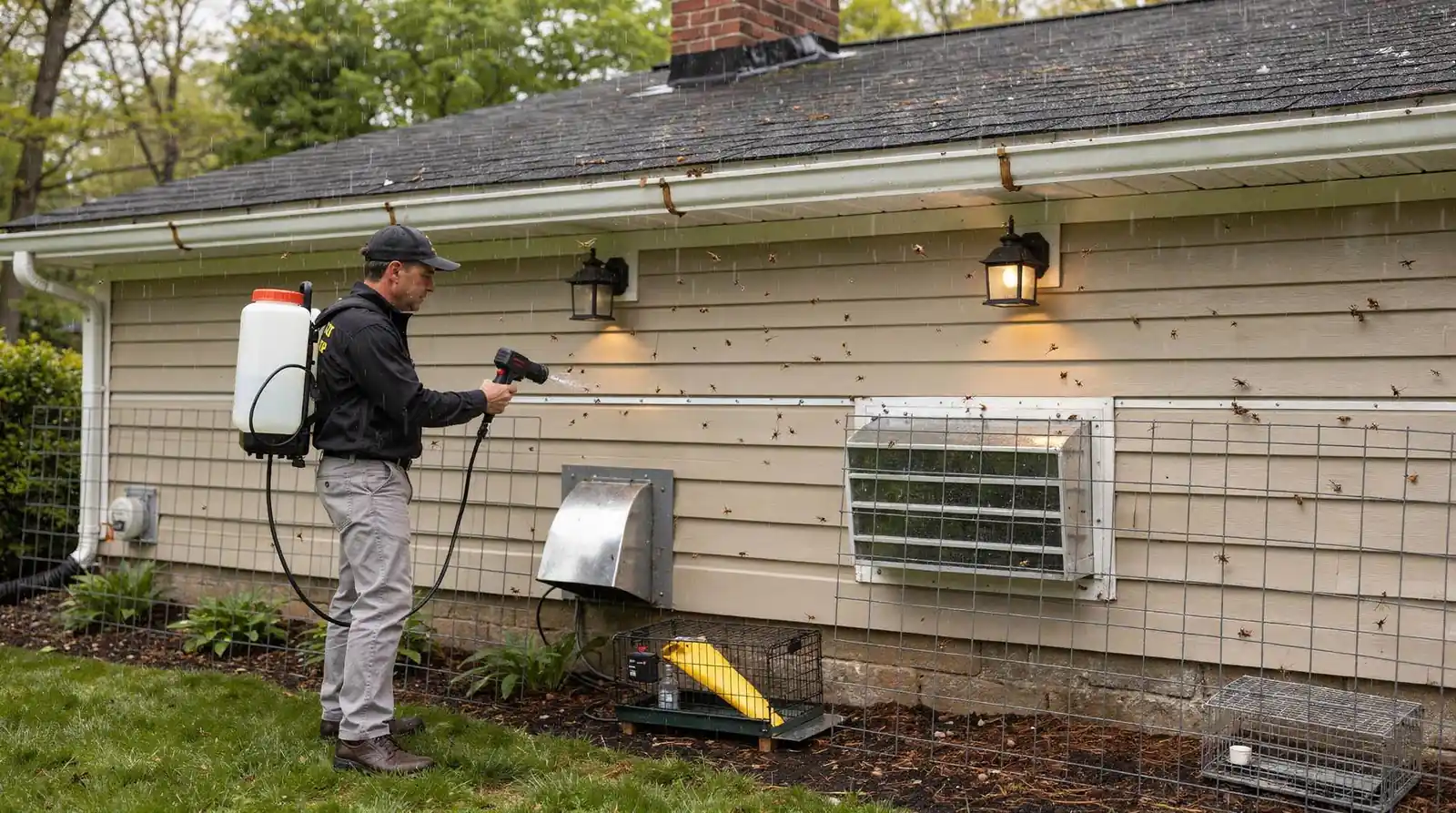
Warm spring air triggers both termite colonies and carpenter ant colonies across Connecticut to release winged reproductives at nearly the same time. This overlap explains why so many homeowners struggle with termite swarmers vs flying ants CT identification the moment insects appear near windows or light fixtures. Healthy subterranean termite colonies and ant colonies in Connecticut send out winged members each spring to establish new colonies. The timing similarity, not the insects themselves, causes most of the confusion.
Weather plays a direct role in when swarms appear. Swarms happen most often during warm, humid stretches, and a swarm frequently follows a spring rain. Because both pests favor the same conditions, a Connecticut property owner might see termite activity and ant activity within days of each other.
Why do termite and ant swarms happen at the same time of year?
Termite and ant colonies respond to nearly identical environmental triggers. Both wait for warming soil and rising humidity before releasing reproductives, which pushes their active periods into the same late-winter-through-early-summer window described in industry reporting on swarm behavior.
What does a termite swarm indoors actually mean?
Subterranean termite swarmers found inside a Connecticut home often signal a colony already traveling from soil into the structure through mud tubes. That indoor sighting points to an established subterranean termites Connecticut infestation, not a passing nuisance. Prompt inspection matters more than the swarm itself.
Correct flying ant identification CT homeowners can trust starts with noting where the swarm originated. Soil-connected tubes suggest termites, while scattered indoor sightings often point to ants nesting in moisture-damaged wood.
Are Subterranean Termites A Real CT Threat?
Yes — colonies of subterranean termites Connecticut homeowners rarely see live year-round in the soil beneath lawns and foundations, and every spring they send out winged reproductives to found new colonies, just as they do across the border in Massachusetts. That swarm is often the first visible sign that a colony has been active nearby for a long time.
The real danger isn’t the swarm itself — it’s what termites do before anyone notices them. Termites eat wood as their primary food source. Because they feed inside walls, floor joists, and framing, the damage stays hidden until it becomes extensive. A homeowner in Enfield or Simsbury could have an active colony working through structural lumber for seasons before spotting a single insect.
How do termites actually get into a house?
Subterranean termites don’t nest above ground the way carpenter ants sometimes do. Instead, they build mud tubes that carry them from soil, up foundation walls, and into structural wood. A travel pattern that makes early detection difficult without a trained eye.
What should a homeowner do if they spot a swarm?
Uncertainty about what’s swarming near a window or foundation is common, and it’s a reasonable reason to call for help. Comparing key traits helps narrow it down:
When identification isn’t certain, scheduling a professional inspection remains the safest next step before any damage spreads further.
What Should You Do After Spotting A Swarm?
A swarm inside a Connecticut home calls for careful observation before any action, not panic. Correct identification determines whether a homeowner faces a cosmetic nuisance or a structural threat. Termites and ants swarm around the same general time of year and get confused constantly. Grabbing a jar, capturing a few insects, and photographing them up close gives a technician real evidence to work with.
Should homeowners try to identify the swarm themselves?
Homeowners can look for basic clues, but certainty requires trained eyes. Pest control experts study antennae shape, waist thickness, and wing length specifically to separate flying ants from termite swarmers. Those details are easy to miss without practice. Guessing wrong delays treatment on an active subterranean termites connecticut infestation, which only gives colonies more time to spread through wood framing.
What steps should come next?
Collect several insects rather than relying on memory of the swarm.
Note the exact location — near a window, foundation crack, or woodpile.
Check for discarded wings, mud tubes, or soft wood nearby.
Schedule a professional inspection before assuming the problem resolved itself.
Connecticut properties benefit from working with technicians experienced in flying ant identification ct and termite biology alike. Nukingstreet Pest & Wildlife Control has served Simsbury, CT and surrounding communities, applying a mechanical-first, eco-friendly approach grounded in real credentials — owner Jeffrey Davis is an Associate Certified Entomologist (ACE), a distinction earned through the Entomological Society of America that grounds every inspection in real insect biology rather than guesswork. Rather than guessing, technicians identify the root cause of a swarm and report exactly what they find, giving homeowners a clear, honest basis for termite swarmers vs flying ants ct treatment decisions. Every recommendation is backed by hands-on inspection and professional credentials.
FAQ
How can homeowners tell termite swarmers apart from flying ants?
Termite swarmers have straight, beaded antennae, equal-length wings, and thick, cigar-shaped bodies without a pinched waist. Flying ants show bent antennae, unequal wing pairs, and a distinctly pinched waist between thorax and abdomen.
What causes termite and ant swarms to appear in Connecticut each spring?
Warm temperatures, elevated humidity, and recent rainfall trigger established colonies to release winged reproductives. These swarmers leave the nest to mate and establish new colonies nearby, sometimes inside CT homes.
Does spotting a swarm mean a home has termites?
Not necessarily. Both flying ants and termites swarm in spring. Homeowners must check body shape, wings, and antennae to determine whether the insects pose a structural threat or a cosmetic nuisance.
Conclusion
In closing, distinguishing termite swarmers from flying ants protects your Connecticut home from costly structural damage. The differences—body shape, wing proportions, and behavior—become clear once you know what to observe. If you spot winged insects during spring or fall, a professional inspection confirms the threat and determines the right response. Early identification and swift action are your strongest defenses against infestation.