
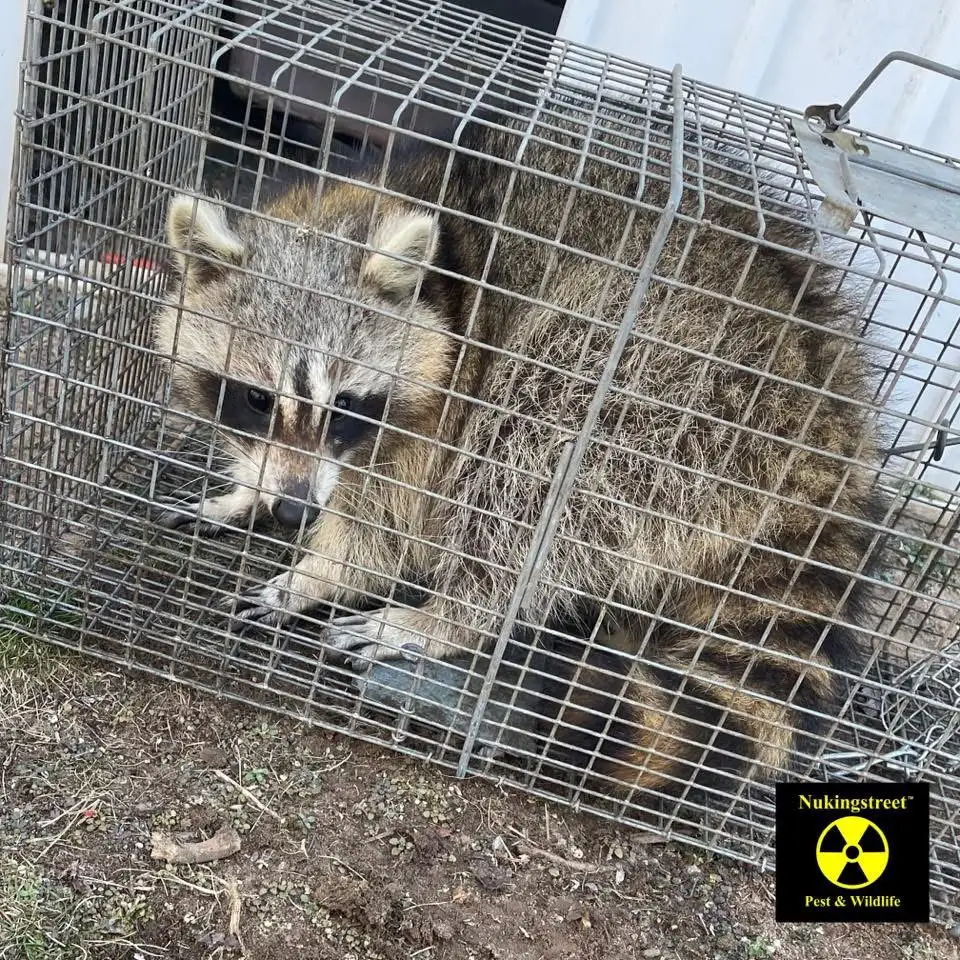
To get rid of animals in the attic, first work out which animal it is, then get it out with a one-way door or a trap after checking for young, and then seal every opening it could use to come back. That last step is the one most often skipped, and it is why the noise returns. In Northern Connecticut the usual attic animals are gray and flying squirrels, raccoons, bats and mice. Each leaves different signs, and bats are protected, so the plan depends on the animal and the season. Nukingstreet Pest & Wildlife Control works from 9 Moody Rd in Enfield and handles attic wildlife across Hartford County.
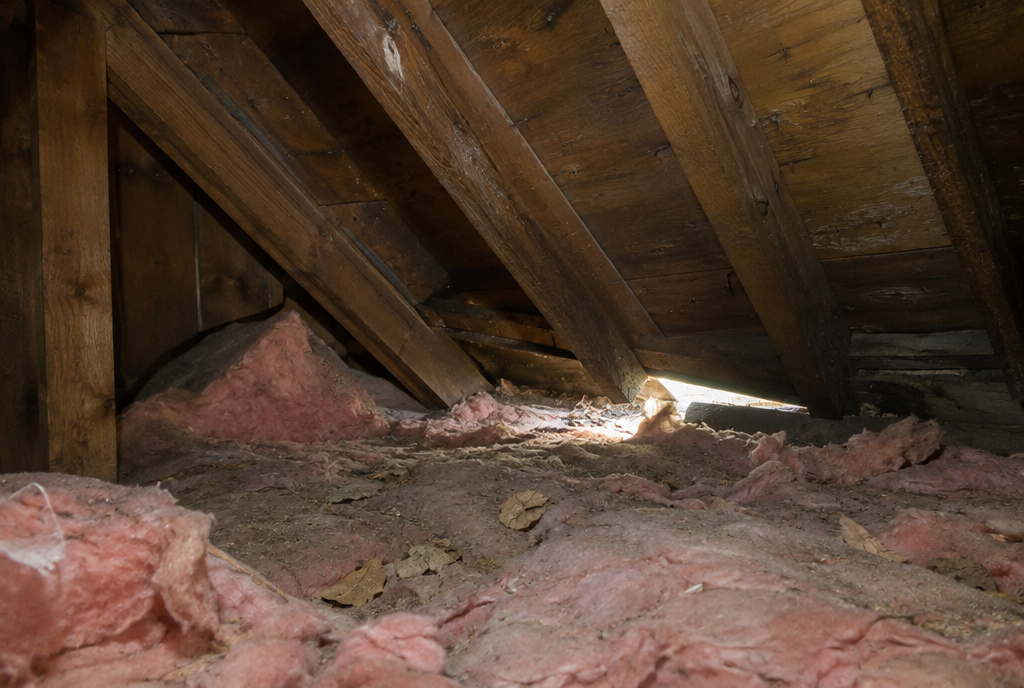
What’s in your attic? Telling squirrels, raccoons, bats and mice apart
The time of day you hear it is the best first clue. Then look for what the animal leaves behind.
- Gray squirrels: scratching, scurrying or rolling sounds in the early morning and late afternoon. Look for chewed holes at soffit corners, roof returns, gable vents or dormers, and shredded insulation. CT DEEP also notes that gnawing and pattering in early morning or daylight hours usually signals squirrels.
- Flying squirrels: noise late at night, often from several animals. They are nocturnal, so they are seldom seen.
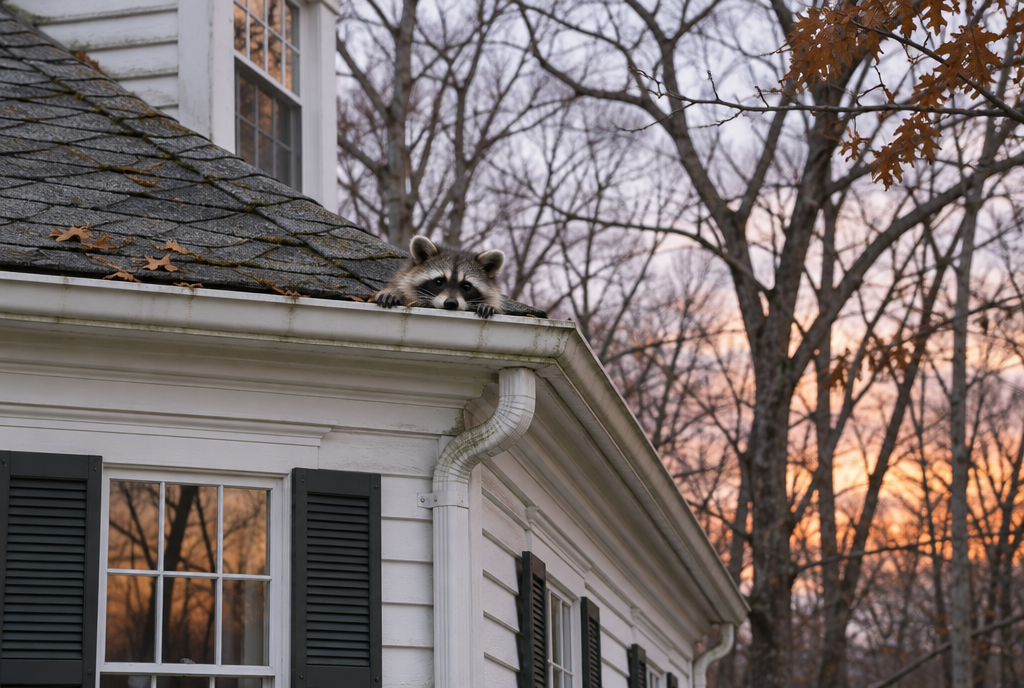
- Raccoons: heavy thumping or walking overhead at night, and chittering or crying in spring, which is often a mother with kits. Outside you may see torn soffits, bent roof vents, lifted shingles or a pulled-off chimney cap. Inside there is often a latrine, a pile of droppings in one spot.
- Bats: bats leaving the roofline, a vent or the chimney at dusk; scratching or squeaking at dusk and dawn; dark, greasy stains around small gaps; a strong ammonia smell. Bat droppings crumble into shiny dust.
- Mice: scratching in walls or ceilings, mostly at night, and droppings about the size of a grain of rice that stay hard. A mouse needs a gap only about a quarter inch wide.
The season changes the plan. Late winter and spring are when squirrels and raccoons raise young in attics. In summer, bat colonies raise pups that cannot fly yet, so a roost is not closed from roughly June to mid-August. Our Enfield wildlife removal page sets out what calls look like through the year.
A safety note: if an animal is acting sick or aggressive, or someone may have been bitten or scratched, call the police or animal control first. Raccoons are one of Connecticut’s main rabies carriers, so never approach or handle one. If a bat may have touched someone, or was found in a room where someone was asleep, contact your doctor or the CT Department of Public Health before it is released.
Why trapping alone doesn’t keep them out
Catching the animal feels like the finish line, but trapping an animal without closing its access route only invites the next one in. Raccoons are loyal to a good den: if the entry is not sealed, the same raccoon or the next one moves right back in. Squirrels keep chewing at the edges of an opening, so a small gap gets bigger every week.
Trapping at the wrong moment also causes harm. A mother raccoon removed while her kits are still in the attic leaves them to starve in the house, and a sealed opening can trap young squirrels inside. That is why we check for young before trapping or sealing anything.
Bats cannot be trapped at all. They are protected in Connecticut, so they are removed only by exclusion: one-way devices let them leave, then every gap is sealed. According to CT DEEP, eight of the nine bat species found in the state are on Connecticut’s list of endangered, threatened and special concern species.
Connecticut also has rules on who may trap nuisance wildlife and what can be done with an animal once it is caught. We remove wildlife as a licensed nuisance wildlife control operator. Rather than repeat the rules here, see our guide to Connecticut wildlife removal regulations.
Store-bought fixes do not solve it either. Mothballs, peppermint oil, lights and ultrasonic devices may bother bats for a night, but they do not move a colony that has used the same attic for years.
Sealing the way in so it doesn’t happen again
Sealing is the part that keeps the problem solved. A good inspection finds every opening, not just the obvious one. The usual entry points on Connecticut homes are:
- Corners where the fascia meets the soffit
- Roof returns and dormer junctions
- Gable vents with weak or rusted screens
- Ridge vents and gaps around chimneys, and chimneys with no cap
The order matters. A one-way door goes on the main entry, or the animals already inside are trapped. Once every animal is out, including any young, the openings are closed with steel mesh, hardware cloth, metal flashing and chimney caps sized to the animal, fitted to older trim without tearing it out. Squirrels cannot chew back through these materials. A bat needs a gap only about the width of a fingertip, which is why a house can have a colony and no obvious hole.
Outside, a few habits cut down on visits. Trim branches within about 8 to 10 feet of the roof, use trash cans with locking lids, and do not leave pet food outside overnight. These steps reduce visits; they will not remove an animal that is already living in the house. See our exclusion and sealing service for how we close a house up.
After the animal is out: cleanup and repairs
Attic animals leave a mess that should not be swept up casually:
- Raccoon latrines can hold roundworm eggs, which are tiny, long-lasting and dangerous if swallowed, especially for children and pets. CT DEEP lists raccoons as primary carriers of this roundworm.
- Bat guano soaks into insulation, stains drywall and can carry fungal spores that are harmful to breathe.
- Squirrels shred, flatten and soil insulation, and chewed wire insulation is a known fire risk. If squirrels have been in the attic for a while, have an electrician check the wiring after removal.
We remove raccoon latrines, bat guano and soiled insulation with protective procedures; see attic cleanup. Once the attic is clean, it may need new insulation: read attic insulation after wildlife removal. If squirrels chewed the roofline, see squirrel damage and entry-point repairs. If it was a raccoon family in spring, see humane raccoon eviction in denning season.
Hearing something in the attic? Call Nukingstreet at (866) 553-5538 to book an inspection.
FAQ
What animal is most likely in my attic?
In Northern Connecticut it is usually a squirrel, a raccoon, bats or mice. Daytime scratching points to gray squirrels. Heavy thumping at night points to a raccoon. Activity at dusk and dawn points to bats, and light scratching at night in walls or ceilings often means flying squirrels or mice.
Can I trap the animal myself?
Trapping alone leaves the opening in place, so another animal can move in. It can also leave young behind in the attic. Bats cannot be trapped at all, and Connecticut has rules on trapping and relocating wildlife; see our Connecticut wildlife removal regulations guide.
When should an attic not be sealed?
Not while young are inside. Raccoon kits are born mostly in April and May. Bat pups cannot fly for several weeks, so a bat roost is not closed from roughly June to mid-August. In late winter and spring we also check for a squirrel nest before sealing.
Do repellents or noise devices get rid of attic animals?
Not for bats: mothballs, peppermint oil, lights and ultrasonic devices may bother them for a night but do not move a colony. For raccoons, locking trash lids, trimmed branches and a chimney cap reduce visits, but they do not remove one that is already living in the house.
Will town animal control remove it?
In Enfield, Animal Control is part of the Enfield Police Department and handles stray and domestic animals and public-safety situations. Wild animals living in your attic, walls or chimney are the homeowner’s responsibility, and that is the work we do.