
By Nukingstreet Pest & Wildlife Control LLC Editorial Team · Updated 2026-09-03
Brown rats infiltrate multi-family basements through foundation gaps, seeking shelter, warmth, and food near dumpsters or storage areas. Nukingstreet Pest & Wildlife Control, founded and led by Associate Certified Entomologist Jeffrey Davis, uses mechanical-first exclusion methods to seal entry points. Eliminate infestations without relying on rodenticides that endanger pets and residents.
Key Takeaways
- Brown rats (Rattus norvegicus) infiltrate basements seeking quiet, dark spaces with food and nesting materials.
- Rats damage insulation, chew electrical wires, and contaminate areas with dangerous droppings in multi-family buildings.
- Urban brown rats carry multidrug-resistant bacteria including meticillin-resistant Staphylococcus species, posing health risks to residents.
- Nukingstreet Pest & Wildlife Control in Enfield, CT provides professional prevention and removal services for rat infestations.
Why Are Brown Rats Invading Basements Now?
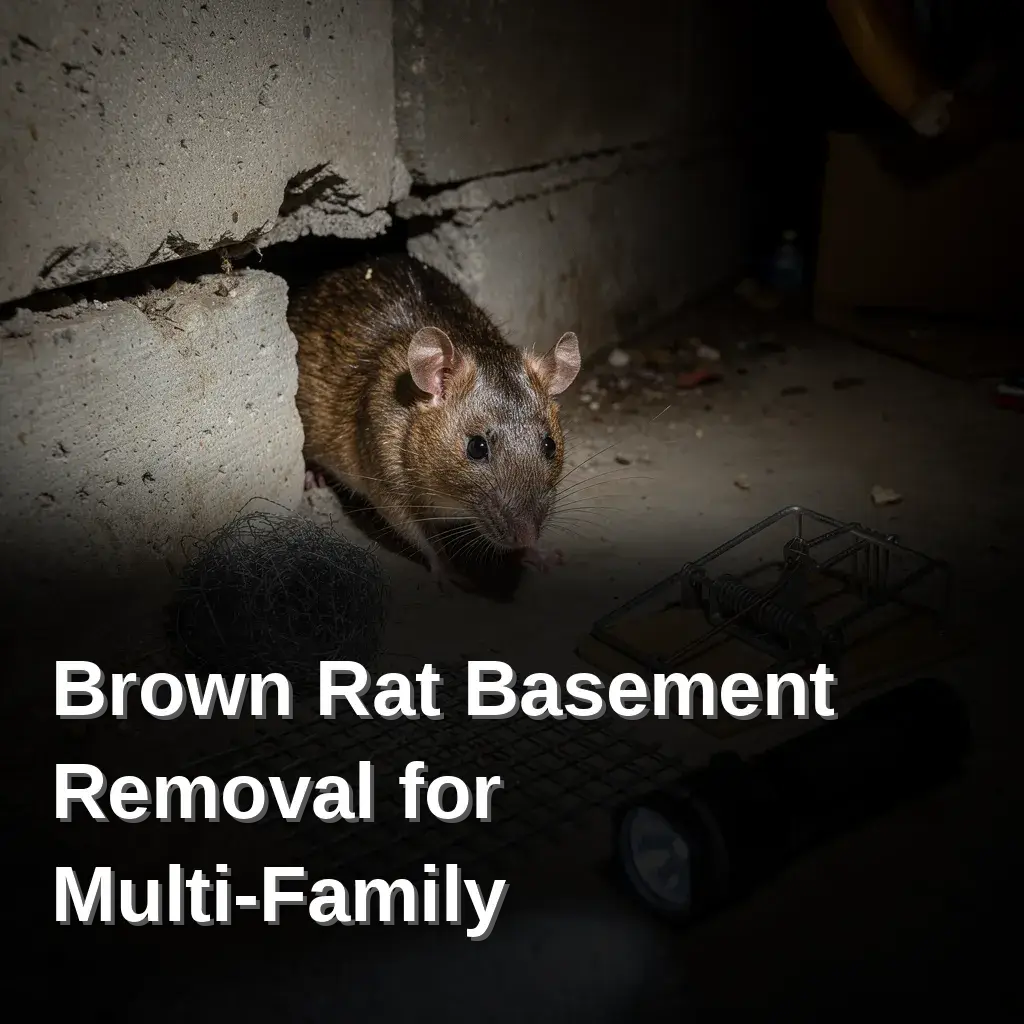
Brown rats seek out basements because these spaces deliver exactly what a rodent needs to survive: darkness, quiet, and easy access to food or nesting material. Property managers across Northern CT and Western MA see rat activity spike each fall as outdoor temperatures drop and rodents look for warm shelter close to a reliable food source. Multi-unit buildings, with their shared walls and interconnected utility lines, give rats far more entry points than a single-family home ever would.
Why do apartment buildings attract rats more than other properties?
Brown rats are commensal rodents, meaning they evolve alongside humans and prefer living inside buildings rather than in open fields or woodland. An apartment complex with dozens of units, shared trash areas, and aging foundation gaps offers exactly that setup. Urban rat control in these settings requires understanding building-wide patterns, not just treating one unit at a time.
Does chemical treatment alone stop a basement infestation?
No. Many pest companies respond to a rat sighting with a chemical spot-treatment and move on, never identifying the entry point that let the rodent inside. That approach treats a symptom, not the cause, and infestations return within weeks. Nukingstreet’s background began with multifamily properties, providing expertise in basement conditions and shared walls that allow rats to travel between units.
Effective brown rat basement removal starts with recognizing why the basement drew rats in the first place:
- Consistent darkness and low foot traffic
- Cluttered storage areas or old insulation suited for nesting
- Food debris from tenant units, dumpsters, or shared laundry rooms
- Foundation cracks and utility gaps offering direct access
Addressing these conditions, not just the visible rats, keeps a property protected long after the first treatment.
What Warning Signs Signal A Basement Infestation?
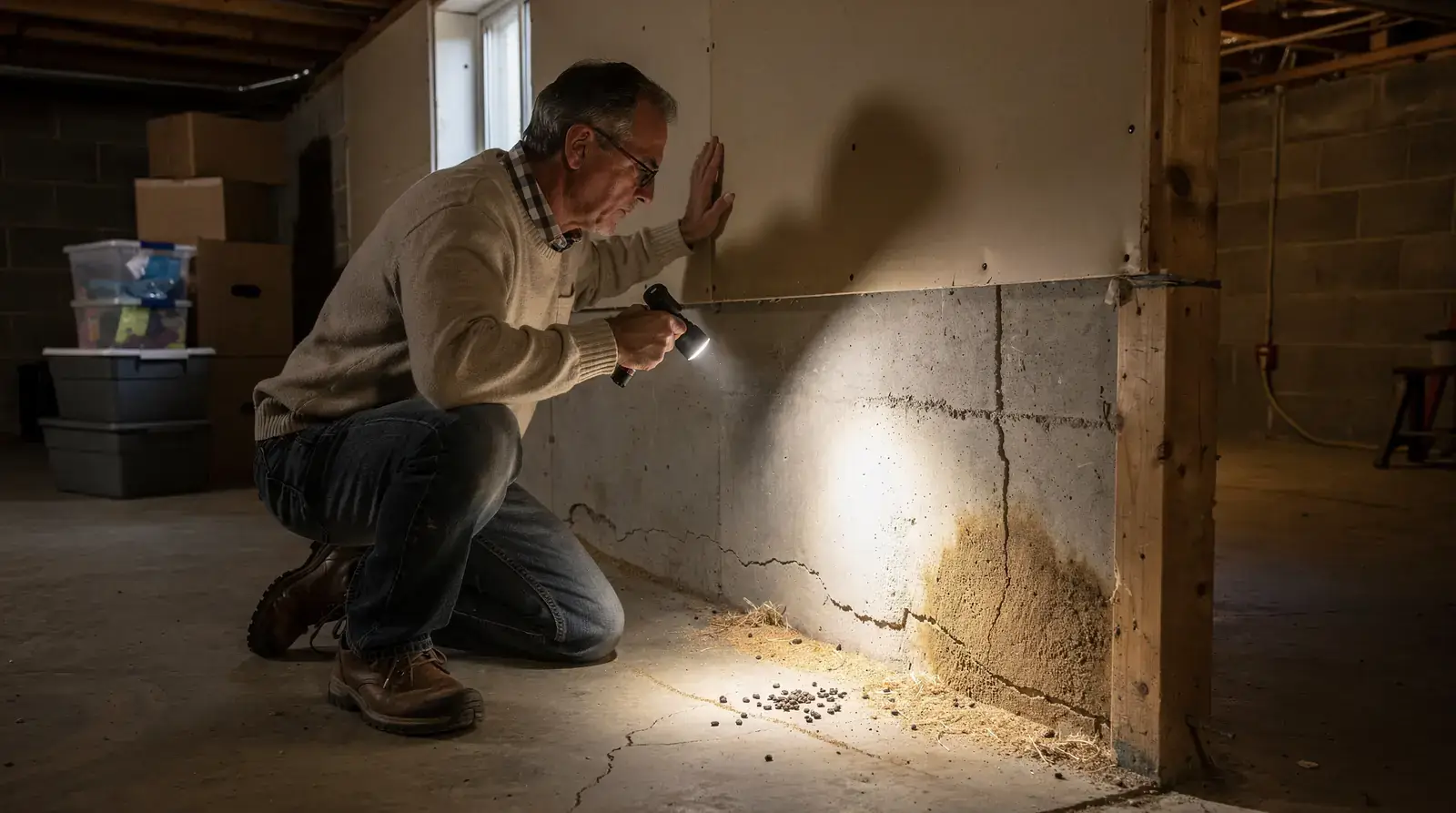
Foundation gaps and old vent openings top the list of structural entry points a brown rat basement removal effort must address. Property managers who ignore these access routes face repeat activity no matter how many traps go down. Rats exploit even small cracks, so a thorough perimeter check matters more than reactive treatment after tenants start complaining.
What draws rats to a basement in the first place?
Basements and storage rooms often hold stored food, discarded boxes, and soft insulation. Exactly the nesting material rats look for. Clutter gives rats cover to build nests undisturbed, while unsecured food sources keep them fed and reluctant to leave. Moisture compounds the problem: high humidity or an unaddressed leak creates the damp environment rats prefer as they move deeper into a building’s lower levels. Landlords managing multi-unit properties should treat any of these conditions as an early warning sign, not a minor maintenance item.
How does a professional inspection differ from a routine spray treatment?
A surface-level spray treats symptoms, not causes. Effective urban rat control starts with an inspection that traces activity back to its structural and environmental source — foundation gaps, moisture issues, clutter — rather than scheduling a follow-up visit before the underlying problem gets solved. This approach protects a property’s reputation and reduces liability tied to rodent-related complaints from residents.
Signs worth flagging during routine unit turnovers or maintenance walkthroughs include:
- Gnaw marks near foundation gaps or vent openings
- Nesting material tucked into insulation or storage clutter
- Musty odors linked to humidity or an active leak
- Droppings along basement walls or utility corridors
Catching these signals early keeps a small issue from becoming a building-wide infestation.
Why Do Urban Rat Infestations Endanger Tenant Health?
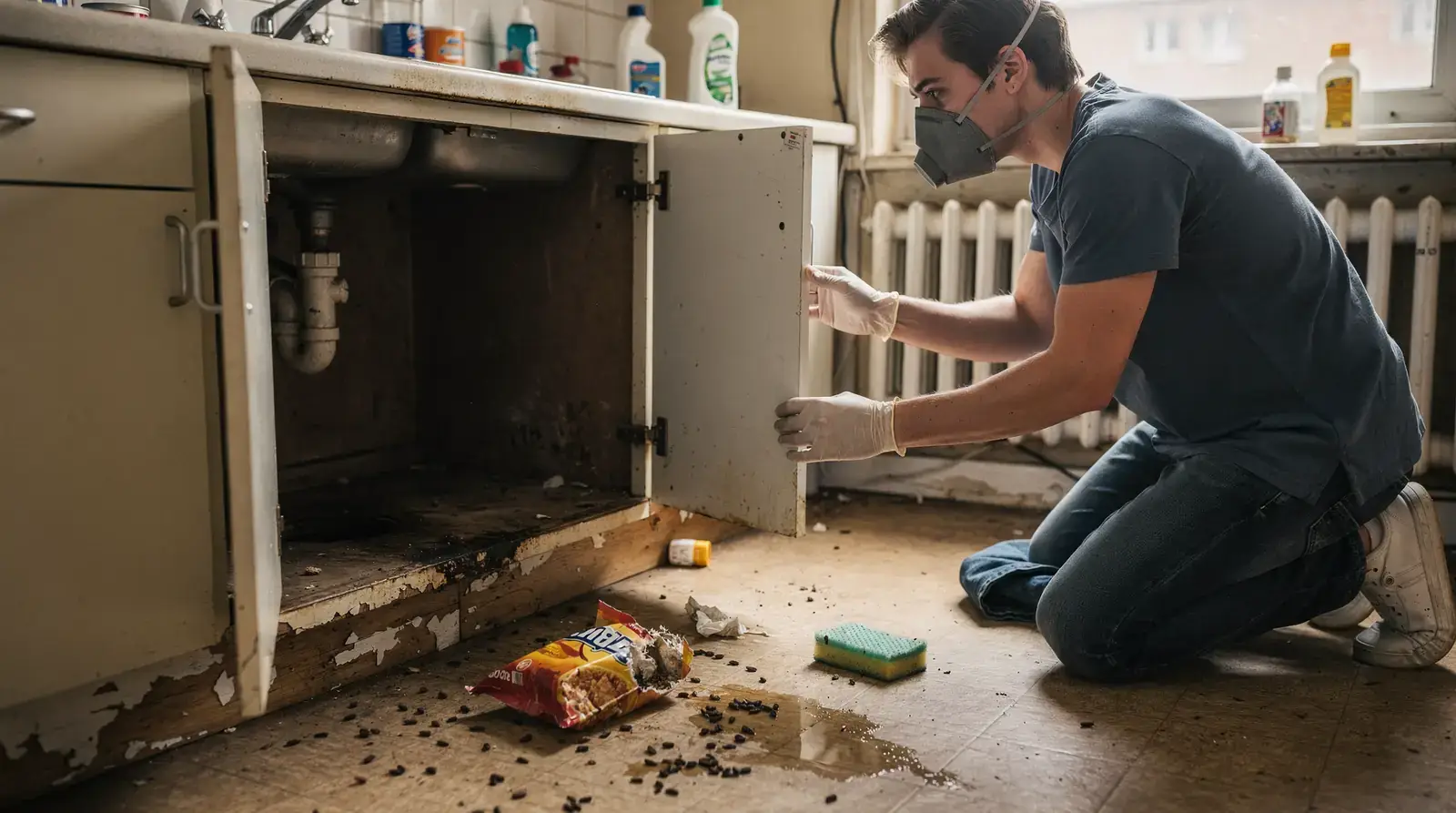
Rat infestations expose tenants to disease-causing bacteria and signal deeper building problems that property managers cannot afford to ignore. A visible rodent presence in a shared basement or hallway tells tenants — and prospective renters — that maintenance has fallen behind. That reputation damage costs owners far more than the infestation itself. A thriving rat population is not something any building wants associated with its name.
The health risk goes beyond appearances. Scientific research on urban brown rats has identified them as a possible carrier of multidrug-resistant Enterobacteriaceae, bacteria strains that resist standard antibiotic treatment. In dense apartment buildings. Basements, utility rooms, and trash areas connect multiple units, this bacterial risk spreads faster than in single-family homes.
Which Tenants Face the Highest Risk from Rat Exposure?
Households with young children, elderly residents, cancer survivors, and pet owners face elevated risk from rodent-borne bacteria and droppings. Immune systems already under stress handle bacterial exposure poorly. Urban rat control protocols that account for these vulnerable populations matter more in multi-family settings than in a single house, simply because more people share the same air, hallways, and basement systems.
Does Rat Control Affect More Than the Building Itself?
Effective rodent management extends past the property line. An environmentally responsible strategy protects pollinators, local wildlife, and the surrounding ecosystem, not just the structure. Property managers who choose brown rat basement removal methods that avoid indiscriminate chemical use protect tenants indoors while limiting harm to the neighborhood outside. That dual protection — tenant health and ecological responsibility — separates a well-managed property from one perpetually fighting the same infestation.
How Does Mechanical-First Control Stop Rat Reentry?
Mechanical-first control blocks the physical pathways rats use to reach a basement, closing gaps and sealing entry points instead of relying on chemicals as a first response. Property managers who skip this step often watch a poisoned rat population get replaced by a new one within weeks. The opening that let the first colony in is still there. Sealing that gap changes the outcome permanently.
Correct diagnosis comes before any treatment decision. Rodent behavior, feeding patterns, and travel routes differ enough that a generic response often fails, the same principle that governs proper species identification in cockroach work. Skipping that diagnostic step wastes time and money on treatments aimed at the wrong problem.
Urban rat control in multi-family buildings works best as a targeted response, not a blanket spray of whatever product is cheapest. Technicians focus effort on confirmed activity and the specific points where rats are entering, rather than treating an entire property uniformly.
A proactive program goes further, tracing infestations back to their root cause instead of just knocking down the rats visible today. That root-cause approach forms the backbone of effective brown rat basement removal across apartment complexes. Multi-unit properties in Northern CT and Western MA.
What Does a Root-Cause Basement Rat Inspection Involve?
A thorough inspection identifies the actual entry cause, treats it directly, and documents exactly what was found. Property managers receive a clear account of the conditions driving the infestation, not just a list of dead rats.
This mechanical-first, eco-friendly model has served Simsbury, CT and Hartford County properties, backed by professional credentials:
- Root-cause identification before treatment begins
- Exclusion work targeted to confirmed entry points
- Documented findings shared with the property manager
- Reduced reliance on broad-spectrum chemical applications
What Should Property Managers Do Next?
Property managers should schedule a professional inspection before rodent activity spreads across shared walls and utility chases. Rats depend entirely on people to meet their basic needs — food, water, and harborage — so a building that removes those resources removes the incentive for rats to stay. Waiting until tenants report scratching noises or droppings means the infestation has already taken hold, often across multiple units.
Credentialed oversight matters here. Nukingstreet’s rodent programs operate under the direction of owner Jeffrey Davis, who holds the Associate Certified Entomologist (ACE) designation. A credential that reflects tested knowledge of rodent biology, exclusion methods, and treatment protocols. That level of oversight gives multi-family programs a technical foundation rather than a guess-and-spray approach.
How fast can a pest control company respond to a multi-family property?
Response speed depends heavily on where a company is based. Nukingstreet operates out of Enfield, Connecticut, which positions the team to reach apartment complexes and multi-unit properties across Northern CT and Western MA without long delays between the initial call and the site visit.
Should a property choose a one-time treatment or an ongoing plan?
The right structure depends on the property’s history and layout. Some buildings need a single, thorough visit to address an active issue. Others benefit from a year-round plan built around recurring risk factors like basement moisture or exterior gaps.
Property managers evaluating options should look for:
- A licensed technician who inspects before treating
- A program scaled to the property’s unit count and layout
- Clear documentation of findings after each visit
- A plan that addresses both current activity and future prevention
FAQ
Why do brown rats target multi-family basements?
Basements offer darkness, quiet, and easy access to food and nesting material through foundation gaps and shared utility lines. Fall temperature drops push rats indoors seeking warm shelter near dumpsters and storage areas.
Is chemical treatment enough to remove a basement infestation?
No, chemical spot-treatments alone address symptoms without sealing entry points, so infestations return within weeks. Nukingstreet uses mechanical-first exclusion methods to seal gaps and eliminate infestations without relying on rodenticides.
What health risks do brown rats pose to residents?
Urban brown rats carry multidrug-resistant bacteria, including meticillin-resistant Staphylococcus species, and contaminate areas with dangerous droppings. They also damage insulation and chew electrical wires throughout multi-family buildings.
Conclusion
In closing, brown rat infiltration in multifamily basements demands swift, professional intervention to protect your tenants and property. A comprehensive approach—combining exclusion, sanitation, and targeted removal—eliminates current infestations while preventing future entry. The expertise of a certified pest control professional ensures your building remains rodent-free and your residents safe. Contact Nukingstreet Pest & Wildlife Control to secure your property today.