

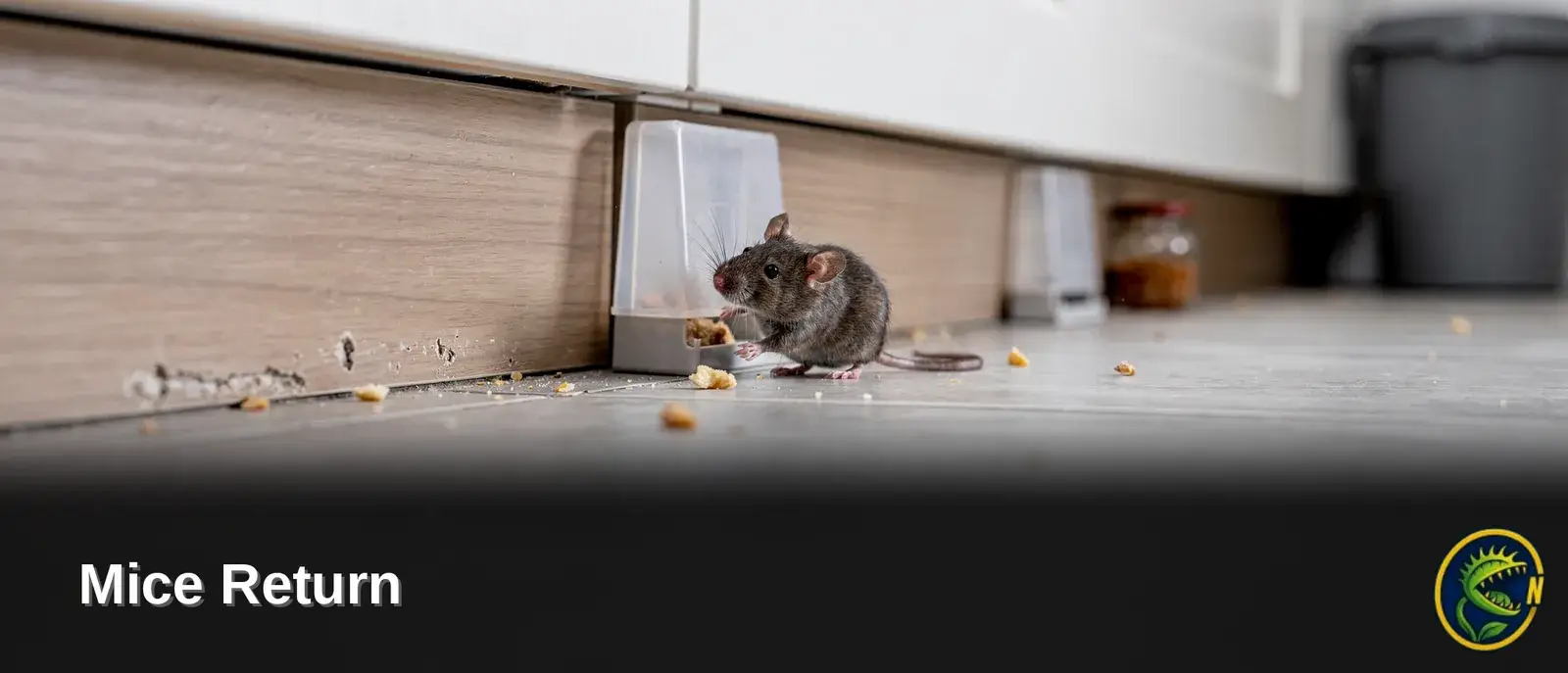
Bait boxes manage symptoms while gaps larger than ¼ inch keep admitting new mice, since houses offer constant warmth, food, and shelter. Structural exclusion — sealing entry points with steel or copper mesh — removes that access entirely. Nukingstreet applies this mechanical-first method, addressing root causes instead of cycling bait refills indefinitely.
Key Takeaways
- Mice enter structures through tiny openings and remain because they find warmth, food, and shelter inside.
- Structural exclusion prevents re-entry by sealing entry points, while bait boxes only eliminate existing rodent populations.
- Proper sanitation reduces food sources that attract mice, addressing the root cause of repeated infestations.
- Rodent infestations require quick response from pest management professionals to prevent significant structural damage and health risks.
Why Do Mice Keep Coming Back After Baiting?
Bait kills the mice already inside a home. It does nothing to stop new ones from entering through the same gaps. Many pest control companies respond to a sighting with traps or poison. Call the job finished, reacting to the symptom instead of preventing the cause. That approach explains why the same infestation resurfaces season after season, sometimes within weeks of a “successful” treatment. Homeowners end up trapped in a costly cycle: bait, wait, see another mouse, bait again.
A proactive strategy breaks that cycle by locating the root cause of entry rather than chasing individual rodents. Nukingstreet’s inspections pinpoint the exact gaps, vents, and foundation cracks driving recurring activity, then addresses the source directly instead of masking the symptom. [Structural rodent exclusion](https://nukingstreet.com/service/rodent-control/) — sealing every entry point a mouse can squeeze through — stops the problem at the wall, not at the bait tray.
Do Ultrasonic Repellers Actually Keep Mice Away?
Ultrasonic devices are widely marketed as an easy fix, but they generally fail to deter mice in real-world conditions. That failure rate explains a common frustration: homeowners buy a plug-in repeller, see initial quiet, then watch mice return within days. Reliable mouse proofing home strategies depend on physical barriers, not sound waves.
What Actually Stops Mice From Returning?
Permanent results require closing entry points, not just reducing the current population. Effective prevention typically includes:
- Sealing gaps larger than a quarter inch around utility lines, foundations, and vents
- Reinforcing weak points with rodent-resistant materials
- Pairing exclusion work with sanitation and habitat changes that remove food and shelter
Bait alone never addresses these structural gaps, which is why exclusion-first plans deliver lasting protection.
What Is Structural Rodent Exclusion Exactly?
Sealing a building against mice means closing every gap wider than roughly a quarter inch. The exact width a mouse needs to squeeze through a foundation crack, utility line, or door sweep. Structural rodent exclusion treats the building itself as the solution, not the bait box. Instead of scattering poison and hoping for the best, this approach physically removes the entry points that let rodents inside in the first place.
The method stands apart from generic pest treatments because it targets a specific property’s weak spots rather than applying a one-size-fits-all chemical fix. Nukingstreet builds exclusion plans around a home’s unique vulnerabilities. The gap under a garage door, a gnawed vent screen, a pipe chase never sealed during construction. No blanket spray gets applied just because it’s the cheapest option available.
Why does exclusion work better than baiting alone?
Bait stations manage a population already inside; exclusion prevents that population from forming. A property manager who relies only on baiting fights the same battle every season. New mice keep finding the same old openings.
Is exclusion safer for pets and the environment?
Yes — a mechanical-first approach favors sealing and screening over rodenticide use, protecting pollinators, wildlife, and the wider ecosystem around the home. Nukingstreet leads with this exclusion-and-targeted-treatment model for Simsbury-area properties instead of broad chemical applications.
Mouse proofing a home typically involves:
- Inspecting the foundation, roofline, and utility penetrations for gaps
- Fitting durable mesh or metal barriers over openings that can’t be permanently sealed
- Correcting sanitation and clutter issues that give mice cover near entry points
- Verifying seals hold up through seasonal shifts in the structure
Done correctly, exclusion turns a recurring infestation into a solved problem.
Do Bait Boxes Actually Stop Infestations?
Bait boxes alone rarely solve a recurring mouse problem. Used correctly, they play a useful role in a broader treatment plan, but they fall short as a standalone fix. Placement, monitoring, and follow-through determine whether a bait box delivers results or just becomes a stocked container that mice learn to ignore.
Where should bait stations be placed for best results?
Placement matters more than most homeowners realize. Mice travel along walls, behind appliances, and near entry points rather than out in open floor space, so a bait station dropped in the wrong spot goes untouched. Strategic placement along known travel paths increases contact rates significantly, while careless placement wastes both time and product. Getting this wrong is one of the most common reasons infestations persist despite months of baiting.
Why isn’t baiting enough on its own?
Bait attacks the symptom, not the cause. Mice keep entering through the same gaps in siding, foundations, and utility penetrations, so new populations replace whatever the bait removes. Genuine control requires closing those entry points through structural rodent exclusion — sealing gaps, screening vents, and reinforcing weak spots so mice can’t get inside in the first place.
Nukingstreet built its service standard around the need for effective exclusion methods in pest control. As a one-technician, one-truck operation, every visit confirms the underlying entry problem is fixed, not just that bait remains stocked. That mechanical-first approach, backed by real professional credentials across Enfield and Hartford County, treats bait as one tool among several rather than the whole plan. For homeowners tired of restocking bait every season, mouse proofing home construction remains the only path to lasting results.
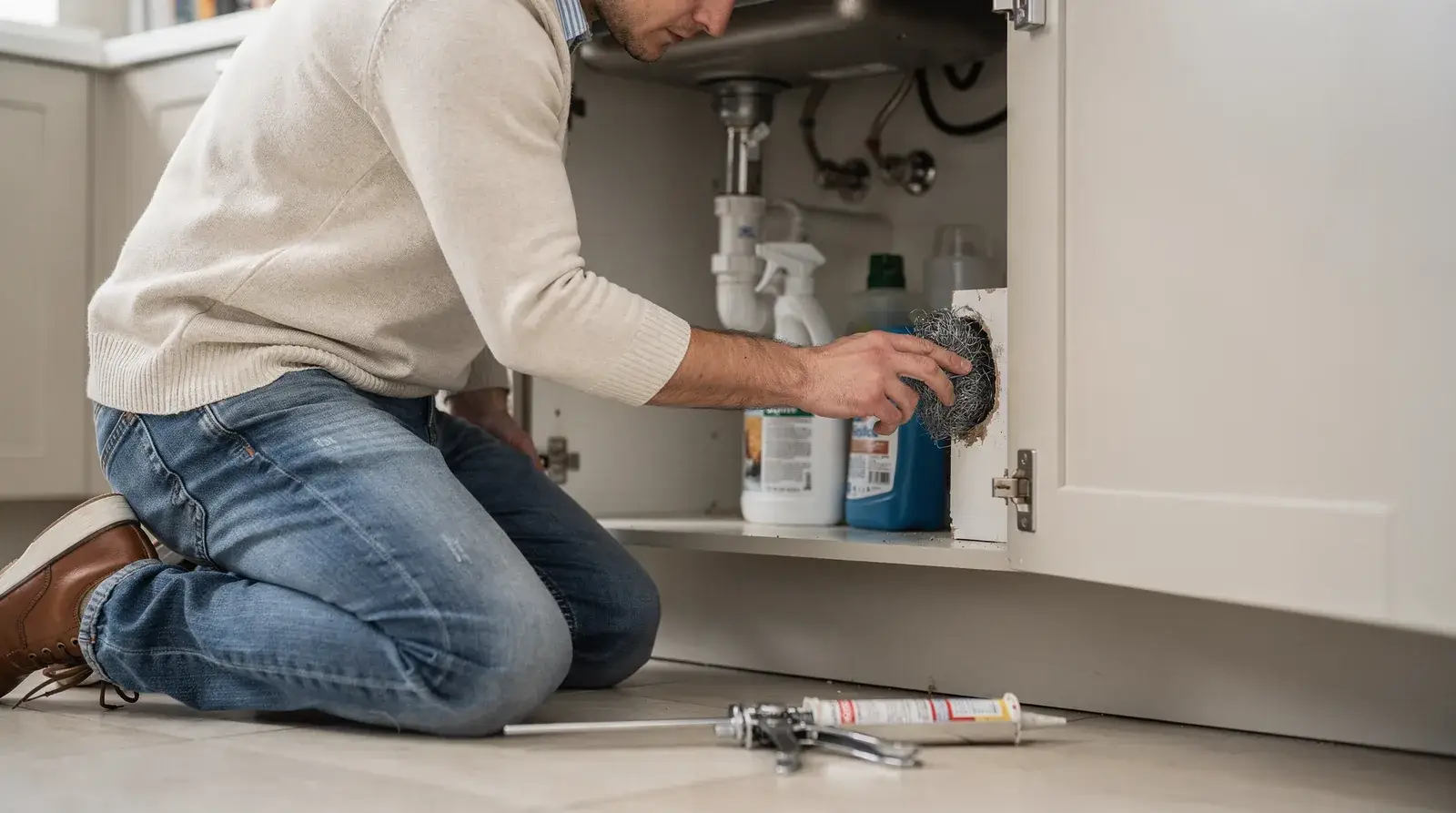
How Do You Start Mouse Proofing Your Home?
Sanitation comes first. Removing accessible food, water, and shelter strips mice of the exact conditions that draw them toward a structure in the first place. Homes with open food sources or damp corners stay attractive to rodents no matter how many traps get set.
Small habits make a measurable difference before any professional exclusion work begins. Mouse proofing a home starts with everyday choices, not just structural repairs.
What can homeowners do on their own before calling a professional?
Property owners hold real power here. A few changes to storage and cleanup routines close off the resources mice depend on:
- Store dry goods, pet food, and grains in rodent-proof containers rather than paper or cardboard packaging
- Dispose of garbage in sealed bins and empty them regularly, especially outdoor cans near entry points
- Clear clutter and woodpiles away from the foundation, since these spots offer shelter
- Fix leaking pipes or faucets that give mice a reliable water source
These steps reduce the appeal of a home long before a technician arrives. They stay important even after professional exclusion work is complete.
How does Nukingstreet approach mouse proofing differently?
Nukingstreet builds each plan around the specific conditions of the home rather than defaulting to a standard bait program. A garage with gaps near utility lines needs a different fix than an older foundation with settling cracks.
Structural rodent exclusion guides the strategy from the start. Exclusion and targeted repairs come before broad-spectrum chemical treatments, keeping the focus on sealing entry points rather than masking the problem with poison alone. That sequence protects families, pets, and the surrounding property while addressing why mice got inside to begin with.
Which Approach Delivers Lasting Mouse Control?
Permanent results come from sealing entry points, not from repeated bait cycles. Property owners face a genuine choice: lower-risk methods that close off a structure for good, or higher-risk chemical toxicants that require careful, ongoing handling. That choice affects household safety directly, especially where children, pets, or immune-compromised family members share the home. Structural rodent exclusion addresses the actual cause of an infestation — gaps, cracks, and unsealed utility lines — rather than the symptom.
Nukingstreet built its recommendations around families, cancer survivors, and pet owners who cannot tolerate unnecessary chemical exposure. Mechanical solutions take priority over toxic baits whenever exclusion can solve the problem outright. This preference isn’t a marketing angle; it traces back to the company’s founding conviction that pest control could be done better than the industry standard.
Is exclusion better than bait stations for long-term control?
Exclusion outperforms bait stations for lasting results because it removes the entry point mice depend on. Bait stations manage symptoms. They kill individual mice but leave the structural gaps that invited them in the first place unaddressed. A property sealed against entry stays protected long after any single bait cycle ends.
Consider the practical differences:
- Bait stations: ongoing product cost, chemical presence on-site, repeat visits required
- Structural exclusion: one-time sealing work, no chemical exposure indoors, durability tied to material quality
- Combined approach: exclusion first, targeted treatment only where structural fixes aren’t yet possible
Nukingstreet has grown from a single technician serving multifamily properties into a full-service company, based in Enfield, CT, applying this mechanical-first standard to every mouse proofing home project across the region it serves.
FAQ
Why do mice keep coming back after baiting?
Bait kills mice already inside but does nothing to stop new ones from entering through the same gaps. Structural exclusion seals those entry points, addressing the root cause instead of just reacting to sightings.
Do ultrasonic repellers keep mice away?
Ultrasonic devices generally fail to deter mice in real-world conditions despite heavy marketing. Homeowners often see initial quiet, then watch mice return within days, since sound waves don’t replace physical barriers.
What actually stops mice from returning for good?
Permanent results require sealing gaps larger than a quarter inch around utility lines, foundations, and vents with rodent-resistant materials. Pairing this exclusion work with sanitation and habitat changes removes food and shelter that attract mice.
Conclusion
In closing, mice return because gaps and cracks in your structure invite them back repeatedly—a cycle that bait boxes alone cannot break. Structural exclusion addresses the root cause by sealing entry points, while bait manages active populations. The most effective strategy combines both approaches: eliminate their access routes and control existing infestations simultaneously. This integrated method delivers lasting protection rather than temporary relief, giving you genuine peace of mind.