

Commercial Bed Bug Prevention for Hotels
By Nukingstreet Pest & Wildlife Control LLC Editorial Team · Updated 2026-08-07
Commercial bed bug prevention programs combine routine inspections, staff training, and mechanical-first treatment protocols to stop infestations before guests notice. Nukingstreet Pest & Wildlife Control, led by ACE-certified Jeffrey Davis, builds hospitality programs around AI-powered remote monitoring, avoiding SGARs and neonicotinoids to protect guests, staff. Brand reputation across Northern CT and Western MA properties.
Key Takeaways
- Single bed bug sightings spread faster than negative reviews, damaging hotel reputation and guest confidence immediately.
- Bed bug infestations result in costly furniture replacement, room shutdowns, and potential litigation for hospitality properties.
- Nukingstreet Pest & Wildlife Control in Enfield, CT provides detection through protection solutions for bed bug prevention.
- Commercial bed bug prevention programs eliminate infestations and protect hospitality businesses from revenue loss and brand damage.
What Do You Need Before Starting a Bed Bug Program?
Three elements matter most before any hotel launches a prevention plan: expert inspection knowledge, a proactive protocol, and a realistic view of the risk. Nukingstreet Pest & Wildlife Control, LLC, based in Enfield, CT, works with hospitality operators across Northern CT and Western MA to build that foundation before treatment ever begins.
Bed bug biology expertise sets the starting point. Owner Jeffrey Davis holds the Associate Certified Entomologist (ACE) designation, which gives hospitality clients access to expert-level knowledge of bed bug behavior and inspection technique. That credential matters because bed bug detection depends on recognizing subtle signs. Fecal spotting, shed skins, live insects in seams — long before guests notice anything.
Why does a hotel need a proactive plan instead of reacting to complaints?
A reactive approach only responds after a guest reports a problem, and by then reputational damage has already started. Commercial bed bug prevention requires identifying root causes. Staff traffic patterns, luggage storage areas, adjoining rooms — rather than treating each report as an isolated event.
How urgent is the bed bug risk for hospitality properties right now?
Infestations are climbing even at exclusive hotels and resorts, not just budget properties. A single pest sighting spreads through guest reviews and word of mouth faster than a bad service complaint. That speed puts bookings and revenue at risk.
Before building a hotel bed bug program, operations leaders should gather:
- Floor plans identifying high-turnover rooms and adjoining units
- Staff training records on early detection signs
- A designated point of contact for inspection scheduling
- Documented bed bug protocols hospitality teams can follow consistently across shifts
How Do You Inspect Rooms for Early Bed Bug Detection?
Effective room inspection follows a targeted sequence, focusing on the specific spots where bed bugs hide rather than treating an entire property as a blanket risk. A structured, risk-zone approach catches infestations before guests do, protecting both occupancy rates and brand reputation.
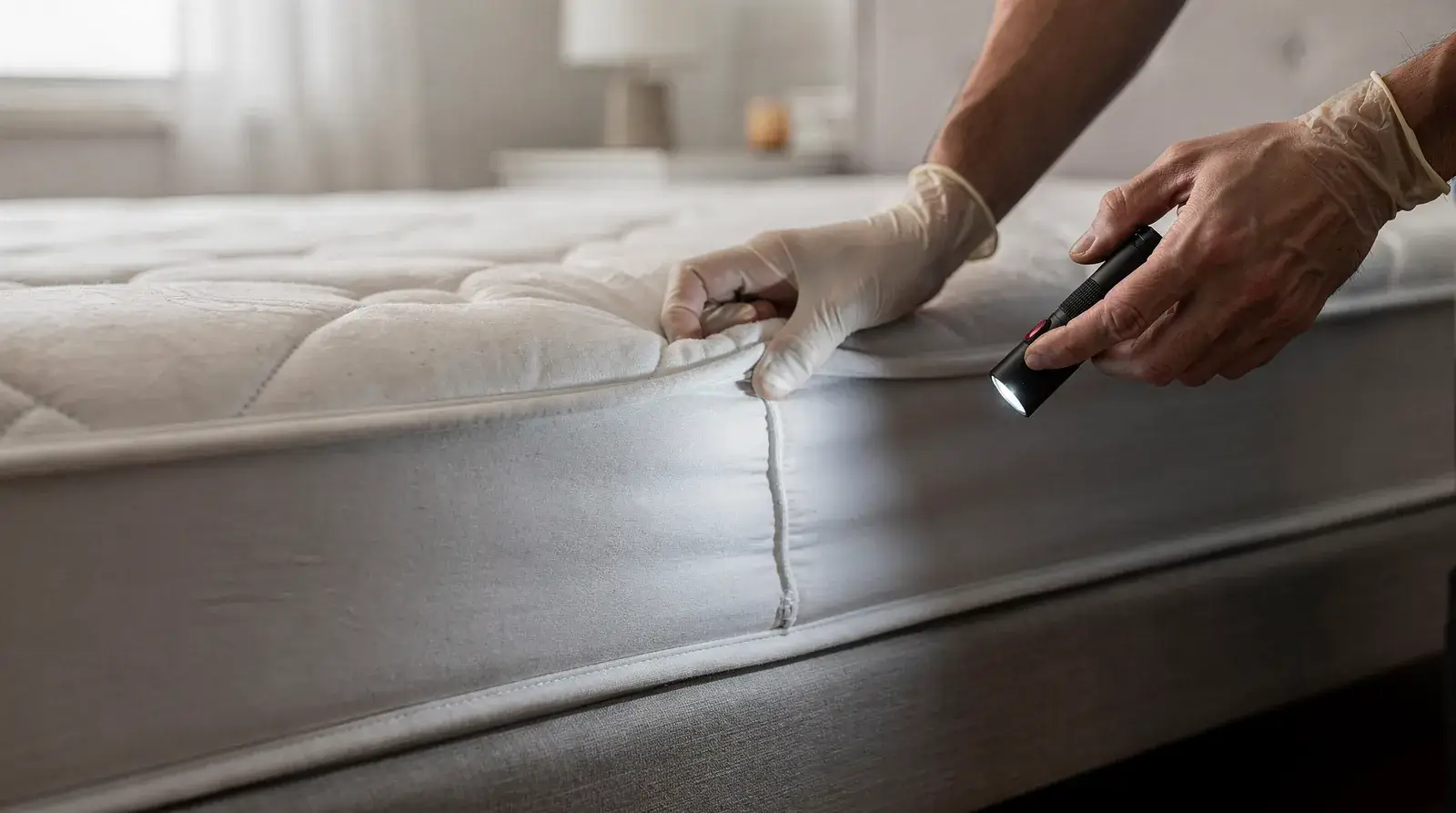
- Start at the headboard. Detach it from the wall and examine seams, screw holes, and joints for live bugs, shed skins, or dark fecal spotting.
- Check the mattress and box spring. Run a flashlight along piping, tags, and corner seams — these are the most common hiding spots in any room.
- Inspect luggage racks and stands. Because bed bugs frequently enter properties through guests’ bags and personal belongings, these fixtures deserve attention on every cleaning cycle, not just after a complaint.
- Examine upholstered furniture. Pull back cushions on chairs and sofas near the bed, where bugs often cluster close to a blood-meal source.
- Document findings immediately. A brief log with photos and dates builds a property-wide record for spotting patterns across rooms.
Which Areas Get Missed Most Often?
Curtain folds, electrical outlet plates, and baseboard gaps near the bed frame rank among the most overlooked spots. Housekeeping teams focused on cleanliness alone often skip these because they don’t affect visible tidiness.
Why Does Routine Inspection Matter So Much?
Roughly 80% of U.S. travelers say they worry about encountering bed bugs during a hotel stay, making inspection a guest-confidence issue, not just a maintenance task. Commercial bed bug prevention built on routine checks catches problems while they’re still small, avoiding the reactive scramble that happens once an infestation becomes visible to guests.
How Do You Train Staff to Spot Bed Bugs?
Effective staff training follows a structured sequence, moving from awareness to inspection to reporting. Housekeeping and front desk teams form the first line of defense against infestations. Their training must be deliberate and repeated.
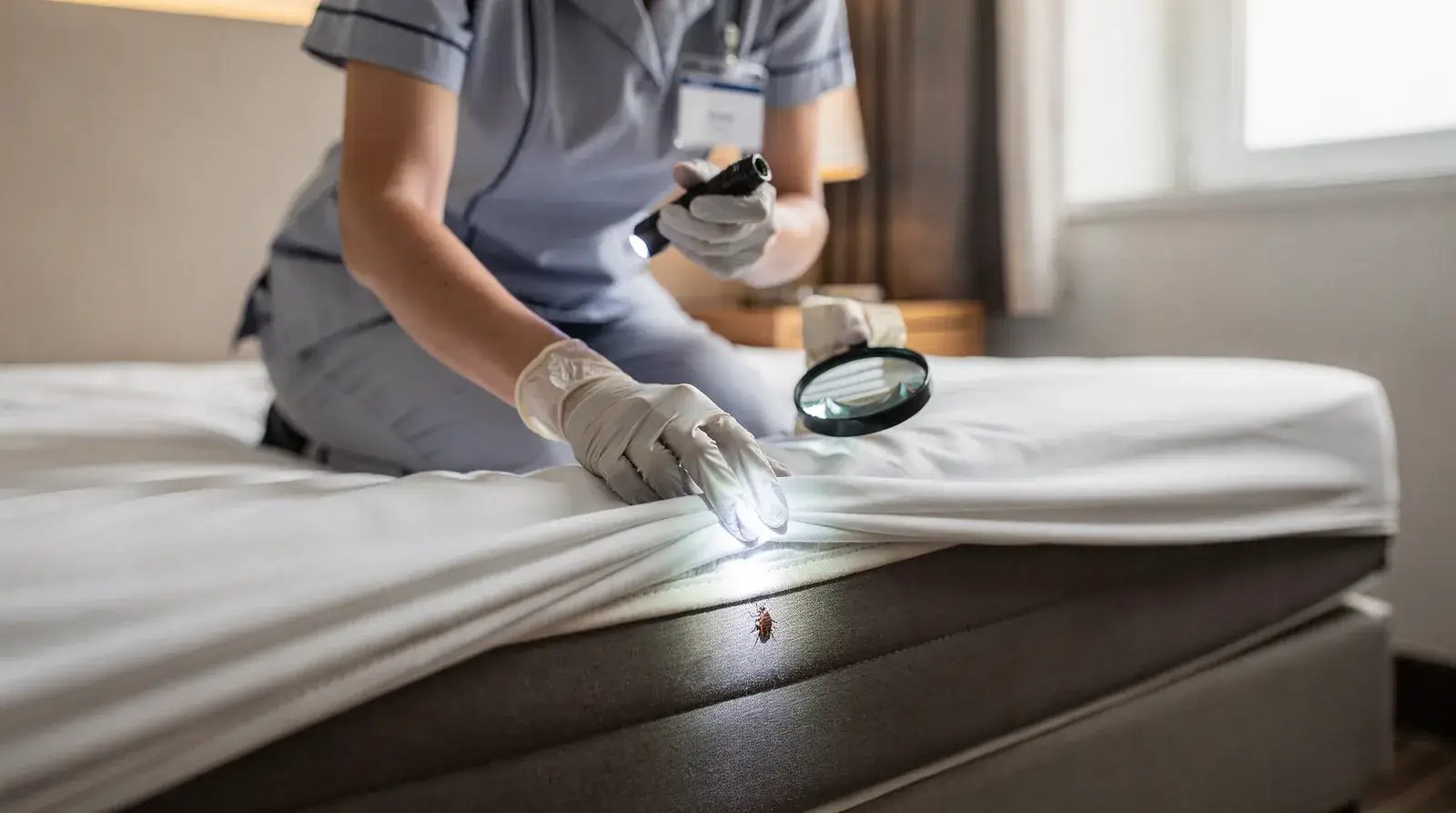
- Teach visual identification first. Staff should learn to recognize live bugs, shed skins, and small dark fecal spots on mattress seams and headboards before moving to more advanced inspection skills.
- Build health-conscious awareness into every session. Training should address the concerns of guests who are cancer survivors, chemically sensitive, or traveling with pets, so staff understand why aggressive chemical spraying isn’t the default response.
- Reinforce environmentally responsible habits. Routine cleaning protocols should protect pollinators and avoid unnecessary chemical exposure, keeping treatment methods proportionate to the actual problem.
- Establish a clear reporting chain. Staff need a simple, fast way to flag suspected activity so a hotel bed bug program can respond before pests spread to adjoining rooms.
- Repeat training on a recurring schedule. One session isn’t enough — ongoing education keeps a program proactive rather than reactive, catching early signs instead of full-blown infestations.
Which staff roles need bed bug training?
Housekeeping, maintenance, and front desk personnel all need training, since each interacts with rooms and guests differently. Housekeepers spot physical evidence during cleaning, while front desk staff often hear guest complaints first.
Why does staff training matter for hospitality operations?
Working with commercial pest professionals strengthens a property’s ability to satisfy guests and encourage repeat bookings. Well-trained staff act as an early warning system, supporting broader commercial bed bug prevention efforts and reinforcing sound bed bug protocols hospitality teams can trust.
What Should You Do When Bed Bugs Are Found?
A confirmed bed bug sighting requires an immediate, structured response, not a guessing game. Left unaddressed, an infestation can damage brand reputation, force costly furniture replacement, and even lead to litigation. Hotel operations teams that follow a clear sequence limit exposure and protect guest trust before word spreads.
- Isolate the room. Take the affected unit out of rotation immediately and flag it in the property management system.
- Document the finding. Photograph evidence and log the room number, date, and staff member who reported it.
- Contact a licensed pest control provider. Avoid do-it-yourself sprays; these often scatter bugs into neighboring rooms instead of eliminating them.
- Request a targeted inspection, not a blanket treatment. Effective bed bug protocols hospitality teams rely on start with inspecting adjoining rooms, since bed bugs travel through wall voids and shared plumbing.
- Schedule treatment based on inspection findings, using methods matched to the infestation’s severity rather than the cheapest available spray.
- Reintroduce the room only after clearance, confirmed by a follow-up inspection.
Should Staff Try to Treat the Room Themselves?
No. Untrained treatment attempts often push bed bugs deeper into furniture or adjacent rooms, prolonging the problem. Many companies in the industry still lead with chemicals. React only after guests complain, an approach that erodes confidence once an incident becomes public. A structured, professional response protects both guests and staff.
Why Does the Response Method Matter So Much?
Because guest trust is fragile once a pest issue surfaces. Nukingstreet grew from a one-technician, one-truck operation into a full-service pest and wildlife control company on the conviction that this industry could be done better. That means building commercial bed bug prevention into a documented hotel bed bug program, with clear escalation steps staff can follow under pressure, rather than reacting room by room after each new complaint.
What Common Mistakes Weaken Hotel Bed Bug Programs?
Weak bed bug programs usually fail for the same four reasons: reactive treatment, guest indifference, harsh chemical shortcuts, and disregard for vulnerable guests. Each mistake compounds the next, turning a manageable pest issue into a reputation crisis. Hotel operations teams that recognize these patterns early protect both occupancy and guest trust.
Reacting to a bed bug complaint instead of preventing one is the most common failure point. Properties that treat every guest interaction like a transaction — rather than investigating the root cause of an infestation. Erode the confidence a strong hotel bed bug program depends on. Root-cause inspection, not damage control, separates properties that recover quickly from those that lose repeat bookings.
Why does ignoring guest concern hurt occupancy?
Roughly 80% of U.S. travelers say bed bugs worry them before they book a room. Facility managers who treat that concern as low priority risk cancellations, negative reviews, and lasting brand damage.
Two more mistakes undermine commercial bed bug prevention efforts on the treatment side itself:
- Skipping environmentally responsible protocols. Aggressive chemical-only treatments risk harming pollinators and wildlife on hotel grounds, especially near landscaped courtyards or pool areas.
- Neglecting health-conscious methods. Properties that ignore families, cancer survivors, and pet owners among their guests expose them to unnecessary chemical risk during treatment.
Do bed bug protocols need to account for guest health?
Yes. Sound bed bug protocols hospitality teams can trust prioritize methods safe for sensitive guests, not just fast results. A program built on prevention, guest transparency, and health-conscious treatment holds up far better than one built on reaction alone.
Protecting your hospitality business from bed bugs requires a comprehensive, proactive approach that combines professional expertise with ongoing vigilance. By implementing a structured prevention program tailored to your property’s unique vulnerabilities, you establish the foundation for guest confidence and operational peace of mind. The investment in professional bed bug prevention pays dividends through reputation protection. Reduced liability, ensuring your hospitality business remains a welcoming destination free from these persistent pests.
FAQ
What should hotels prepare before starting a bed bug prevention program?
Hotels need floor plans identifying high-turnover rooms, staff training records on early detection, a designated inspection contact, and documented protocols teams follow consistently across shifts.
Why do hotels need a proactive bed bug plan instead of reacting to complaints?
Reactive approaches only respond after guests report problems, when reputational damage has already started. Prevention requires identifying root causes like staff traffic patterns and luggage storage areas.
Where do inspectors check first for early bed bug detection?
Inspectors start at the headboard, detaching it to examine seams, screw holes, and joints for live bugs, shed skins, or fecal spotting, then check mattress and box spring seams.
Facts
- Nukingstreet Pest & Wildlife Control, LLC is located in Enfield, CT.