

Commercial Pest Control Enfield: Best Practices
By Nukingstreet Pest & Wildlife Control LLC Editorial Team · Updated 2026-08-07
Restaurants, retail stores, and offices require integrated pest management built on record-keeping, communication. Partnership between operator and client, following the 2019 Pest Management Guidelines for Retail Food Handling Facilities and Restaurants. Nukingstreet Pest & Wildlife Control, LLC, based in Enfield, CT, delivers these tailored commercial programs.
Commercial pest management programs for restaurants, retail, and offices combine inspection, exclusion, and monitoring under a mechanical-first, chemical-last protocol. Nukingstreet Pest & Wildlife Control, led by ACE-certified owner Jeffrey Davis, avoids SGARs and neonicotinoids, using AI-powered remote monitoring to deliver documented, regulation-compliant protection for Northern CT and Western MA businesses.
Key Takeaways
- The 2019 Pest Management Guidelines provide integrated pest control standards for retail food service industry professionals.
- Pests enter businesses through merchandise deliveries, structural gaps, and adjacent storefronts, damaging reputation and property.
- Record-keeping and communication form major components of implementing effective integrated pest management programs.
- Commercial pest control protects businesses across restaurants, retail, and offices from property damage and client loss.
Why Do Commercial Properties Need Ongoing Pest Control?
A single treatment cannot stop a pest population from rebuilding. Commercial pest problems demand a continuous program, not a one-time visit. Breeding cycles, deliveries, and structural gaps keep reintroducing risk week after week. Left unaddressed, infestations damage a business’s reputation and make it harder to attract clients and quality employees — a cost far steeper than routine prevention.
For restaurants, retail stores, and offices across Northern Connecticut, commercial pest control Enfield businesses trust starts with regular inspection and monitoring rather than emergency response. Waiting for visible signs of activity almost always means the damage. To inventory, equipment, or brand perception — has already begun.
What happens if a business skips ongoing pest service?
Skipping service allows small issues to compound quickly. A few rodents or roaches can multiply into a full infestation within weeks, risking health code violations, stock loss, and negative reviews. Consistent scheduling catches these problems while they’re still manageable and inexpensive to resolve.
Does every commercial property face the same pest risks?
Risk levels vary by industry, but no property is immune. Restaurants face constant pressure from food odors and grease buildup, which is why a structured restaurant pest control program matters as much as kitchen hygiene itself. Office buildings deal with different challenges — paper storage, break rooms, and HVAC systems. Making dedicated office pest management just as essential for a professional environment.
Nukingstreet Pest & Wildlife Control, LLC operates out of Enfield, CT, giving technicians direct familiarity with the seasonal pest pressures affecting Northern CT and Western MA businesses. That local grounding, paired with a reputation as a premier eco-friendly provider, shapes prevention plans built around each property’s specific vulnerabilities rather than generic treatment schedules.
What Should A Restaurant Pest Control Program Include?
A complete restaurant pest control program rests on three connected pillars: inspection, documentation, and communication. Record-keeping and ongoing communication between the pest control provider. The restaurant operator form the backbone of any true integrated pest management approach for food-service environments. Without consistent documentation, small problems go unnoticed until they threaten a health inspection score or a customer’s dining experience.
Restaurants sit alongside offices, retail spaces, schools, and multi-family properties as a core service line handled through [commercial pest control](https://nukingstreet.com/services) in Enfield. That range of experience matters because food-service accounts carry unique risks. Perishable inventory, high foot traffic, and strict sanitation codes all raise the stakes when pests go undetected.
Why does the provider-restaurant relationship matter?
Strong results depend on a genuine working partnership, not a one-way service call. Guidance built for the retail food industry treats the pest control operator. The restaurant client as collaborators, each responsible for spotting issues early and reporting them promptly. Kitchen staff who flag a grease trap issue or a gap under a delivery door give technicians the information needed to act before pests establish themselves.
What treatment approach protects a restaurant’s reputation?
Chemical-first tactics create more risk than they solve near food prep and dining areas. Treatments avoid leading with chemical applications, relying instead on mechanical exclusion, sanitation correction, and targeted monitoring first.
- Sealing entry points and correcting sanitation gaps before pests establish
- Avoiding second-generation anticoagulant rodenticides near dining and prep spaces
- Steering clear of neonicotinoid products that endanger pollinators and wildlife nearby
That mechanical-first standard keeps kitchens compliant, guests safe, and a restaurant’s brand protected from a single bad review.
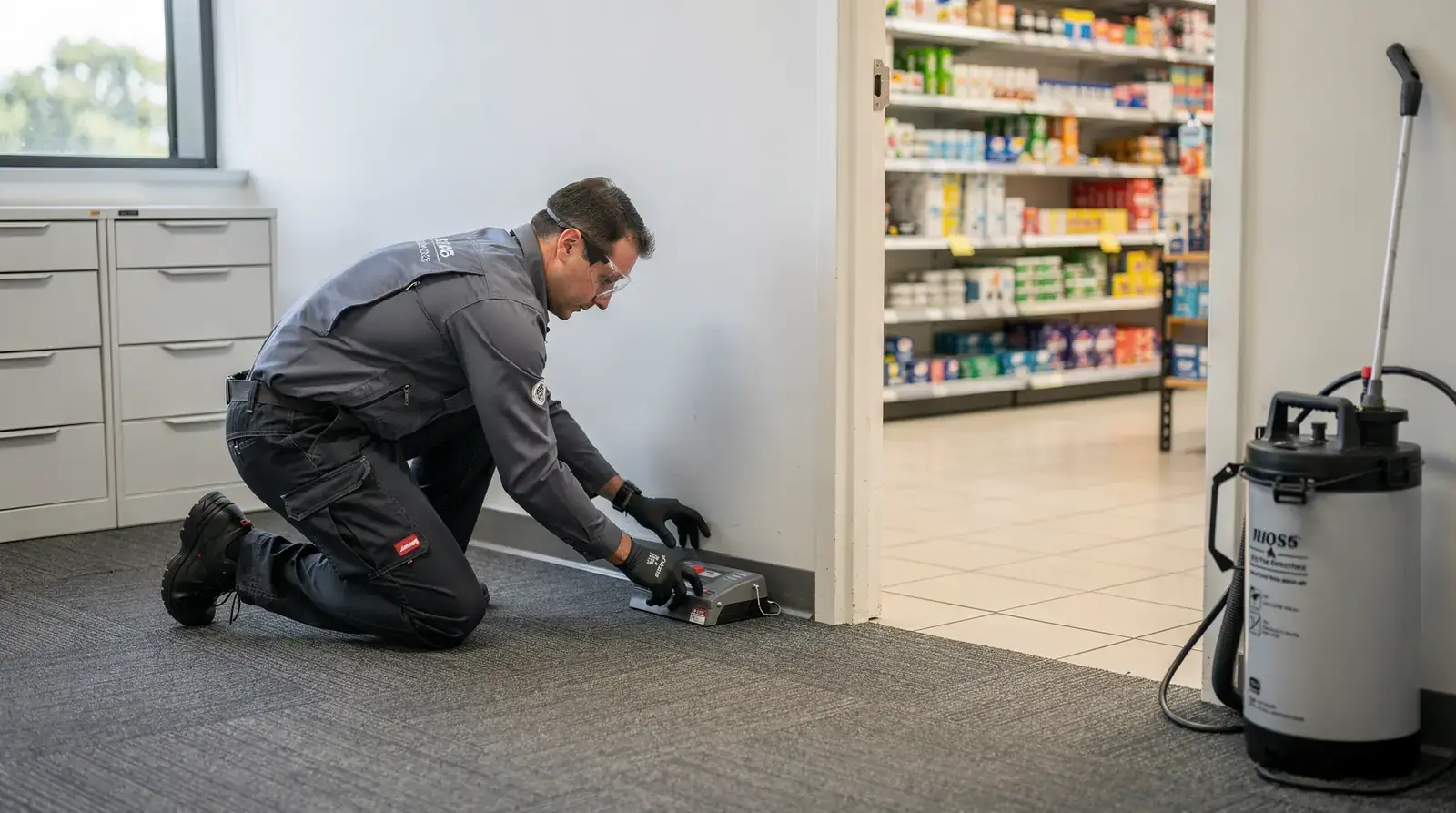
How Does Office Pest Management Differ From Retail?
Office buildings and retail stores fall under separate service categories for a reason. Each space carries distinct traffic patterns, storage layouts, and pest pressure points that call for a tailored plan rather than a one-size-fits-all treatment. Restaurants, office and retail properties, schools, daycares, and apartment communities each require program adjustments based on how people move through the building and what materials sit on the shelves or in the break room.
Office pest management for corporate and professional spaces often prioritizes discretion. Employees and clients notice visible traps or strong odors quickly, so technicians favor low-profile methods that protect a building’s professional image while still solving the underlying problem.
What technology sets office pest control apart?
AI-powered electronic monitoring gives facility managers a discreet, high-tech advantage most competitors do not offer. Sensors track pest activity around the clock and flag emerging issues before they spread through cubicles, server rooms, or storage areas. Without the need for constant manual checks.
Why does an office need a forensic inspection?
Forensic inspections dig into a building’s structure, not just its surface symptoms. Technicians trace gaps around utility lines, loading docks, and HVAC penetrations that create entry points for pests, then correct those vulnerabilities before infestations take hold.
Retail environments, by contrast, deal with heavier foot traffic and constant merchandise turnover, raising the risk of pests hitching a ride inside deliveries. Both property types share one core principle, though: effective control depends on an ongoing service relationship. A single visit rarely solves a structural or supply-chain vulnerability. Sustained monitoring and scheduled follow-ups keep small problems from escalating into costly ones for commercial pest control Enfield clients across every industry.
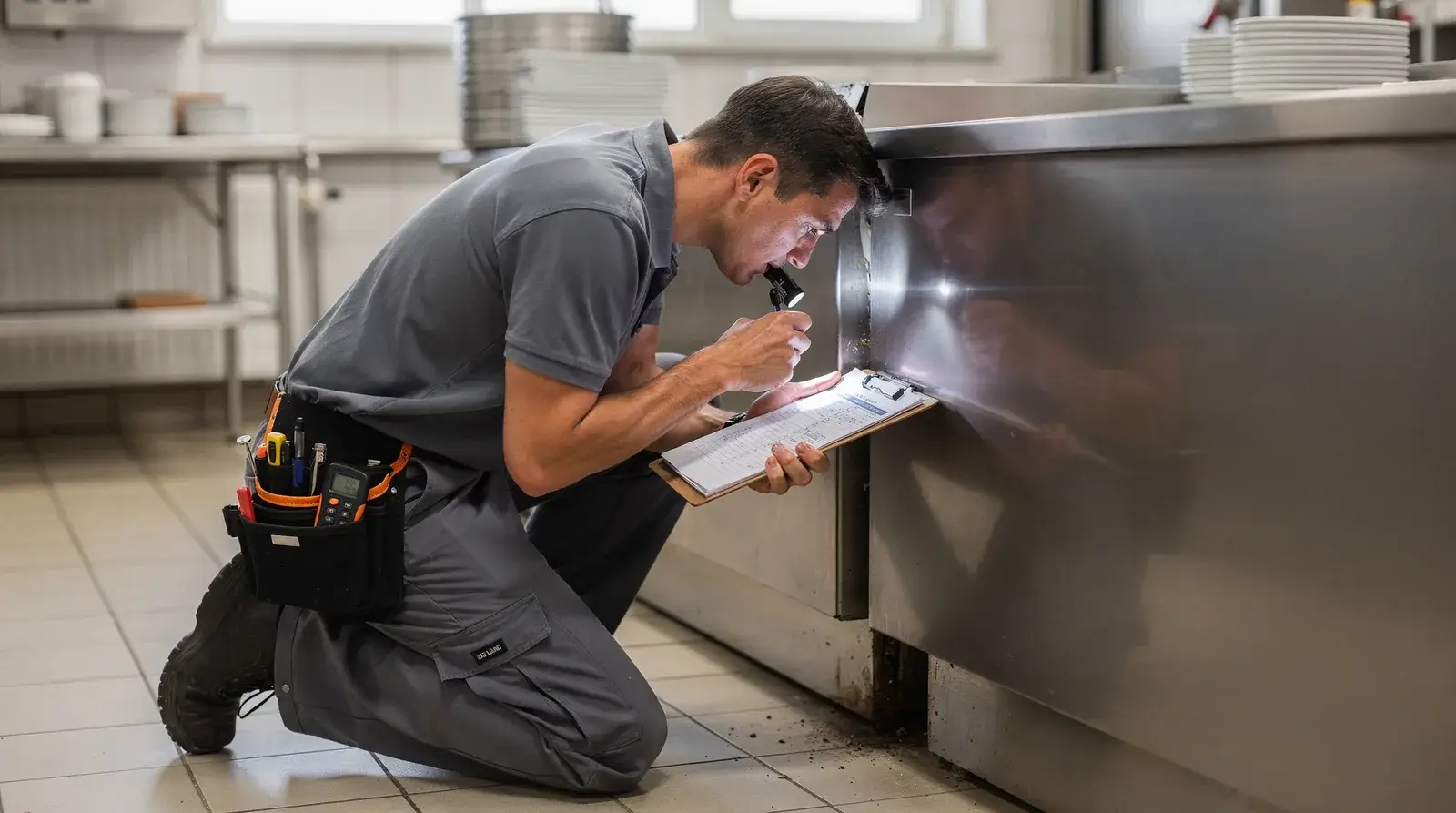
What Happens During A Commercial Pest Inspection?
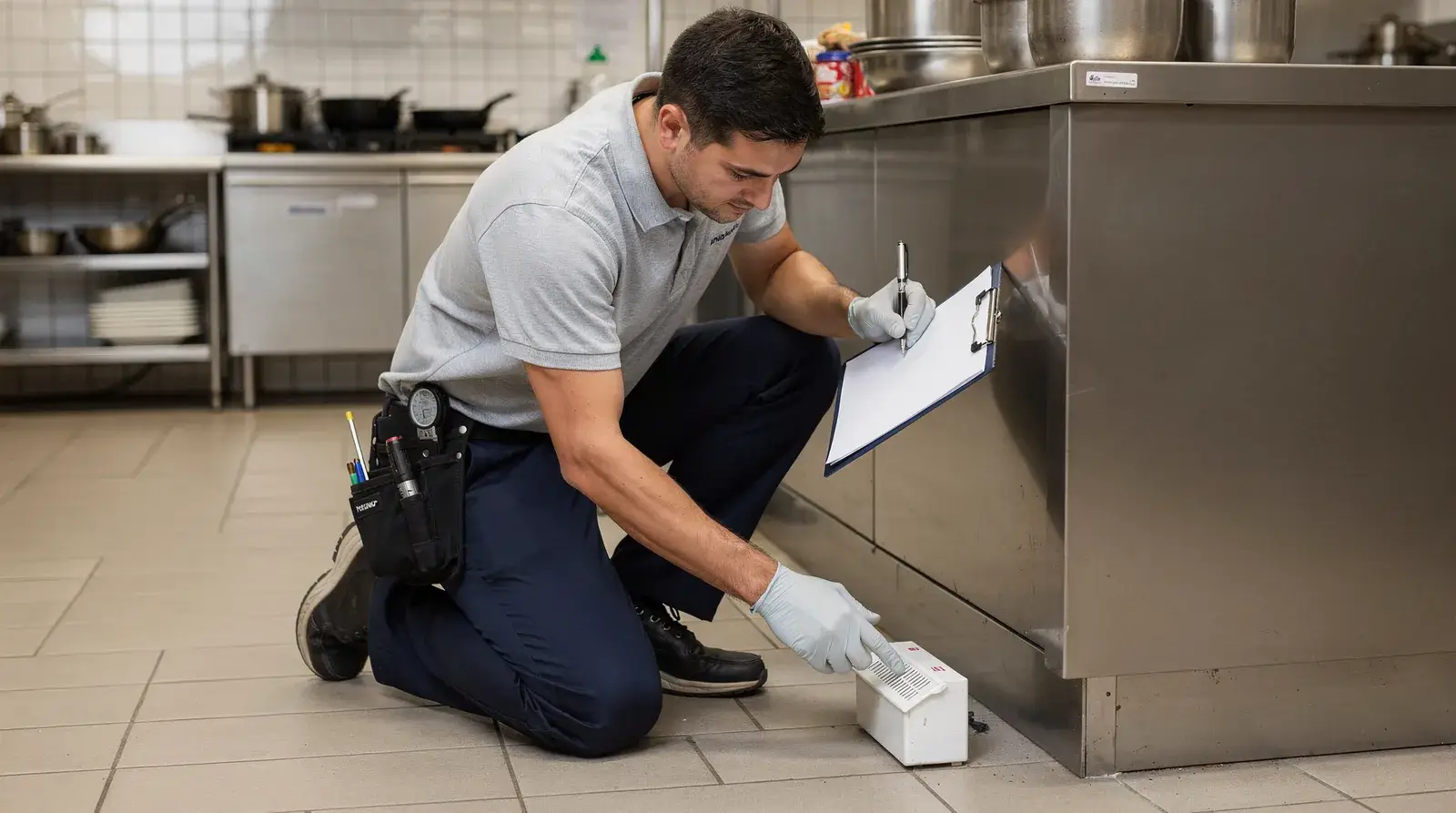
A credible inspection covers every entry point, storage area, and utility line in a facility, not just the spaces visible during a five-minute walkthrough. Facility managers who accept a rushed once-over often miss the conditions that let pests return within weeks. A real inspection documents findings and sets the baseline for every treatment decision that follows.
Nukingstreet approaches each site with forensic-level scrutiny, tracing evidence back to its source rather than treating surface symptoms. Technicians look for moisture issues, gaps in the building envelope, and food or waste sources that attract activity. Mechanical exclusion — sealing, screening, and physical barriers — comes before any product touches the property. This sequence matters for commercial pest control enfield clients that need documented, defensible pest programs for health inspectors and corporate compliance teams.
Who conducts the inspection?
Owner Jeffrey Davis, an Associate Certified Entomologist, brings that credential along with several NWCOA specialty certifications to inspection work. That combination gives commercial clients a technician trained in pest biology, not just application methods.
What does an inspection typically include?
- Perimeter check for foundation cracks, utility penetrations, and drainage issues
- Interior review of storage rooms, kitchens, break rooms, and mechanical spaces
- Documentation of pest pressure by species, location, and severity
- Recommendations feeding directly into a restaurant pest control program or broader office pest management plan
Credentials matter beyond the inspection itself. A BBB Accredited A+ Rating and Bed Bug Central certification back the standards applied on-site, giving property managers a documented reason to trust the findings and the plan built from them.
How Do You Choose A Commercial Pest Partner In Enfield?
Local coverage and contract flexibility separate a dependable pest partner from a risky one. Business owners searching for commercial pest control enfield should look at service radius, response speed, and billing terms before signing anything. A vendor’s history matters too — longevity in the region signals staying power and accountability.
Nukingstreet covers Enfield and communities within roughly 25 miles, including Simsbury, Windsor, West Hartford, and several towns across Western Massachusetts. That radius matters for multi-location businesses and property managers overseeing several sites. A single vendor relationship across all locations simplifies scheduling and keeps service standards consistent.
What Response Time Should A Facility Manager Expect?
Speed matters when a pest sighting threatens a health inspection or a customer complaint. Nukingstreet promises fast, same-day response paired with long-lasting solutions across Northern Connecticut and Western Massachusetts, rather than a delayed callback days later.
Should Commercial Contracts Lock Businesses In Long-Term?
Flexibility protects a business from a poor fit. Nukingstreet offers monthly subscription billing with the option to cancel anytime given 30-day notice. Restaurant operators and facility managers aren’t trapped in multi-year agreements that no longer serve their needs.
A few questions help narrow the decision:
- Does the provider cover every location a business operates, not just one?
- Can service scale up during peak risk seasons without a new contract?
- Is billing transparent, with no penalty for adjusting or canceling service?
Nukingstreet’s own trajectory reflects that standard. The company started as a single technician serving multifamily properties and grew into a full-service pest and wildlife control operation built on accountability rather than volume. That growth pattern — earned through consistent results, not aggressive sales tactics. Is worth weighing against any competitor’s sales pitch.
FAQ
Why do commercial properties need ongoing pest control instead of a one-time visit?
Breeding cycles, deliveries, and structural gaps continuously reintroduce risk, so a single treatment cannot stop a pest population from rebuilding. Nukingstreet builds continuous programs for restaurants, retail, and offices across Northern CT and Western MA.
What happens if a business skips regular pest service?
Small issues compound quickly, with a few rodents or roaches multiplying into a full infestation within weeks. This risks health code violations, stock loss, and negative reviews that regular scheduling prevents.
Do restaurants, retail stores, and offices face the same pest risks?
No — restaurants deal with food odors and grease buildup. Offices face challenges from paper storage, break rooms, and HVAC systems. Nukingstreet builds prevention plans around each property’s specific vulnerabilities rather than generic schedules.
Facts
- Nukingstreet Pest & Wildlife Control, LLC is located in Enfield, CT.