Restaurant health inspection pest compliance requires documented, mechanical-first IPM programs rather than routine spraying. Nukingstreet Pest & Wildlife Control serves Simsbury, CT and surrounding areas, providing commercial pest control for restaurants that identifies root-cause conditions and applies targeted treatments to help support compliance with health inspection standards. Part of recurring commercial pest management contracts.
Key Takeaways
- Restaurant health inspectors cite pest compliance violations as primary reasons for failed inspections nationwide.
- Single pest sightings damage restaurant reputation through social media exposure and customer loss immediately.
- Commercial IPM programs reduce pest activity by a notable share when implemented with monthly monitoring protocols.
- Nukingstreet Pest & Wildlife Control provides Simsbury, CT restaurants with compliant pest prevention strategies.
Why Do Pests Trigger Restaurant Inspection Failures?
A single roach or rodent sighting carries enough weight to derail an entire health inspection. Rodents, cockroaches, flies, and ants each carry bacteria capable of contaminating food and food-contact surfaces. Inspectors treat that contamination risk as a serious violation rather than a cosmetic issue. What looks like one stray insect to a diner often signals a much larger conducive condition behind the scenes.
The consequences escalate fast. Health inspection guidance commonly notes that even small pest problems can lead to warnings, fines, or temporary closure — outcomes that put revenue and reputation on the line simultaneously. For an executive chef managing a packed dining room, that kind of disruption is far more costly than the price of consistent restaurant pest management.
Why does one pest sighting matter so much?
Health inspectors read a single sighting as evidence of a systemic gap, not an isolated event. One confirmed sighting typically points to breeding activity, access points, or sanitation lapses somewhere in the facility.
Can pest sightings damage a restaurant’s reputation beyond the inspection report?
Yes — often more severely than the official penalty itself. A mouse or roach caught on a customer’s smartphone can damage a brand faster. Harder than weeks of slow sales. The image spreads instantly across social media and review platforms.
For owners and general managers, prevention isn’t a discretionary line item. It functions as a daily operational responsibility, woven into opening and closing procedures alongside food storage and sanitation checks. Facility directors who treat pest control as routine maintenance — rather than emergency response — are the ones who keep inspection scores clean and dining rooms trusted. Partnering with a qualified food service exterminator turns that daily responsibility into a documented, defensible compliance record.
What Do Health Inspectors Actually Look For?
Health inspectors search for the specific conditions that link directly to pest activity and food-borne illness risk. According to a guide covering New York City restaurant inspections, the modified inspection process focuses on conditions most associated with food-borne illness, pest presence, and general sanitation compliance. That focus means inspectors aren’t just glancing for a live rodent mid-inspection. They’re reading the environment for clues that pests exist, or could soon.
Strict health and safety rules govern restaurant kitchens, and pest prevention doesn’t stand apart from cleanliness and food storage. These three pillars work together. A kitchen can look spotless on the surface and still fail if storage practices or structural gaps invite pests behind the scenes.
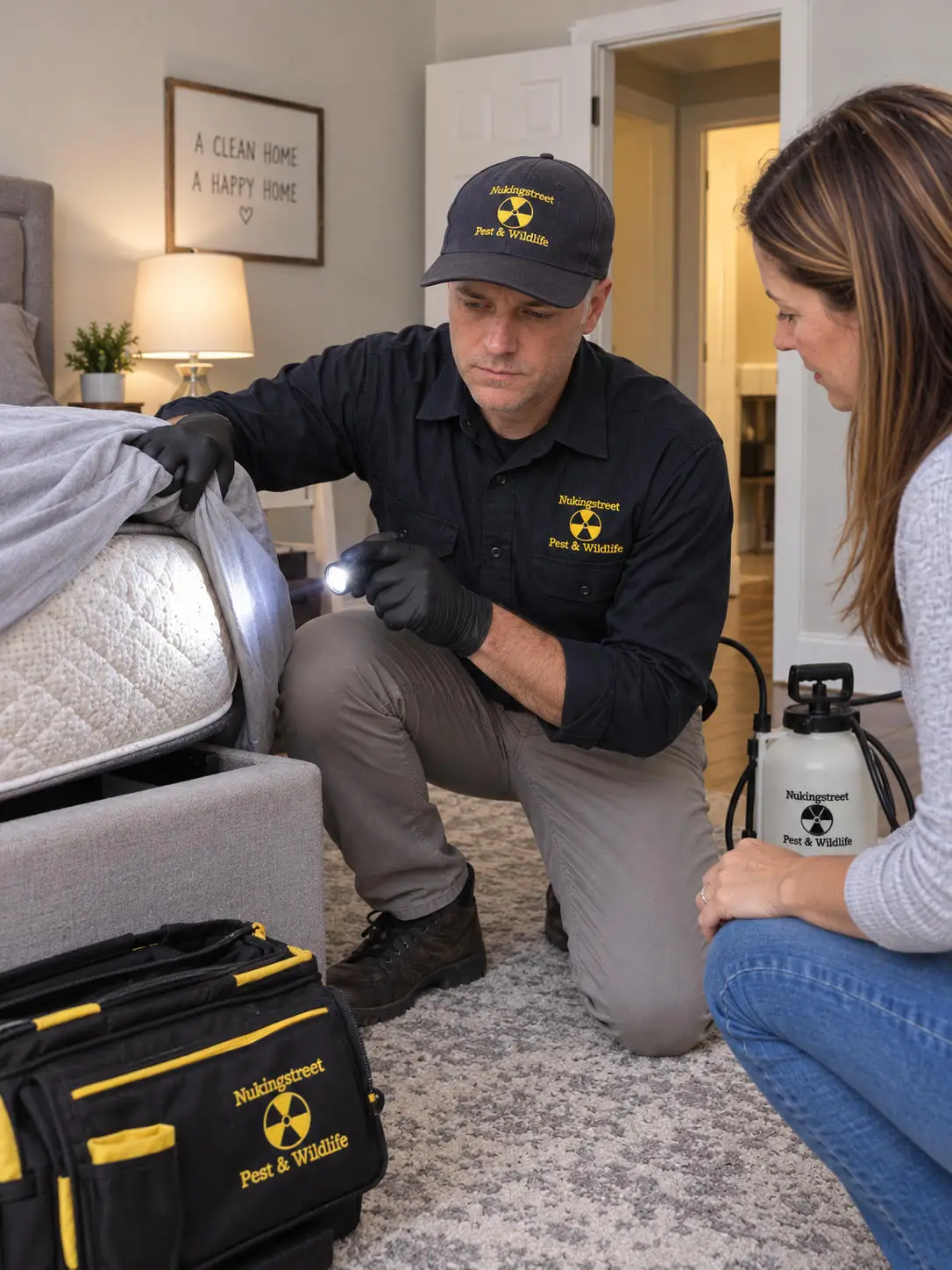
Nukingstreet’s inspection philosophy mirrors what a thorough health inspector expects to find. Rather than scanning only for visible insects or droppings, technicians dig into the structural and environmental conditions that let pest problems take root and return month after month. A gap under a back door, a leaking floor drain, or improperly sealed dry storage can all sustain an infestation long after the visible signs are cleaned up.
What Happens When an Inspector Finds a Pest Problem?
Even a single sighting during an inspection can trigger warnings, fines, or in serious cases a temporary shutdown. Inspectors treat pest presence as a direct indicator of food safety risk, not a cosmetic issue.
Do Inspectors Care About the Cause, Not Just the Pest?
Yes — trained eyes look past the pest itself toward what’s feeding and sheltering it. Nukingstreet technicians document those structural and environmental vulnerabilities. Report them plainly to the customer, even when the findings aren’t welcome news. Fixing the cause is the only way to keep a violation from repeating.
How Does Commercial Integrated Pest Management Prevent Violations?
A well-run restaurant IPM program prevents violations by eliminating the conditions inspectors flag before those conditions produce visible pest activity. A commercial kitchen that relies on restaurant pest management built around exclusion, inspection, and targeted treatment stands a far better chance of a clean report than one that waits for a sighting to trigger action.
Nukingstreet leads with exclusion and targeted treatment methods rather than broad-spectrum chemical applications. In a food-prep environment, that distinction carries real weight. Health inspectors scrutinize what touches food-contact surfaces, and a kitchen soaked in unnecessary chemical residue creates its own compliance risk. Prevention starts with sealing entry points, correcting moisture issues, and removing food sources pests need to survive.
Prioritization matters too. Nukingstreet’s approach puts thorough inspections, mechanical methods, exclusion, and prevention ahead of any chemical solution, reserving targeted treatment for situations where it’s genuinely needed.
What does a food service exterminator actually look for?
A qualified food service exterminator looks past the pest itself. Examines the structural and sanitation conditions allowing it to survive. That means checking door sweeps, floor drains, receiving areas, and storage practices — not just spraying baseboards.
Why does treating the root cause matter for repeat inspections?
Kitchens that only treat symptoms tend to see the same violations return visit after visit. Nukingstreet finds the root cause of a pest issue, treats it directly, and reports exactly what technicians found on-site.
This documentation habit does double duty for facility directors:
- Creates a paper trail inspectors and auditors can review
- Confirms treatments target confirmed conditions, not guesswork
- Supports the goal of correcting the conditions that let infestations recur
The result is a kitchen built to stay compliant, not just pass one inspection cycle.
Why Choose Food-Safe Pest Control Products?
Food-safe pest control products support food safety pest management compliance, protecting diners, staff, and inspection scores without sacrificing results. Kitchens that rely on broad chemical fogging risk contaminating food-contact surfaces and drawing scrutiny during health inspections. Targeted, pest-specific treatments solve that problem at the source.
Nukingstreet builds its restaurant pest management approach around precision rather than volume. Instead of blanket chemical applications, treatments get matched to the specific pest and the specific space it occupies. This limits unnecessary exposure in areas where food gets prepped, stored, or served. It reduces environmental impact throughout the facility.
Rodent control deserves special attention in commercial kitchens. Many operators still default to second-generation anticoagulant rodenticides, chemicals linked to secondary poisoning risks. Nukingstreet takes a proactive stance against these products, along with systemic treatments known to harm pollinators, well ahead of any regulatory mandate requiring the switch.
What makes a pest control product “food-safe”?
A food-safe product minimizes contamination risk to food-contact surfaces, ingredients, and packaging while still eliminating the target pest. It typically means avoiding volatile chemical fogs near prep areas and choosing mechanical or targeted methods first. Selection depends on correctly identifying the pest, its biology, and its access points.
Does the technician’s training affect product selection?
Yes — credentials matter here. Owner Jeffrey Davis holds the Associate Certified Entomologist designation, a credential that supports scientifically grounded identification and treatment decisions rather than guesswork. Nukingstreet also carries membership in the National Pest Management Association. The Connecticut Pest Control Association, alongside an A+ BBB rating. For restaurant owners and facility directors conducting vendor due diligence, this combination highlights professional expertise and credentials. Verifying these credentials before signing a service agreement is a reasonable step for any commercial account.
How Can Ongoing Monitoring Keep You Compliant?
Continuous pest activity tracking closes the gap between scheduled service visits, catching problems days or weeks before an inspector walks through the door. Nukingstreet incorporates technology and monitoring into its pest management services, giving kitchen operators visibility into pest activity between scheduled visits instead of relying on a single snapshot during a monthly visit.
Traditional pest control checks a property once and leaves. Between visits, rodents and insects can establish activity that only becomes obvious once droppings, gnaw marks, or live sightings appear. Exactly what triggers inspection violations. Remote monitoring flags changes in activity early, before they escalate into a citation.
What Makes a Food Service Exterminator Different From General Pest Control?
A food service exterminator works within a facility that never fully closes to pests: deliveries arrive daily, grease traps collect debris, and dining areas open to the public. Nukingstreet approaches restaurant accounts as long-term partnerships rather than isolated service calls, treating recurring monitoring and documentation as core parts of the relationship. This structure fits health-code expectations that pest management stay continuous, not occasional.
What Happens When Monitoring Detects a Problem Between Visits?
Same-day response separates a minor flag from a failed inspection. Nukingstreet offers fast, same-day service within approximately 25 miles of Simsbury, CT. A technician can address a detected issue before the next routine visit. And well before a health inspector arrives unannounced.
Commercial clients across restaurants, office and retail spaces, schools, daycares, and multi-family properties rely on this combination of monitoring and rapid follow-up. For kitchen operators, that means fewer surprises and a documented response history ready for the next inspection.
FAQ
What does a compliant IPM program include for restaurants?
Nukingstreet Pest & Wildlife Control builds documented, mechanical-first IPM programs that identify root-cause conditions, apply targeted treatments, and deliver written findings inspectors accept as compliance evidence.
Why does mechanical-first treatment matter more than routine spraying?
Health inspectors expect programs addressing root-cause conditions rather than masking pest activity. Mechanical-first IPM satisfies inspection standards while supporting recurring commercial pest management contracts.
Conclusion
In closing, effective pest management in food service establishments demands a proactive, inspection-driven approach that identifies vulnerabilities before infestations develop. By prioritizing mechanical exclusion, targeted treatments, and environmental controls over broad chemical applications, restaurants protect their operations, reputation, and customers. Professional pest management partners who understand the unique pressures of commercial food service—and who maintain the certifications. Expertise to deliver compliant, results-driven solutions—become essential allies in maintaining the health and safety standards your business depends on.