

Office Pest Control CT: Commercial Solutions
By Nukingstreet Pest & Wildlife Control LLC Editorial Team · Updated 2026-08-07
Commercial office and retail pest management requires scheduled inspections, exclusion of entry points, sanitation protocols, and targeted treatments for rodents, insects, and stored-product pests. Nukingstreet Pest & Wildlife Control, LLC, based in Enfield, CT, provides customized IPM programs, documented compliance reports, and ongoing monitoring to help protect businesses.
Effective commercial office and retail pest management relies on integrated pest management programs. Outlined in the 2019 guidelines for retail food handling facilities, combining record-keeping, communication, and prevention. Nukingstreet Pest & Wildlife Control,
Commercial office and retail pest management combines scheduled inspections, sanitation review, and mechanical-first treatments to eliminate infestations without relying on SGARs or neonicotinoids. Nukingstreet Pest & Wildlife Control LLC serves Northern CT and Western MA businesses, using AI-powered remote monitoring. Documented service records that satisfy audit requirements while protecting employees, customers, and property reputation year-round.
Key Takeaways
- First impressions form in less than one-tenth of a second; pest presence signals uncleanliness to customers.
- The 2019 pest management guidelines provide three integrated sections for retail food service facilities.
- Pests damage inventory, compromise customer trust, and trigger health and safety violations shutting businesses down.
- Nukingstreet Pest & Wildlife Control, LLC serves commercial pest management needs across Northern CT and Western MA.
What Do You Need Before Starting Commercial Pest Control?
A successful commercial pest program starts with a clear scope, an assessment of current risk, and a partner whose mission centers on solving pest problems while protecting health, property, and daily operations. Facility directors and store owners gain the most value by preparing this groundwork before crews ever arrive on-site.
Commercial pest services for offices and retail spaces fall under a defined category that also covers restaurants, schools, daycares, and apartment communities. Treating office and retail environments differently from a standalone restaurant location matters because foot traffic patterns, storage areas, and public-facing spaces each carry distinct risk factors. A property manager overseeing a strip mall faces different exposure than an office suite with a small break room.
Why does pest activity matter for offices and retail stores specifically?
Untreated pests disrupt daily business operations in ways that go beyond simple annoyance. Rodents damage inventory, flies drift through public areas, and ants trail across break rooms. Each scenario chips away at customer confidence and staff morale.
Before scheduling a first visit, decision-makers should complete these steps:
- Walk the property and note entry points, food storage zones, and moisture sources.
- Document any existing office pest control ct history, including prior treatments or recurring problems.
- Identify high-traffic customer areas that require retail pest prevention measures without disrupting shoppers.
- Confirm response-time expectations, since fast, same-day service should be the standard baseline when comparing providers.
- Establish a communication contact for ongoing reporting and follow-up scheduling.
How Do You Identify Pest Risks In Your Facility?
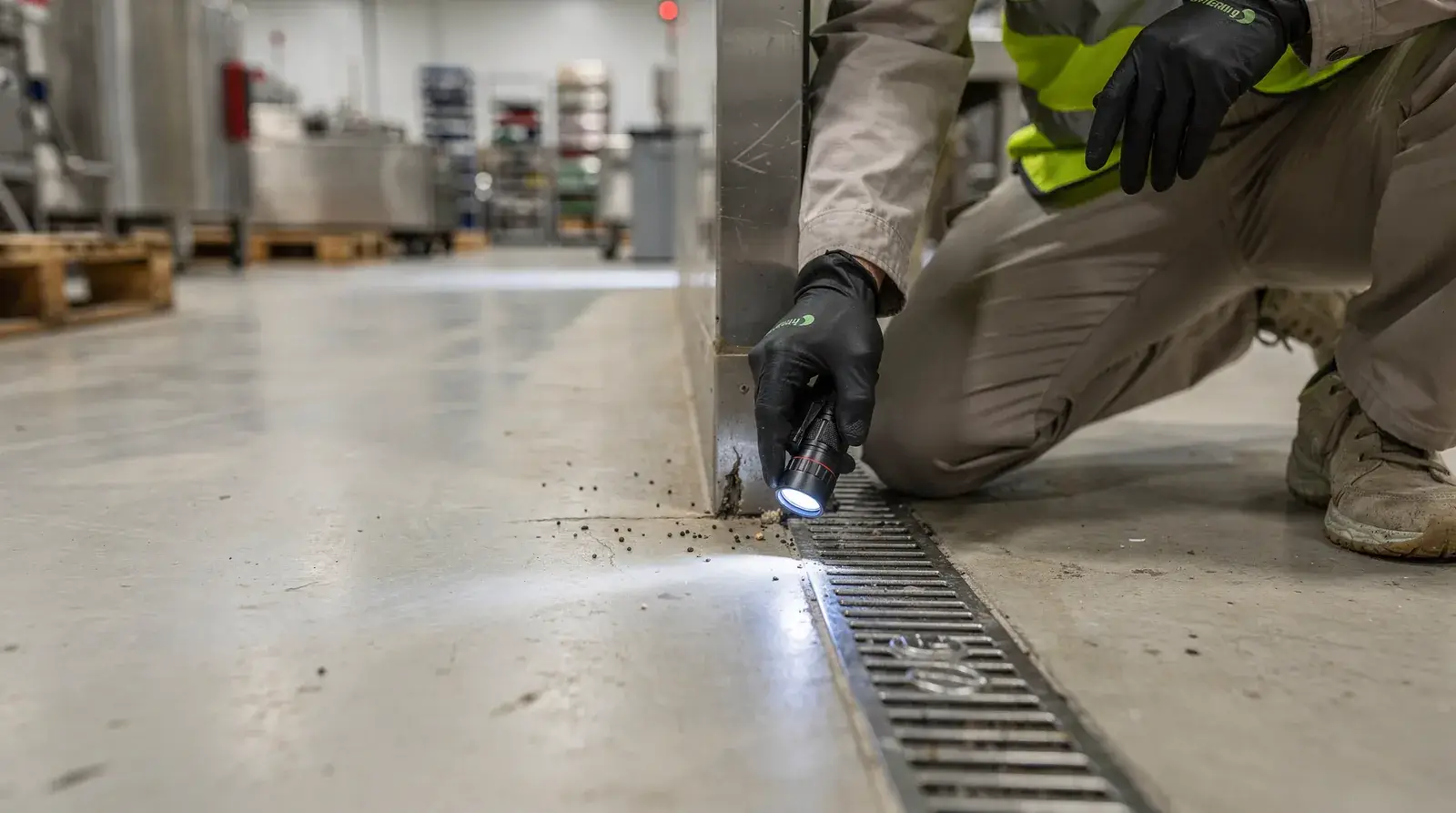
Facility teams identify pest risks through structured inspection, not guesswork. A qualified pest management provider examines entry points, food storage areas, plumbing lines, and waste zones before recommending any treatment. Nukingstreet Pest & Wildlife Control approaches this process like an investigator, not a technician spraying on autopilot.
Forensic-style inspections form the foundation of accurate risk assessment. These inspections identify root causes and structural vulnerabilities. Cracked foundations, gaps under doors, moisture buildup — before any treatment plan gets proposed. Skipping this step leads to repeat infestations and wasted service calls. Surface-level spraying rarely addresses what’s drawing pests into a building in the first place.
Facility directors evaluating office pest control CT providers should follow a clear inspection sequence:
- Walk the exterior perimeter to spot foundation cracks, gaps around utility lines, and standing water.
- Inspect interior food storage, break rooms, and stockrooms for crumbs, spills, or improper sealing.
- Check plumbing and HVAC access points, common entry routes for rodents and insects.
- Review past pest logs or complaint records to identify recurring hot spots.
- Install monitoring equipment in high-risk zones for ongoing data collection.
What pests pose the biggest threat to offices and retail stores?
Rats and mice rank among the most frequent invaders of commercial properties, particularly businesses tied to food service. Insects present a separate but serious threat: they contaminate food products and damage inventory sitting in offices and retail stockrooms alike.
How does ongoing monitoring improve pest risk detection?
AI-powered electronic monitoring extends visibility well beyond a single walkthrough. This technology tracks pest activity between scheduled visits, giving facility teams real-time data instead of relying solely on visual inspection. Continuous monitoring supports proactive retail pest prevention and strengthens broader commercial pest services by catching problems early.

How Do You Build A Mechanical-First Treatment Plan?
A mechanical-first treatment plan builds physical barriers and exclusion work before any pesticide touches the property. Effective commercial pest services begin with sealing entry points, repairing gaps, and installing monitoring devices, saving chemical intervention for cases that truly require it. Facility directors and office managers benefit most from this order of operations. It limits exposure risk for staff and visitors from day one.
The plan follows a clear sequence:
- Inspect the building envelope for gaps around doors, utility penetrations, and foundation cracks.
- Seal and exclude identified entry points using physical materials rather than repellents.
- Install monitoring stations to track activity without introducing chemicals.
- Evaluate results and escalate only if mechanical steps fail to resolve the issue.
- Apply targeted treatment as a last resort, never a first response.
Why avoid certain rodenticides in an office or retail setting?
Second-generation anticoagulant rodenticides, known as SGARs, pose a real risk to wildlife that scavenges on poisoned rodents. A responsible plan skips these products, along with neonicotinoid insecticides that can harm pollinators around landscaped retail sites and business parks. Property teams focused on long-term site health need protection that doesn’t create secondary hazards outdoors.
Does this approach protect sensitive staff and customers?
Yes. Retail pest prevention built around mechanical methods reduces exposure for employees and shoppers with chemical sensitivities. A health-conscious service model considers occupants who may be more vulnerable, including cancer survivors and anyone managing young children on site.
For any workplace, office pest control ct teams follow this same order: inspect, exclude, monitor, then treat. Chemicals never lead the response. They remain the final option, reserved for situations mechanical methods cannot solve alone.
How Do You Maintain Compliance And Long-Term Protection?
Compliance depends on structured recurring service, verified credentials, and consistent documentation, not a single treatment visit. Facility directors and store owners who skip ongoing monitoring risk failed health inspections, pest resurgence, and damaged customer trust. Long-term protection requires a program that combines professional standards with clear communication between provider and client.
Follow these steps to build a compliant, lasting pest management program:
- Verify credentials before signing a contract. Confirm the provider holds recognized industry certifications, such as BBB accreditation with an A+ rating and Bed Bug Central certification. These credentials signal a program built for ongoing commercial pest services and regulatory accountability.
- Establish recurring service on a predictable schedule. Monthly subscription billing keeps protection consistent without locking facilities into rigid long-term contracts; most programs allow cancellation with a 30-day notice.
- Maintain shared documentation. Record-keeping and open communication between the pest management provider and the facility form the backbone of an integrated pest management program, especially for retail and food-handling locations.
- Treat the relationship as a partnership, not a vendor transaction. A true collaboration between the operator and the client, rather than one-off service calls, produces steadier results and fewer surprise infestations over time.
- Confirm service coverage matches facility location. Ongoing programs across Northern CT and Western MA typically serve towns within a defined radius of Enfield, CT, which keeps response times short for recurring visits.
What documentation should a commercial client keep on file?
Facilities should retain service reports, pest activity logs, and treatment records from each visit. These records support office pest control ct compliance during inspections and demonstrate proactive retail pest prevention to regulators or auditors.
How often should service records be reviewed?
Reviewing records at each recurring visit helps identify pest trends before they escalate. Consistent documentation, paired with monthly service, keeps facilities audit-ready year-round.
What Mistakes Undermine Commercial Pest Management Programs?
Three recurring errors sabotage even well-intentioned pest programs: treating pests as a one-time fix, chasing symptoms instead of causes, and skipping specialized expertise. Visible pest activity sends customers and staff an immediate signal that a facility is unclean, unsafe, and unprofessional. That judgment forms fast — studies show people size up a space in less than one-tenth of a second. A single sighting near a reception desk or retail display can undo months of goodwill.
Why does eliminating pests alone often fail?
Killing the pests in front of a manager solves the visible symptom, not the underlying problem. Facilities that focus only on extermination overlook the ongoing stress a recurring infestation places on staff, tenants, and shoppers. Effective commercial pest services address that emotional burden directly, pairing removal with follow-up monitoring so the anxiety doesn’t return with the next generation of pests.
Does skipping certified expertise really matter?
Yes — programs run without Associate Certified Entomologist-level knowledge or specialized wildlife credentials frequently misdiagnose root causes. A technician without this training may treat symptoms in an office breakroom while ignoring the moisture source or entry point driving the activity.
Common program failures include:
- Relying on office pest control ct visits scheduled only after a sighting, rather than preventive rounds
- Neglecting retail pest prevention basics like sealing loading-dock gaps and monitoring stockrooms
- Assigning pest response to untrained staff instead of certified professionals
- Ignoring documentation, which leaves no record to guide long-term correction
Effective commercial pest management protects your business reputation, ensures regulatory compliance, and safeguards employee and customer health. By partnering with a professional pest control provider who prioritizes prevention, monitoring, and targeted treatment strategies, you establish a proactive defense against infestations before they compromise operations. The right approach combines expertise, accountability, and ongoing vigilance to keep your office or retail space pest-free year-round.
FAQ
What does a commercial pest management program for offices and retail spaces include?
Nukingstreet combines scheduled inspections, sanitation review, and mechanical-first treatments, avoiding SGARs and neonicotinoids. AI-powered remote monitoring and documented service records support audit requirements while protecting employees, customers, and property reputation year-round.
Untreated pests disrupt daily operations beyond mere annoyance. Rodents damage inventory, flies drift through public areas, and ants trail across break rooms, chipping away at customer confidence and staff morale.
What steps should decision-makers take before scheduling a first pest control visit?
Walk the property noting entry points, food storage zones, and moisture sources; document prior treatment history. Identify high-traffic customer areas; confirm response-time expectations; and establish a communication contact for ongoing reporting.
Facts
- Nukingstreet Pest & Wildlife Control, LLC is located in Enfield, CT.