


Beaver Control CT: Managing Watercourse Wildlife
By Nukingstreet Pest & Wildlife Control LLC Editorial Team · Updated 2026-08-07
Nukingstreet Pest & Wildlife Control, LLC in Enfield, CT addresses beaver activity along watercourses using methods such as dam removal, flow-device installation, or habitat modification. Their team identifies lodges, chewed vegetation, and dam sites, then implements targeted trapping and exclusion methods to eliminate flooding risks and protect adjacent properties from ongoing beaver-related wildlife damage.
Nukingstreet Pest & Wildlife Control, LLC of Enfield, CT resolves beaver-related watercourse conflicts using flow devices to control water levels, metal fencing around individual trees and culverts. Dam removal where permitted, effectively addressing flooding and tree damage caused by North American beaver (Castor canadensis) activity.
Effective beaver management combines habitat modification, exclusion, and flow-control devices rather than one-time removal. Flow devices regulate water levels without destroying dams, while metal fencing protects culverts and individual trees. Nukingstreet Pest & Wildlife Control LLC, founded under ACE-certified owner Jeffrey Davis, applies mechanical-first methods to resolve watercourse conflicts sustainably for Northern CT and Western MA properties.
Key Takeaways
- North American beavers (Castor canadensis) shape watercourses by felling trees and constructing dams for lodge protection.
- Habitat modification removes dams, eliminates food sources, and installs flow devices to control water levels effectively.
- Metal fencing around individual trees and culverts provides exclusion barriers against beaver damage to infrastructure.
- Community collaboration and education programs resolve beaver conflicts while maintaining fish and wildlife conservation goals.
Why Are Beavers Reshaping Local Watercourses?
Beavers have engineered ponds and wetlands for thousands of years, felling trees and packing mud into dams that reroute streams and flood low-lying land. This instinct, hardwired and relentless, now collides with roads, septic systems, farmland, and municipal infrastructure across Northern Connecticut. A single active dam raises water levels within days, and the disruption rarely stays contained to one property.
Landowners often see only the surface problem: a submerged field, a clogged culvert, a soaked basement. Genuine watercourse wildlife management looks past those symptoms to find why beavers chose that particular stretch of water. Food availability, slope, and water flow all factor into a colony’s decision to settle and expand.
Why Do Beavers Keep Coming Back After Removal?
Relocating or removing beavers without addressing the underlying habitat rarely solves the problem long-term. New beavers frequently move into the same territory because the water conditions. Food sources that attracted the original colony remain unchanged. Lasting beaver control CT solutions require altering those conditions, not just removing the animals present at the time.
Is Beaver Activity Actually Harmful to the Ecosystem?
Not inherently — beaver-built wetlands support fish, birds, and amphibians that depend on that habitat. The conflict arises only where dams threaten roads, crops, or structures. Responsible management protects surrounding wildlife and ecosystems rather than eliminating beaver populations outright, which is why beaver dam removal should always pair with habitat-conscious planning.
Nukingstreet Pest & Wildlife Control, LLC, based in Enfield, CT, works with property owners, farm managers, and municipal planners across the region to resolve these conflicts at the source, balancing infrastructure protection with environmental responsibility.

What Damage Should Property Owners Watch For?
Two problems dominate every beaver conflict: flooding from dam construction and tree loss along the shoreline. Property owners who spot either sign early avoid far greater costs later. Waiting rarely pays off — reactive management. Crews respond only after a dam fails or a basement floods, lets small watercourse problems turn into expensive emergencies. Effective beaver control CT property owners can rely on starts with catching these signs before they escalate.
How does beaver flooding become an emergency?
A dam left unchecked doesn’t stay small. Beavers raise water levels gradually, and an unmonitored structure can inundate an entire property once heavy rain hits. What starts as a soggy back lot can become a genuine flooding crisis within days of a major storm, threatening driveways, septic systems, and building foundations.
What does tree damage from beavers look like?
Beavers fell trees close to water, almost always within 100 feet of the shoreline. Trunk diameter tells the story:
- Typical targets: 2 to 6 inches — saplings and young hardwoods
- Occasional targets: up to 24 inches — mature, high-value trees at risk
Property owners should walk the waterline regularly, checking for these warning signs:
- Fresh gnaw marks or pointed stumps near the bank
- Rising water levels around culverts or low-lying areas
- New mud-and-stick construction blocking flow
- Downed trees near power lines or structures
Spotting these early makes beaver dam removal and other watercourse wildlife management measures far more manageable —. Far less costly — than waiting for a full-blown flood or lost tree canopy to force the issue.
Which Beaver Dam Removal Methods Actually Work?
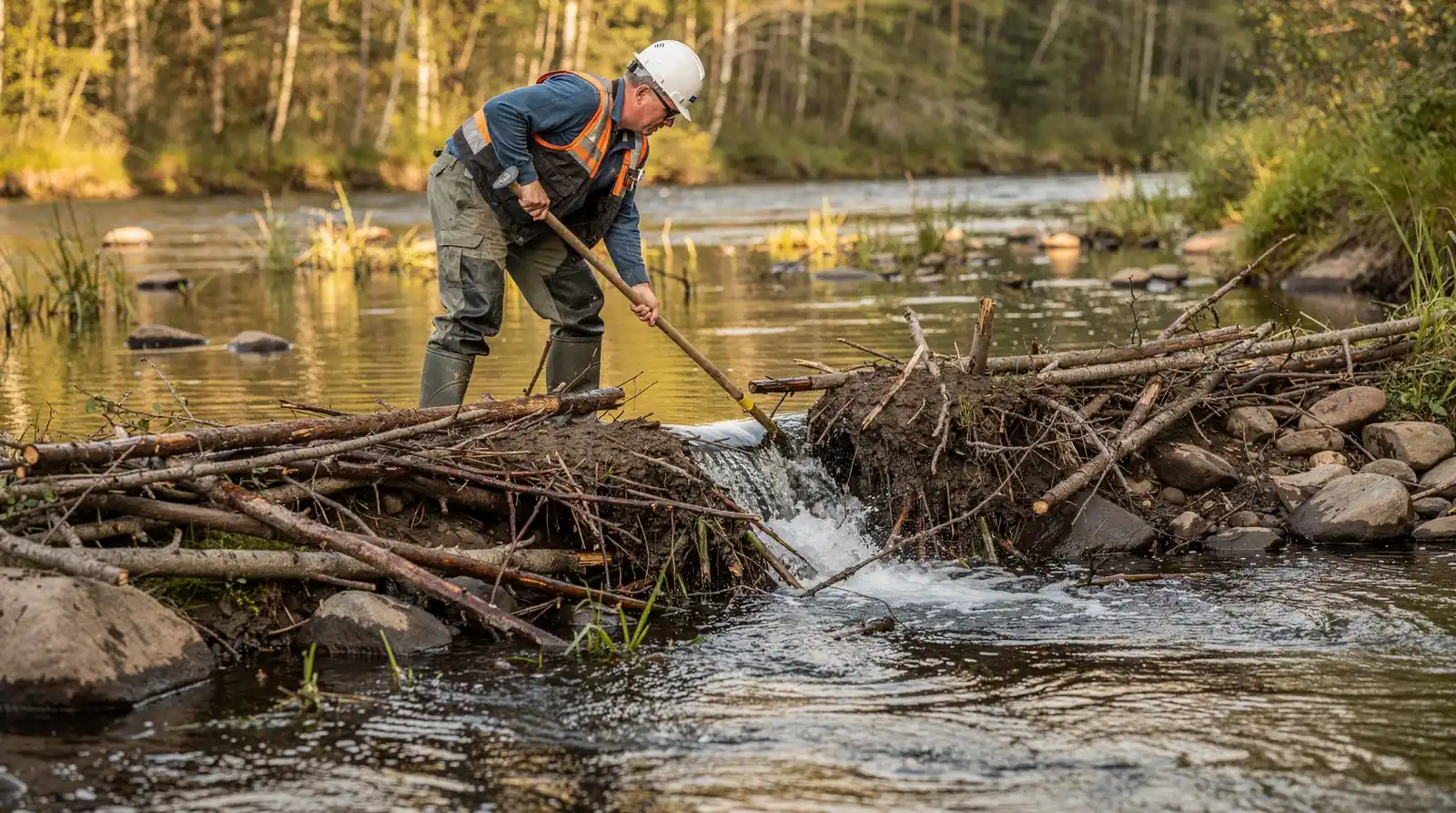
Full dam removal solves flooding fast, but state permits typically must come first before crews can touch the structure. Flow devices offer a quieter, permit-friendlier path for property owners who need steady water control without tearing out the whole dam. Both methods work — the right choice depends on the site, the flooding history, and how urgent the problem has become.
Beaver dam removal clears the blockage entirely, dropping water levels and restoring normal flow through culverts, drainage ditches, or streambeds. That speed comes with a catch: most states require permits before removal begins, since dams sit within regulated wetlands and waterways. Skipping that step risks fines and delays that outlast the flooding itself.
Are flow devices better than removing the dam?
For chronic, low-grade flooding, flow devices often make more sense than removal. These systems regulate water levels through the dam itself, using pipes or fencing to control outflow without destroying beaver habitat. Property owners avoid repeat removals since beavers tend to rebuild dams within days of demolition.
Effective watercourse wildlife management never treats every property the same way. A pond behind a residential yard needs a different response than a flooded municipal culvert or a farm irrigation channel.
Beaver control CT property owners trust starts with matching the method to the site, not defaulting to demolition. That targeted, root-cause approach reflects the same conviction that built a single-truck operation into a full-service wildlife control company: this industry works better when solutions fit the problem instead of the other way around.
How Does Watercourse Wildlife Management Stay Eco-Friendly?
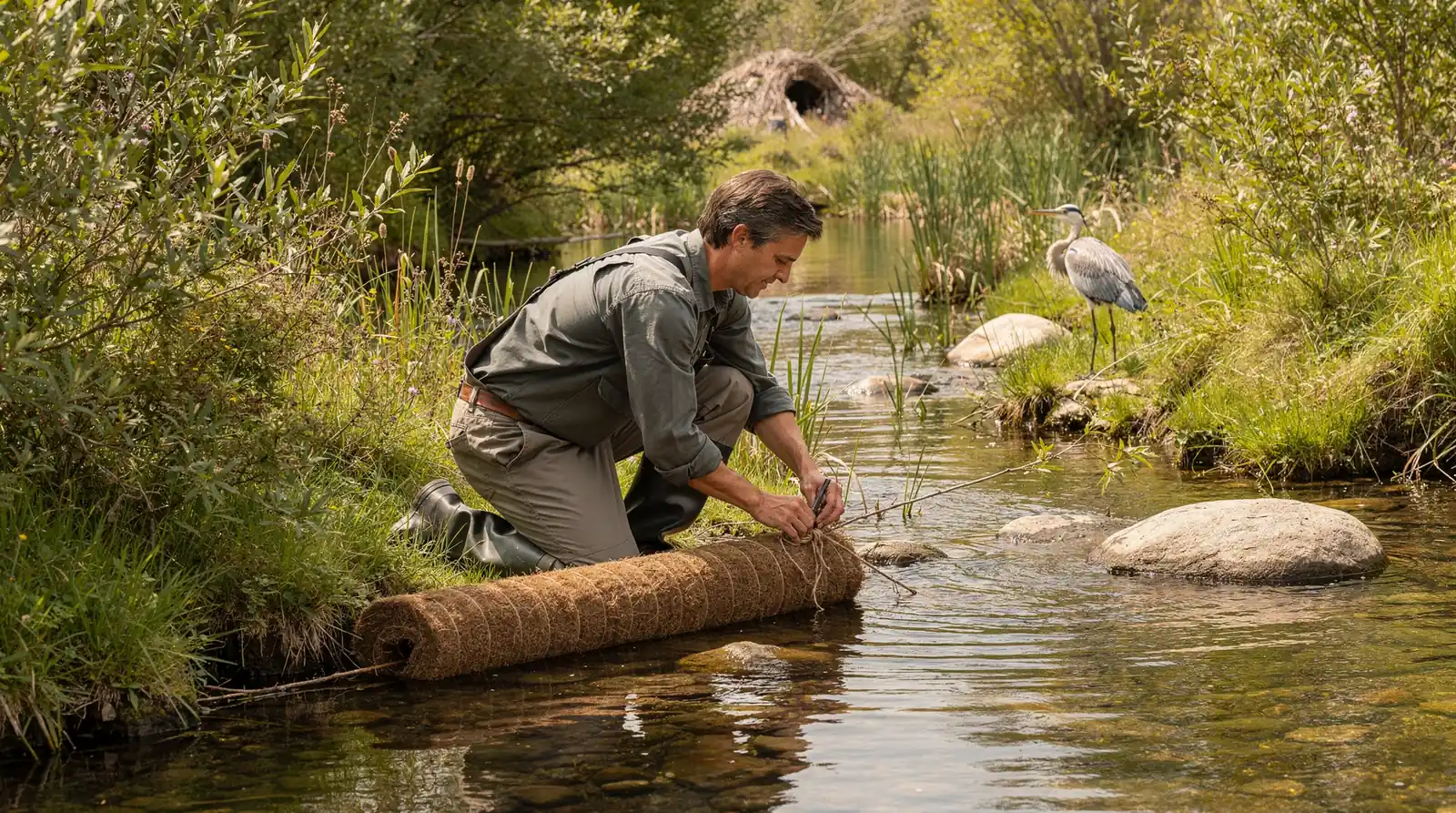
Sustainable watercourse wildlife management relies on mechanical tools and habitat exclusion, not poison. No toxicants are currently registered for beaver control, so licensed technicians turn to trapping, flow devices, and physical barriers instead. That regulatory reality shapes every eco-friendly strategy applied to ponds, culverts, and drainage systems across the region.
This mechanical-first standard protects more than the watercourse itself. Families with young children, cancer survivors, and pet owners face heightened sensitivity to conventional chemical treatments, making a non-toxic approach essential rather than optional. Effective beaver control CT programs account for these vulnerable groups from the start, not as an afterthought.
Why Avoid Chemical Solutions for Beaver Problems?
Chemical-first tactics reflect an industry habit of reacting to damage instead of preventing it. Many companies default to spraying whatever product is on the truck, treating clients like account numbers rather than partners in a solution.
A responsible alternative looks different. Pest and wildlife management should be:
- Targeted — addressing the specific animal and site conditions, not a blanket treatment
- Proactive — solving the root cause of flooding or tree damage before it escalates
- Health-conscious — protecting families, cancer survivors, and pets from unnecessary chemical exposure
- Environmentally responsible — safeguarding fish, amphibians, and downstream habitat
What Does Eco-Friendly Beaver Dam Removal Involve?
Beaver dam removal done responsibly avoids toxicants entirely, leaning on physical removal and flow-control devices to manage water levels. Because no chemical option exists for beaver activity, mechanical methods aren’t a preference — they’re the only viable path. This makes exclusion devices, culvert guards, and permitted dam removal the backbone of any lasting, environmentally sound solution for property owners and municipal planners alike.
When Should You Call Beaver Control CT Experts?
A flooded driveway, a gnawed tree line, or a culvert plugged overnight marks the point where professional help beats a wait-and-see approach. Property owners, farm managers, and municipal planners lose valuable time. And money — when dam activity goes unaddressed for even a few days. Fast water backup damages roads, crop fields, and septic systems before most people notice the cause.
Nukingstreet Pest & Wildlife Control, LLC operates out of Enfield, CT, giving property owners and municipal crews a local resource for watercourse wildlife issues rather than a distant call center. Local presence matters when a culvert blocks overnight and floodwater threatens a roadbed by morning.
How does a beaver control CT provider typically respond?
Response follows the same standard Nukingstreet built its reputation on: one technician, one truck, and a relentless focus on doing the job right the first time. That hands-on approach applies whether the job involves a single backyard pond or a multi-acre watercourse wildlife management project spanning several properties.
What methods handle active dams and culvert blockages?
Beaver dam removal requires more than pulling sticks from a stream — it demands an understanding of dam structure and water flow to prevent immediate rebuilding. Recognized field solutions include:
- Cylindrical wire mesh beaver guards installed around culvert openings to block debris packing
- Structured dam removal paired with flow-control devices to manage water levels long-term
- Ongoing monitoring to catch new dam activity before it escalates
Every intervention protects surrounding pollinators, wildlife, and ecosystem balance, not just the immediate flooding problem. Environmental responsibility stays central even during urgent removal work, ensuring the fix doesn’t create new habitat damage elsewhere on the property.
Beaver activity along watercourses demands a thoughtful, informed approach that balances wildlife management with environmental stewardship. By understanding beaver behavior and implementing strategic solutions—from habitat modification to professional intervention—property owners protect their land while respecting these keystone species. Nukingstreet Pest & Wildlife Control brings professional expertise. Proven methods to resolve beaver conflicts responsibly, ensuring your watercourse remains healthy and your property secure.
FAQ
Does removing beavers solve the problem for good?
No — new beavers move into the same territory when water conditions and food sources remain unchanged. Lasting solutions require altering habitat conditions, not just removing the animals present at the time.
What methods does Nukingstreet use to manage beaver conflicts?
Nukingstreet uses flow devices to control water levels, metal fencing around trees and culverts, and dam removal where permitted. This mechanical-first approach combines habitat modification and exclusion rather than one-time removal.
Are beavers bad for the ecosystem?
Beaver-built wetlands support fish, birds, and amphibians that depend on that habitat. Conflict only arises where dams threaten roads, crops, or structures, so management balances infrastructure protection with environmental responsibility.
Facts
- Nukingstreet Pest & Wildlife Control, LLC is located in Enfield, CT.