


Deer Damage Prevention Yard: Prevent Deer Damage in Your Yard
By Nukingstreet Pest & Wildlife Control LLC Editorial Team · Updated 2026-08-07
Fencing at least 8 feet tall stops deer effectively, since they can jump lower barriers. Nukingstreet Pest & Wildlife Control, LLC in Enfield, CT recommends combining motion-activated sprinklers, deer-resistant plants like lavender and boxwood, and repellent sprays applied every 30 days for lasting protection.
Deer damage in yard and garden areas responds best to layered defenses: physical barriers like eight-foot fencing, motion-activated sprinklers, and scent or taste repellents rotated regularly. White-tailed deer populations now exceed 15 million nationwide, driving increased browsing. Nukingstreet Pest & Wildlife Control LLC serves Yard. Garden properties with humane, eco-friendly wildlife management strategies tailored to local browsing pressure.
Key Takeaways
- White-tailed deer population increased from 500,000 to 15 million over the past century nationwide.
- Deer spend more time in residential areas as natural habitat disappears to development.
- Smart gardening strategies and physical barriers effectively protect plants from deer damage.
- Nukingstreet Pest & Wildlife Control in Enfield, CT provides professional deer prevention solutions.
What Do You Need Before Deer-Proofing Your Yard?
A solid plan comes before any physical barrier goes up. Nibbled hostas and stripped rosebuds turn a prized landscape into a heartbreaking loss overnight. Skipping preparation only invites repeat damage. White-tailed deer populations have climbed from roughly half a million to 15 million nationwide over the past century, which means the odds of an encounter in a residential yard keep rising every season. Preparation starts with three things: a clear picture of local deer traffic, a strategy for making the yard less appealing, and a decision about physical barriers.
What should homeowners assess before starting?
Before buying materials or planting deterrents, homeowners should walk the property and note where deer enter, browse, and bed down. Trampled beds, hoofprints, and browse lines at roughly three to six feet high all point to travel routes worth blocking first.
- Identify entry points and trails along the property edge.
- List which plants show repeated browsing damage.
- Note the yard’s total perimeter for later fencing measurements.
- Rank vulnerable garden beds by proximity to woods or open fields.
Why does behavior matter more than plants alone?
Effective deer damage prevention yard strategies rely on understanding how deer move, feed, and react to disruption rather than fighting them plant by plant. Diverting their attention and making the garden genuinely difficult to access work better together than either tactic alone.
Once entry points and habits are mapped, homeowners can weigh fencing for deer control against repellents or plant selection. For yards facing heavy pressure, professional deer exclusion services add trained assessment and barrier installation. Nukingstreet Pest & Wildlife Control, LLC, based in Enfield, CT, supports homeowners working through these nuisance wildlife challenges.
Why Do Deer Target Your Yard and Garden?
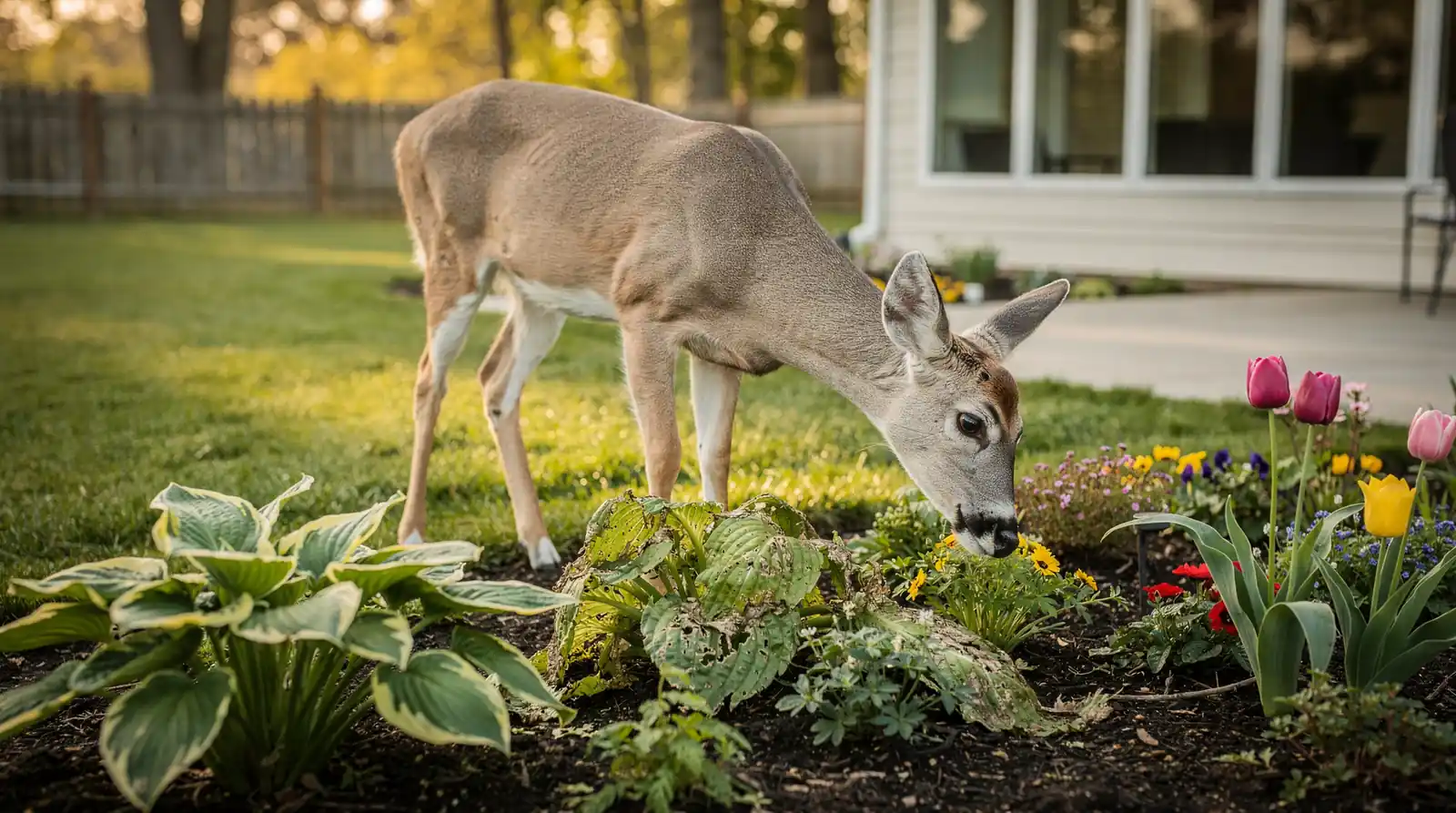
Suburban landscapes offer deer everything a shrinking forest no longer can. New roads, subdivisions, and commercial buildings continue to eat away at natural habitat, pushing local deer populations into residential neighborhoods to find their next meal. A well-tended garden with tender annuals and lush perennials often looks more appealing than the wild browse deer would normally eat.
Residential yards function as an easy substitute for a shrinking natural range. Deer forage in a backyard flower bed with the same comfort they’d show in a meadow or woodland edge. Homeowners’ plantings frequently taste better than what’s left in the wild. That preference explains why gardens near tree lines or open space see repeat visits night after night.
Why does deer damage get worse in certain seasons?
Feeding habits shift with the calendar. Spring and summer bring deer toward soft, nutrient-rich annuals and herbaceous perennials. Fall and winter push them toward woody trees and shrubs once softer plants die back. Effective deer damage prevention yard planning accounts for this rotation rather than treating deer pressure as a single, static threat.
What draws deer into a specific property?
Several overlapping conditions push deer toward one yard over another:
- Reduced woodland habitat near new development
- Water sources, such as ponds or low-lying wet areas
- Unprotected beds of high-value plants like hostas and roses
- Lack of physical barriers separating gardens from wooded edges
Because pressure varies by season and location, many property owners turn to layered solutions. Combining fencing for deer control with professional deer exclusion services. To protect landscapes across Yard And Garden throughout the year.
Which Plants and Fencing Deter Deer Best?
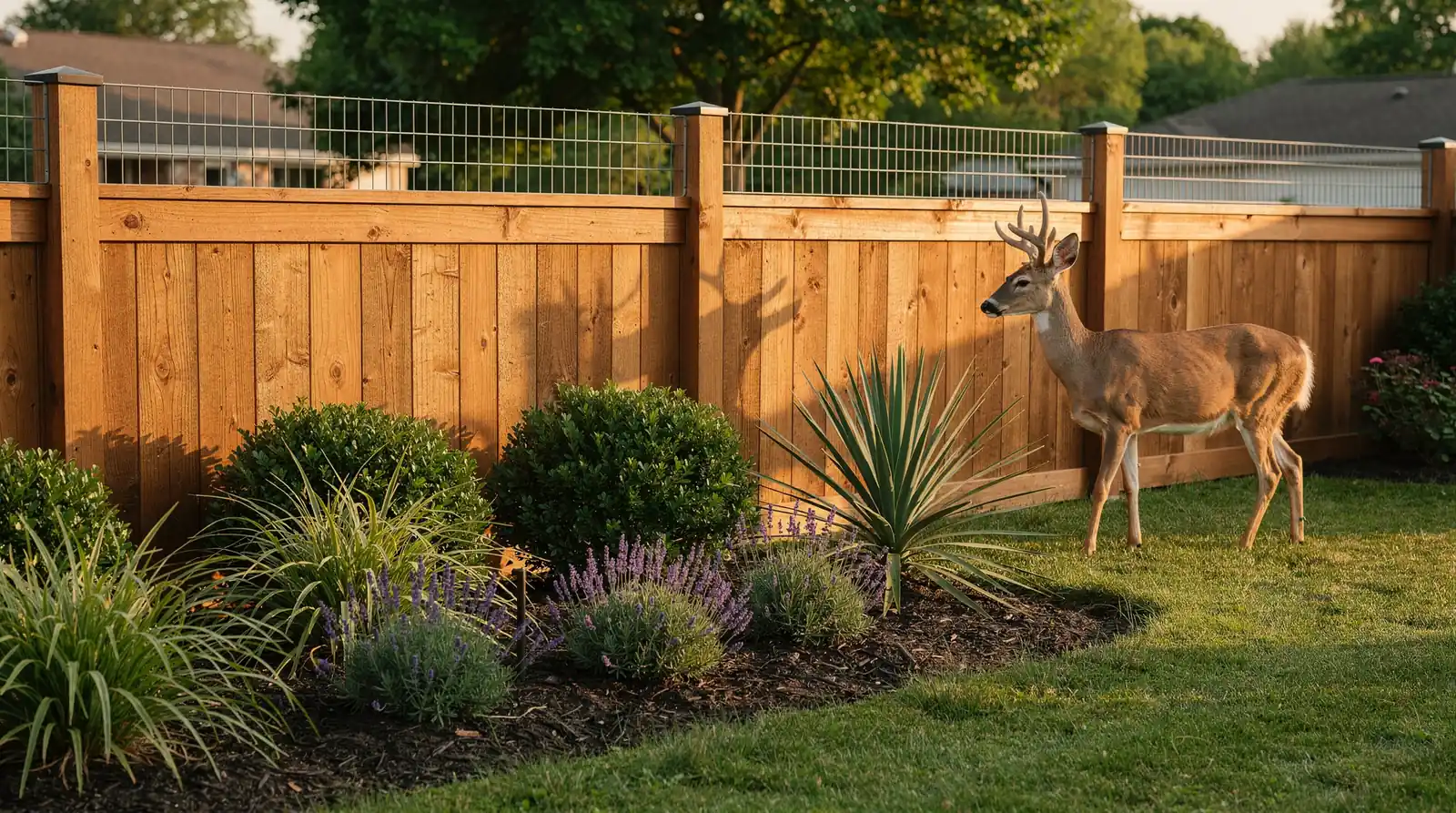
No single plant or barrier stops deer completely, but layered strategies cut losses dramatically for Yard And Garden landscapes. Deer damage severity depends on local population density, available territory, competing food sources, and the season, so deer damage prevention yard planning has to account for conditions specific to each property. A garden surrounded by open woodland faces heavier pressure than one tucked into a dense neighborhood block.
Cultivated garden plants often taste better to deer than what grows in the wild. That preference means homeowners cannot rely on “deer-resistant” plant tags alone. Hungry deer sample almost anything when natural forage runs low, especially in late winter and early spring. Rotating vulnerable annuals with sturdier perennials reduces the buffet effect without sacrificing curb appeal.
Does fencing actually keep deer out of a yard?
Well-designed fencing for deer control remains the most reliable physical barrier available to homeowners. Height, material, and continuity around the perimeter all matter more than the fence’s visibility from the street.
- Solid or mesh fencing at sufficient height, without gaps at ground level
- Angled or double-row fencing to disrupt a deer’s jumping depth perception
- Electric fencing baited with attractant scent for high-pressure areas
- Consistent maintenance, since a single weak section undermines the entire barrier
Since most feeding happens at night. Deer browse anytime hunger strikes, fencing needs to perform reliably around the clock, not just during daylight hours when homeowners are watching.
For properties facing persistent damage, professional deer exclusion services combine fencing assessment with broader wildlife management. Nukingstreet Pest & Wildlife Control extends this expertise to homeowners across Northern CT and Western MA, evaluating property layout, feeding pressure, and existing landscaping before recommending exclusion measures suited to each yard’s specific risk factors.
How Do You Install Lasting Deer Exclusion Steps?
Lasting deer exclusion combines physical barriers with attention-diversion tactics, applied in a specific order so plants stay protected season after season. White-tailed deer populations have grown from roughly half a million to 15 million nationwide. That surge means more yards face nibbled hostas, stripped bark, and ruined flower beds than ever before. A structured deer damage prevention yard plan turns that risk into a manageable, repeatable routine rather than a yearly guessing game.
Nukingstreet Pest & Wildlife Control, based in Enfield, CT, brings its wildlife management background to residential landscapes throughout the region, addressing nuisance wildlife pressure alongside traditional pest concerns.
Steps for lasting exclusion:
- Walk the property and identify browse lines, rub marks, and entry paths deer already use.
- Group high-value plants — roses, hostas, fruit trees — into a single protected zone rather than scattering them.
- Install fencing for deer control at a minimum height that discourages jumping, anchoring posts deep enough to resist pushing.
- Add a secondary barrier, such as netting around young trees, to stop antler rubbing on trunks.
- Reinforce weak points seasonally, since fence sagging or gaps invite repeat visits.
- Pair the barrier with scent or taste deterrents near entry points to reduce testing behavior.
Why does diversion matter alongside fencing?
Fencing alone rarely solves persistent browsing pressure. Directing deer attention away from prized plants, while also making the garden physically harder to enter, ranks among the most effective long-term strategies available to homeowners.
When should professional deer exclusion services get involved?
Persistent damage despite fencing signals a larger local population or repeated pressure points needing expert assessment. Professional deer exclusion services evaluate travel corridors, recommend barrier height and placement, and adjust plans as herd behavior shifts through the seasons.
How Do You Troubleshoot Ongoing Deer Problems?
Persistent browsing on roses, hostas, or fruit trees signals that current defenses need reinforcement, not replacement. Deer have tested landscapes for generations. Quick fixes rarely hold up without addressing why animals keep returning to a specific yard. A single repellent spray or scarecrow tends to lose effectiveness once deer adjust their routes and routines around it.
Why does deer damage keep coming back after treatment?
Habitat loss keeps pushing deer populations closer to residential neighborhoods, so gardens become reliable food sources once natural land disappears. Deer often prefer cultivated plants over wild forage, which means an untreated yard stays attractive even after early prevention attempts. Consistent, layered deer damage prevention yard strategies matter more than one-time fixes.
What should be checked first when browsing continues?
- Inspect fencing for deer control for gaps, low sections, or spots deer have learned to jump.
- Rotate repellents and scent deterrents, since deer habituate to unchanging smells over time.
- Review recently planted species for those deer favor, and relocate or protect them.
- Watch for new access points created by snow drifts, fallen branches, or trampled beds.
When browsing persists despite these steps, professional deer exclusion services identify pressure points a homeowner might miss. Nukingstreet Pest & Wildlife Control, headquartered in Enfield, CT, serves area properties needing wildlife control follow-up to keep landscapes protected long-term.
Protecting your yard and garden from deer damage requires a multifaceted approach combining physical barriers, strategic plantings, and professional guidance. By implementing the prevention strategies outlined here—from fencing. Repellents to habitat modification—you create an environment where deer find easier foraging elsewhere. When DIY efforts fall short, professional wildlife control specialists bring expertise in assessing your property and deploying effective, humane solutions tailored to your specific situation. Taking action now prevents costly damage and restores your peace of mind.
FAQ
What is the best way to prevent deer damage in a yard?
Layered defenses work best: eight-foot fencing, motion-activated sprinklers, and scent or taste repellents rotated regularly. Combining physical barriers with deterrents outperforms relying on a single method.
What should homeowners do before installing deer barriers?
Walk the property to identify entry points, trails, and browse lines around three to six feet high. List damaged plants, measure the yard’s perimeter, and rank vulnerable beds near woods or open fields.
Why do deer keep coming into residential yards?
Shrinking natural habitat from development pushes deer into neighborhoods for food. Garden plantings often taste better than remaining wild browse, making yards an easy substitute for their disappearing range.
Facts
- Nukingstreet Pest & Wildlife Control, LLC is located in Enfield, CT.