Crawl space moisture control is central to crawl space mold prevention and pest activity, blocking the ground moisture that up to 50% of a household’s air draws from below. Nukingstreet Pest & Wildlife Control pairs encapsulation-style moisture control with residential pest control, addressing termite, carpenter ant, and rodent entry points common in Northern Connecticut homes with damp, unsealed crawlspaces.
Key Takeaways
- Crawl space moisture contributes to up to 50% of household air flowing upward into living spaces.
- Vapor barriers prevent moisture accumulation that creates ideal breeding environments for pests and mold.
- Professional crawl space encapsulation eliminates moisture problems that attract rodents, insects, and other unwanted wildlife.
- Nukingstreet Pest & Wildlife Control provides crawl space pest control services protecting Enfield, CT homes year-round.
Why Does Your Crawlspace Attract Pests?
Moisture stands out as one of the biggest factors drawing pests into a home through the crawlspace. Damp soil, condensation on pipes, and poor ventilation create the exact conditions termites, carpenter ants, and rodents search for. Left unaddressed, that moisture doesn’t stay contained underneath the house.
Air movement makes the problem worse than most homeowners realize. Up to 50% of a household’s air can rise upward from the crawlspace, carrying moisture, odors, and pest activity straight into living areas above. A musty smell in an upstairs bedroom often traces back to conditions forming several feet below.
What Attracts Pests to a Damp Crawlspace?
Standing water, exposed dirt floors, and cracked foundation vents give pests easy access and a reliable water source. Wood-destroying insects like termites and carpenter ants target the moisture-softened wood common in unsealed crawlspaces. Rodents follow the same path, using gaps and vents as entry points once conditions turn favorable.
How Does a Professional Inspection Help?
A thorough inspection looks well beyond visible pests, examining the structural and environmental conditions that let infestations take hold in the first place. Technicians trace activity back to its source rather than just treating what’s currently visible.
That root-cause approach matters because surface treatments rarely solve a moisture-driven problem. Common vulnerabilities include:
- Exposed dirt floors that hold ground moisture
- Damaged or missing vapor barriers
- Poor crawlspace ventilation
- Cracked foundation vents or gaps around utility lines
Sealing these entry points with crawlspace encapsulation pest defense methods addresses the underlying moisture problem, not just the pests it currently supports.
How Does a Vapor Barrier Stop Moisture?
A vapor barrier blocks ground moisture before it ever reaches the living space above. Thick sheeting gets sealed directly over the exposed soil in a crawlspace, cutting off the pathway water vapor normally travels through. Damp soil constantly releases moisture into the air. Without a barrier in place, that moisture rises straight into floor joists, insulation, and eventually the rooms above.
Installing this barrier significantly reduces moisture levels inside a crawlspace, especially when paired with sealed vents and, in more humid Connecticut homes, a dehumidifier. Northern Connecticut properties in pest control service areas face persistent humidity swings that make crawlspaces especially vulnerable. Once the barrier goes down, the space dries out and stays that way through changing seasons.
Why does moisture control matter for pest prevention?
Damp wood, soft framing, and standing puddles create an open invitation for termites, carpenter ants, and rodents searching for water. Drying out the crawlspace removes that invitation entirely. Fixing moisture at the source works better than chasing pests one treatment at a time.
Property owners get more reliable protection when moisture control gets paired with a broader crawlspace encapsulation pest defense strategy. This starts with forensic-level inspections rather than guesswork, identifying exactly where moisture and pests are entering.
- Full soil coverage with sealed seams
- Vent sealing to stop outside humidity from getting in
- Mechanical fixes and exclusion work prioritized ahead of chemical treatments
A responsible approach leans on inspection and prevention first, saving chemical applications for situations that call for them. That sequence protects both the home and the environment. A standard homeowners in older Northern Connecticut housing stock benefit from year after year.
What Does Crawlspace Encapsulation Actually Involve?
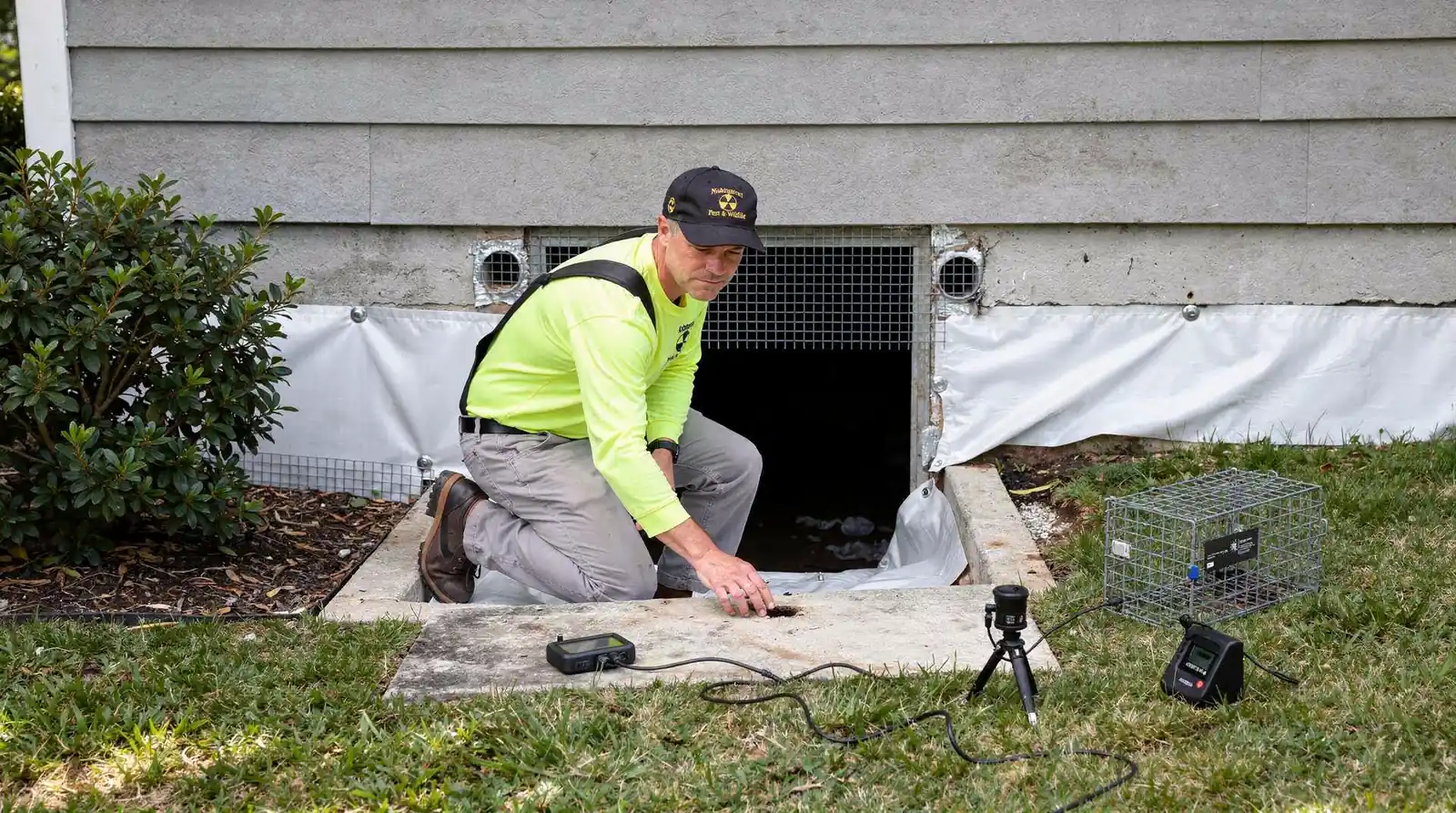
Sealing off the crawlspace from moisture, outside air, and pests defines the process at its core. Crawlspace encapsulation pest defense treats the space beneath a home as a controlled environment, not an open gap exposed to soil, humidity, and wandering wildlife. For Northern Connecticut properties battling seasonal humidity swings, that seal matters as much for pest prevention as for structural protection. Among the many methods available for controlling crawlspace moisture, encapsulation stands out as one of the most effective, addressing the source of dampness rather than masking its symptoms.
A properly encapsulated crawlspace typically includes:
- A heavy-duty vapor barrier covering the ground and often extending up the foundation walls
- Sealed seams and penetrations where pipes, vents, or wiring pass through
- Reduced airflow between the crawlspace and the living space above
- A drier, less hospitable environment for termites, carpenter ants, and rodents
Does encapsulation actually stop pests, not just moisture?
Moisture control and pest control work together in an encapsulated crawlspace. Dry conditions remove the standing water and damp wood that attract termites and carpenter ants in the first place. Consistent with a mechanical-first philosophy, this approach relies on physical exclusion and barrier installation rather than routine chemical applications spread across every surface.
How does this fit into a broader pest control plan?
Encapsulation works best as one layer within a larger residential pest program. A pest-free home stays that way through treatments homeowners feel confident about, paired with structural fixes like sealed crawlspaces. Property managers overseeing multiple units in Enfield, Simsbury, or Windsor benefit from applying the same standard across every building they maintain.
How Should You Install a Vapor Barrier?
Proper installation starts with building code compliance, not guesswork. Northern Connecticut homeowners considering crawlspace encapsulation pest defense should know that whether a homeowner tackles the project alone or hires a professional, specific building codes govern how the barrier gets installed. Skipping this step risks a barrier that fails to hold moisture back. And a crawlspace that stays attractive to termites, carpenter ants, and rodents.
Before any material goes down, an on-site evaluation matters more than the product itself. A trained technician should walk the crawlspace to determine whether a vapor barrier is actually the right fix for that specific property. Conditions vary house to house: grading, existing insulation, ventilation, and prior moisture damage all factor into the right approach. Installing a barrier without that inspection can mean covering up a problem instead of solving it.
What Do Technicians Look for During a Crawlspace Inspection?
Technicians don’t stop at surface-level moisture. They examine structural and environmental vulnerabilities — gaps, cracks, poor drainage, and damp wood — that could let pests back in even after treatment. Findings get reported directly to the homeowner, in plain language, so the scope of the problem is clear.
Does the Barrier Alone Solve the Pest Problem?
Not by itself. The barrier addresses moisture, but lasting protection depends on correcting the conditions that caused the moisture in the first place. That’s why the process goes beyond installation:
- Identify current damage and active moisture sources
- Correct structural gaps or drainage issues contributing to dampness
- Educate the homeowner on maintenance that prevents recurrence
This layered approach highlights professional expertise and credentials, giving Northern Connecticut homeowners a barrier system built to last rather than a quick cosmetic patch.
Why Choose a Mechanical-First Pest Partner?
A mechanical-first approach treats the cause of a pest problem before reaching for chemical products. Nukingstreet Pest & Wildlife Control, based in Enfield, CT, has served Northern Connecticut homeowners and property managers with this philosophy for years, prioritizing exclusion, moisture control, and targeted treatment over broad-spectrum spraying. Owner Jeffrey Davis holds the Associate Certified Entomologist (ACE) designation, backing that approach with a documented, science-based standard of pest biology training. For a homeowner in Simsbury or Windsor dealing with damp crawlspaces and recurring rodent activity, that difference determines whether a problem actually gets solved or only gets masked.
Technicians have worked throughout Simsbury and the greater Hartford County area for years, building a reputation on credentials rather than shortcuts. The process stays consistent on every visit: locate the root cause, treat it directly, and report back exactly what was found and why. No vague summaries, no guesswork — just a clear account of the conditions driving the infestation.
What does “mechanical-first” actually mean for rodent control?
It means sealing entry points, correcting moisture problems, and using crawlspace encapsulation pest defense methods before considering chemical baiting. Nukingstreet avoids second-generation anticoagulant rodenticides and systemic products known to harm pollinators, choosing instead to close off access points that draw rodents into the home in the first place.
Why does moisture control matter so much in older Connecticut homes?
Damp crawlspaces attract termites, carpenter ants, and rodents looking for water and shelter. A properly installed vapor barrier limits that moisture at the source, cutting off the conditions pests need to establish a colony indoors.
- Root-cause inspections before any product gets applied
- Exclusion and sealing prioritized over broad chemical use
- Clear, documented reporting on every visit
- Credentialed technicians trained in humane, targeted methods
This professional standard highlights professional expertise and credentials, giving property owners a documented reason to trust the diagnosis, not just the treatment.
FAQ
Why does crawlspace moisture attract pests?
Damp soil, condensation on pipes, and poor ventilation create ideal conditions that termites, carpenter ants, and rodents search for. Left unaddressed, this moisture spreads beyond the crawlspace and into the home’s living areas.
How does a vapor barrier prevent mold and pest problems?
A vapor barrier uses thick sheeting sealed over exposed soil, blocking ground moisture from rising into floor joists, insulation, and living spaces. This cuts off the damp conditions that breed mold and attract pests.
What does a professional crawlspace inspection check for?
Technicians examine structural and environmental conditions like exposed dirt floors, damaged vapor barriers, poor ventilation, and cracked foundation vents. They trace pest activity back to its source rather than just treating visible pests.
Conclusion
In closing, a properly installed vapor barrier protects your crawlspace from moisture, mold, and the pest activity that thrives in damp environments. By addressing moisture at its source, you eliminate conditions that attract rodents, insects, and other nuisance wildlife while safeguarding your home’s structural integrity. This preventative approach—combining mechanical solutions with environmental control—reflects the foundation of effective pest management: stop the problem before it starts. For a comprehensive crawlspace assessment and integrated pest prevention strategy tailored to your property, contact Nukingstreet Pest & Wildlife Control in Enfield.