
Pests and Health Risks: Public Health Guidance
By Nukingstreet Pest & Wildlife Control LLC Editorial Team · Updated 2026-08-07
Rodents, cockroaches, and mosquitoes transmit diseases like hantavirus, salmonellosis, and West Nile virus, posing direct zoonotic risks to households. Nukingstreet Pest & Wildlife Control, LLC in Enfield, CT, follows CDC-aligned exclusion and sanitation protocols to eliminate infestations, reducing pathogen exposure and protecting residents from vector-borne and rodent-associated illnesses effectively.
Zoonoses account for 58% of all human infectious diseases, with over 200 known types transmitted from animals to people. Nukingstreet Pest & Wildlife Control, LLC in Enfield, CT, recommends prompt pest exclusion and sanitation to reduce household exposure risks.
Zoonotic pests, including rodents, ticks, and mosquitoes, transmit over 200 known zoonoses to humans, ranging from rabies to tick-borne illness. Nukingstreet Pest & Wildlife Control addresses these risks using a mechanical-first, chemical-last approach, avoiding SGARs and neonicotinoids, protecting families, pets. The environment while reducing vector exposure around homes and commercial properties.
Key Takeaways
- Over 200 known zoonotic diseases transmit naturally from vertebrate animals to humans.
- Rabies achieves 100% preventability through vaccination and other protective measures.
- Zoonotic diseases comprise a large percentage of new and existing human diseases.
- Simple protective steps help families reduce infection risk from animal-to-human disease transmission.
How Do Household Pests Actually Spread Disease?
Germs move from animals to humans in three ways: direct contact, contaminated food or water, and shared environments. Rodents, cockroaches, and mosquitoes act as living carriers, ferrying bacteria, viruses, and parasites straight into kitchens, bedrooms, and crawl spaces. That transfer is the essence of a zoonotic disease — an illness caused by germs passing between animals and people.
Homeowners, property managers, and facility operators face a wider exposure chain than most realize. A single mouse can contaminate a pantry shelf. A cockroach can track pathogens across a countertop overnight. Because the illnesses involved originate in animals. Land squarely on people, pest activity in a home or building deserves to be treated as a public health issue, not just a nuisance.
What Pathogens Do Household Pests Actually Carry?
Pests can host bacterial, viral, or parasitic organisms, and each spreads through a different route. Some pathogens transfer through direct skin contact or bites. Others contaminate food, drinking water, or surfaces pets and children touch daily. That range of exposure is what makes zoonotic pests CT households encounter. From rodents to biting insects — a genuine health concern, not a minor inconvenience.
Why Do So Many Pest Problems Keep Coming Back?
Recurring infestations usually trace back to treatment that only kills what’s visible. Much of the pest control industry leads with chemical sprays and reacts to symptoms instead of preventing the underlying cause. That pattern explains a lot about how pests spread disease repeatedly in the same building: the entry points, moisture sources, and food access that attracted pests in the first place never get fixed.
Correcting those root causes — sealing entry gaps, eliminating moisture, removing food sources. Reduces disease exposure far more reliably than a single visible-pest treatment ever could. Addressing the structure, not just the sighting, is what breaks the cycle for good.
Which CT Pests Pose the Greatest Zoonotic Risk?
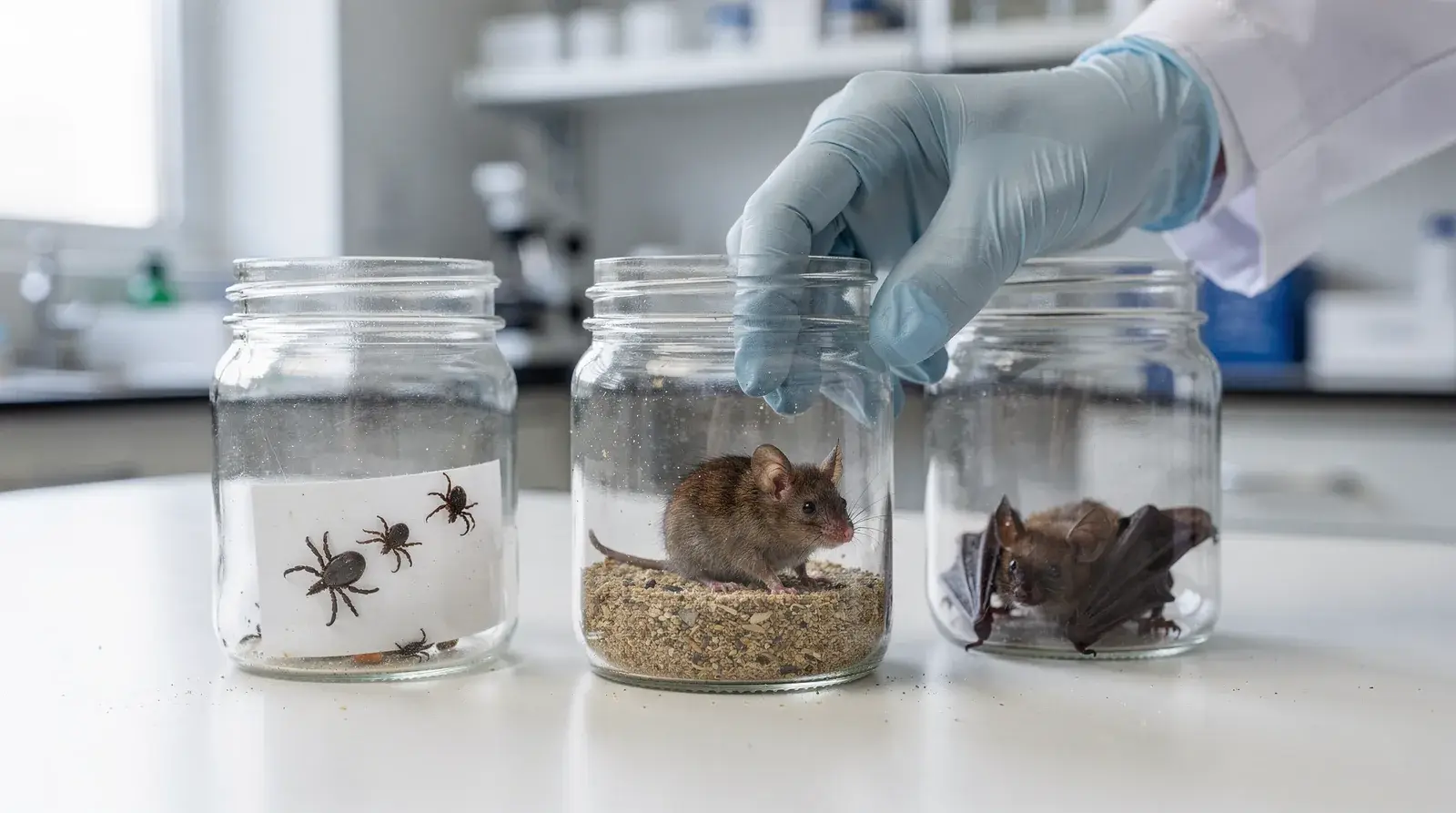
Rodents, ticks, and mosquitoes top the list of Connecticut pests carrying disease to households. Each species poses distinct pests and health risks, from bacterial contamination to vector-borne illness, and left unchecked, a single infestation multiplies exposure for every family member and pet in the home.
Species-level identification separates guesswork from an accurate risk assessment. An Associate Certified Entomologist (ACE) credential reflects the depth of training needed to distinguish which local pest species actually carry disease-causing pathogens versus which are simply a nuisance. That distinction matters because treatment aimed at the wrong target wastes time while the real threat keeps breeding.
Why do rodents, ticks, and mosquitoes matter most for CT properties?
A company headquartered in Enfield understands the specific pressures shaping infestations across Northern CT and Western MA. Rodent populations thrive in older housing stock and multifamily buildings common to the region. Tick activity spikes in wooded and suburban yards, while standing water after seasonal rain fuels mosquito breeding.
How many diseases can pests actually carry?
More than 200 known zoonotic pests ct residents should recognize have been cataloged by researchers studying animal-to-human disease transmission. That figure illustrates how many pathways exist for illness to move from a common household pest into a family. Understanding how pests spread disease — through bites, droppings, or contaminated surfaces — is the first step toward reducing exposure.
Targeted treatment, rather than a blanket application of whatever chemical is cheapest, directs control efforts at the species genuinely present on a property. Focusing resources this way protects the household while avoiding unnecessary chemical use elsewhere on the premises.

Who Is Most Vulnerable to Pest-Borne Illness?
Not every household member carries the same risk from pest exposure. Certain individuals face a higher likelihood of severe illness after contact with disease-carrying pests, which means pests and health risks vary sharply from one family member to the next. A healthy adult might shrug off exposure that sends a young child or an immunocompromised relative to the doctor.
Which household members need the most protection?
Families raising young children, cancer survivors, and pet owners deserve pest control built around their specific vulnerabilities. Children’s developing immune systems respond differently to pathogens than adult systems do. Cancer survivors often carry weakened immunity from treatment, raising their stakes with any pest-related exposure. Pet owners take on a distinct risk layer too — with millions of U.S. households keeping at least one pet, animals routinely bridge the gap between wildlife, yards, and living rooms, carrying zoonotic pests CT residents may not notice until symptoms appear.
Does the treatment method itself create risk?
Treatment choice matters as much as pest identification. A chemical-heavy approach can trade one hazard for another, especially in homes with sensitive residents. An environmentally responsible strategy avoids stacking pesticide exposure on top of an already vulnerable household by protecting pollinators, wildlife, and the broader home ecosystem while still addressing the pest problem directly.
Vulnerability isn’t one-size-fits-all, and neither should pest control be. Consider which household members face elevated risk:
- Young children — developing immune systems, close floor-level contact with pests
- Cancer survivors — treatment-weakened immunity, heightened sensitivity to chemical exposure
- Pet owners — animals bridge outdoor wildlife and indoor living space
- Elderly residents — slower recovery from illness, often overlooked in risk planning
Recognizing these differences shapes smarter, safer pest management decisions for the whole household.

What Prevention Steps Actually Reduce Health Risks?
Consistent, low-effort habits cut a household’s odds of catching a pest-borne illness far more than a single dramatic cleanup. Sealing entry points, storing food properly, and removing standing water form the daily backbone of protection against pests and health risks. These steps work because they deny pests the food, water, and shelter they need to establish themselves.
Property history matters too. A pest control provider that started out managing multifamily housing before expanding into full residential and commercial service has seen prevention challenges across dense apartment complexes, single-family homes, and commercial kitchens alike. That range of experience translates into inspection routines built for many different risk profiles, not a one-size-fits-all checklist.
Why does inspection quality matter so much for prevention?
Thorough inspection is what separates a lucky guess from a real solution. A single-technician, single-truck standard of care allows for the kind of close, methodical inspection that catches cracks, gaps, and moisture issues before they become entry points. Missed openings are exactly how zoonotic pests ct residents worry about. Rodents, ticks, mosquitoes — find their way indoors in the first place.
What actually stops pests from coming back?
Chasing visible pests without addressing why they showed up guarantees a repeat problem. Root-cause prevention means fixing the moisture source, sealing the foundation gap, or removing the harborage site that attracted pests initially. Understanding how pests spread disease — through bites, droppings, contaminated surfaces, or contact with pets. Makes clear why symptom-only treatment falls short.
Practical prevention steps property owners can prioritize include:
- Sealing foundation cracks and utility line gaps
- Fixing leaks and eliminating standing water
- Storing food and trash in pest-proof containers
- Trimming vegetation away from structures
- Scheduling regular professional inspections to catch issues early
Each habit reduces contact between people, pets, and disease-carrying pests before an infestation takes hold.
When Should You Call a Pest Professional?
Professional help becomes necessary the moment pest activity moves beyond a minor annoyance and starts to look like a genuine health concern. A zoonosis is a disease that has jumped from an animal host to a human. Droppings, nests, or repeated sightings deserve immediate attention rather than a wait-and-see approach. Pathogens spread most easily where people and animals share close living space. An untreated infestation creates exactly that kind of shared environment inside a home or business.
How do I know if a pest problem is a health risk?
Warning signs include droppings near food storage, gnawed wiring or insulation, and nesting materials found in attics or wall voids. Any of these point to sustained animal contact with living spaces, which raises the odds of pathogen transfer.
Who should I call for a suspected infestation?
An ACE-credentialed entomologist offers homeowners a trained resource instead of a guess. Jeffrey Davis, Associate Certified Entomologist, brings that credentialed expertise to inspections across the region.
Property managers and facility operators facing recurring activity should treat it as a call-now situation, not a maintenance item. A locally based Enfield, CT team responds quickly, turning a suspected health risk into a documented, resolved problem before it spreads further.
FAQ
How do household pests spread disease to people?
<answer>Germs move from animals to humans through direct contact, contaminated food or water, and shared environments. Rodents, cockroaches, and mosquitoes carry bacteria, viruses, and parasites directly into kitchens, bedrooms, and crawl spaces.
Why do pest infestations keep returning after treatment?
<answer>Many treatments only kill visible pests while leaving entry points, moisture sources, and food access untouched. Nukingstreet fixes these root causes through exclusion and sanitation instead of relying solely on chemical sprays.
Which pests pose the greatest zoonotic risk in Connecticut homes?
<answer>Rodents, ticks, and mosquitoes top the list of Connecticut pests carrying disease into households. Each poses distinct risks, from bacterial contamination to vector-borne illness, multiplying exposure for families and pets when left unaddressed.
Facts
- Nukingstreet Pest & Wildlife Control, LLC is located in Enfield, CT.