

Safe Wasp Removal Enfield: Hornets & Yellow Jackets
By Nukingstreet Pest & Wildlife Control LLC Editorial Team · Updated 2026-08-07
Professional removal remains the safest method for wasp, hornet, and yellow jacket nests, especially those built in walls or attics. Nukingstreet Pest & Wildlife Control, LLC in Enfield, CT uses protective equipment and targeted treatments to eliminate colonies, preventing multiple stings and allergic reactions during extraction.
Stings account for roughly 225,000 emergency room visits annually in the U.S., with some leading to fatalities, so nest removal at dusk with protective clothing is essential; never attempt yellow jacket nest removal alone. Contact a licensed professional such as Nukingstreet Pest & Wildlife Control, LLC in Enfield, CT, for safe elimination.
Safe wasp and hornet removal starts with correct identification, since paper wasps, hornets, and yellow jackets nest and behave differently. Allergic reactions to these insects cause roughly 225,000 emergency room visits annually in the U.S. Nukingstreet Pest & Wildlife Control uses a mechanical-first, chemical-last approach, protecting families and pets while eliminating active nests and preventing new colonies from forming.
Key Takeaways
- Wasp and hornet stings cause approximately 225,000 emergency room visits annually in the United States, with some leading to fatalities.
- Identifying the specific pest type—wasps, hornets, or yellow jackets—determines the most effective removal strategy for your situation.
- Nukingstreet Pest & Wildlife Control, LLC in Enfield, CT provides professional removal services for stinging insects in residential areas.
- Spray treatments alone prove less effective than comprehensive identification and targeted removal of nests from your property.
Why Are Wasp Stings More Dangerous Than You Think?
Public health data tells the real story. Nationwide, wasp and hornet stings send roughly 225,000 people to the emergency room every year, a number that places stinging insects far outside the realm of ordinary backyard nuisance. For homeowners, that statistic changes the calculation: a nest near a porch or play area is not just an inconvenience but a genuine safety hazard.
Much of the pest control industry treats these situations reactively. Too many companies wait until a nest becomes a crisis, spraying chemicals only after someone has already been stung, rather than identifying and addressing the colony before it grows. That approach leaves families exposed during the exact weeks when wasp activity peaks and colony size. And aggression — is highest.
Who Faces the Greatest Risk From Stinging Insects?
Families with young children, cancer survivors, and pet owners carry the highest stakes on both sides of the problem. These groups face elevated danger from stings themselves. Simultaneously need extra caution around the chemicals sometimes used to eliminate nests. A health-conscious approach to wasp removal in Enfield protects both concerns at once, rather than trading one risk for another.
Does Every Sting Require Emergency Care?
Not every sting turns into a medical emergency, but the risk profile shifts fast once a nest is disturbed. Multiple stings, known allergies, or reactions near the face and throat all raise the stakes considerably. Because outcomes vary so widely person to person, prompt, professional wasp nest removal matters more than waiting to see what happens next.
How Can You Tell Wasps, Hornets, and Yellow Jackets Apart?
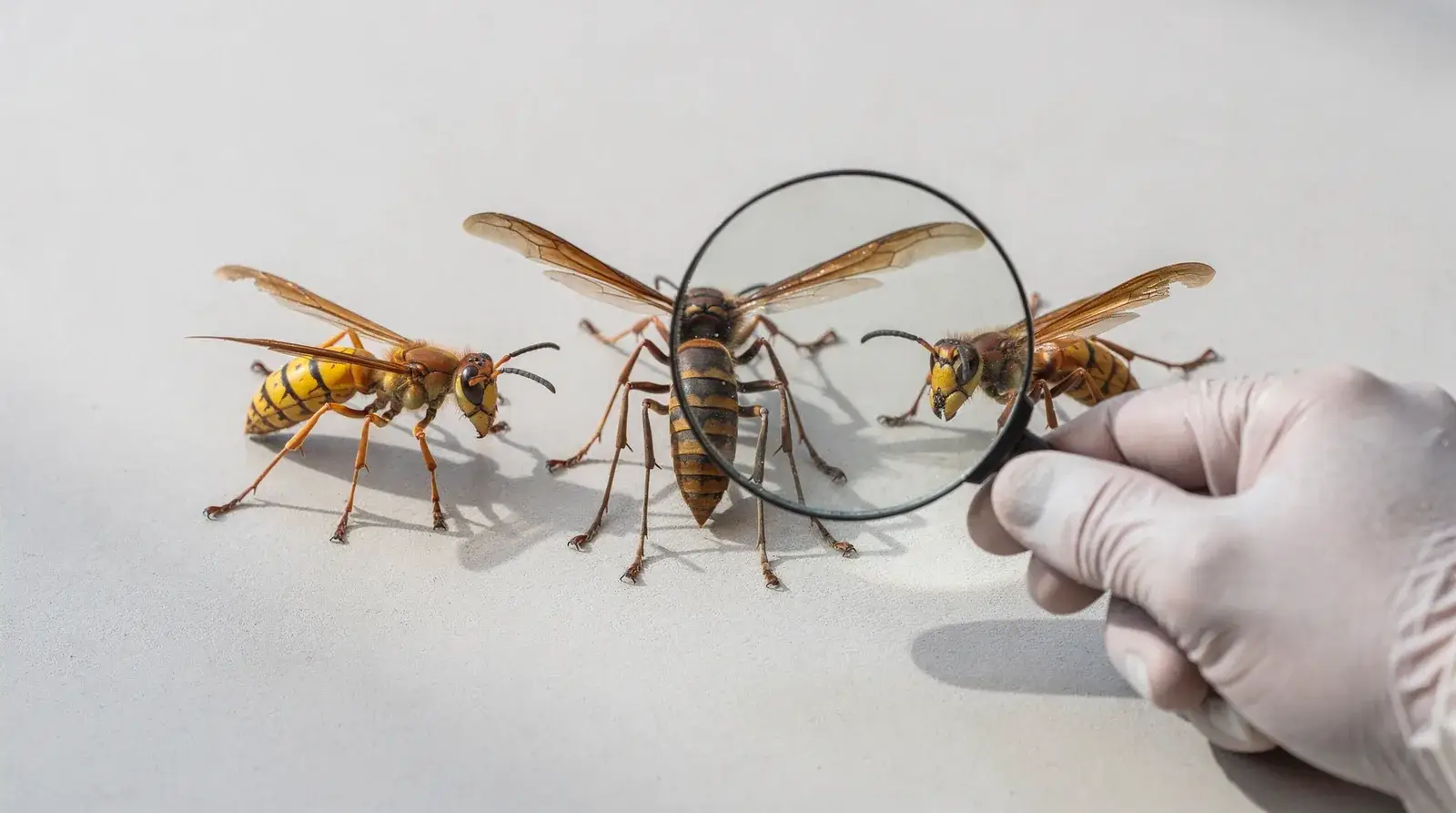
Abdomen shape settles the identification question fastest. A wasp’s body narrows into a thin, cylindrical waist, while a bee’s abdomen stays round and fuzzy. That single visual difference helps homeowners. Property managers decide whether they’re dealing with a stinging-insect problem or a beneficial pollinator before reaching for wasp removal in Enfield or searching for yellow jacket removal nearby.
Getting the species right isn’t just a matter of curiosity — it shapes the entire treatment plan. A nest full of yellow jackets behaves differently than a paper wasp colony or a hornet’s aerial nest. Treating them the same way rarely solves the problem.
Why does correct identification matter before treatment?
Misidentifying a nest often leads straight to a wasted trip to the hardware store. A generic, blanket chemical spray costs money and frequently misses the actual nest driving the activity, leaving the colony intact and the problem unresolved. Many companies skip this step entirely, defaulting to chemical-first treatment regardless of species and treating customers like account numbers instead of neighbors with a real stinging-insect hazard.
What’s the fastest way to check which insect is nesting nearby?
A quick abdomen check answers the question in seconds:
- Round, fuzzy abdomen — bee, generally not a treatment target unless the colony poses a direct risk
- Thin, cylindrical abdomen — wasp, hornet, or yellow jacket, warranting closer inspection
Once that distinction is clear, proper wasp nest removal planning can begin with the right approach for the actual species found, rather than a one-size-fits-all reaction.
When Should You Call a Professional Instead of DIY?
A nest larger than a golf ball, activity near doors or play areas, or any sign of yellow jackets calls for professional help rather than a store-bought spray. Yellow jackets rank among the most aggressive stinging insects. Their colonies defend the queen and her eggs with coordinated, repeated attacks against anyone perceived as a threat. Homeowners who disturb a nest with an aerosol can trigger exactly that response, often before they can retreat to safety.
Property managers face the same risk multiplied across tenants, shared walkways, and common outdoor areas. A single missed nest near a mailbox or dumpster corral can turn into multiple stings and liability headaches. Wasp nest removal done without proper protective gear and colony knowledge tends to escalate the danger rather than resolve it.
How Do I Know If a Nest Needs a Professional?
Size and location tell most of the story. Nests inside wall voids, attics, or near high-traffic entry points require extraction methods that go beyond surface spraying, and any established colony spotted from July through September has likely grown too large for a DIY approach.
Correct species identification matters just as much as timing. Nukingstreet’s owner, Jeffrey Davis, holds the Associate Certified Entomologist designation. A credential that reflects the entomological training needed to tell paper wasps, hornets, and yellow jackets apart and choose the safest removal method for each.
That standard isn’t new. Nukingstreet’s approach traces back to its earliest days as a single technician working from one truck, holding to a strict discipline for doing the job correctly rather than cutting corners. Homeowners searching for yellow jacket removal near me benefit from that same commitment on every wasp removal Enfield service call today, whether the nest sits in a shrub, a soffit, or underground.

What Should You Do Around an Active Nest?
Distance and observation matter most around an active colony. A nest tucked away from patios, doorways, and play areas often poses less risk left undisturbed than one that gets provoked by a broom or a garden hose. Entomologists frequently advise homeowners to coexist with wasps when the nest sits far from daily foot traffic. Agitating a colony triggers defensive swarming that wasn’t happening before.
Proximity to activity changes the calculus entirely. A nest above a mailbox, under a deck railing, or near a child’s swing set demands a different response than one hidden in a distant tree line. That’s the moment to call in professional wasp removal enfield homeowners already trust for fast, careful service.
Is it safe to remove a wasp nest myself?
DIY removal carries real risk, especially with yellow jackets, which defend aggressively when threatened. Store-bought sprays often knock down only the visible nest while leaving satellite colonies or underground entrances untouched. Professional wasp nest removal addresses the full colony structure, not just the surface threat.
Why does a nest keep coming back after treatment?
Recurring activity usually points to an unresolved attractant on the property. A proactive inspection looks past the nest itself to find the structural gap, food source, or entry point drawing insects back season after season. Sealing that root cause, rather than just spraying the nest, prevents the cycle from repeating.
Effective control also protects the surrounding ecosystem. Removal methods should target the problem colony without harming pollinators, beneficial insects, or wildlife sharing the yard. Not every stinging insect needs elimination. For property managers or homeowners searching yellow jacket removal near me, choosing a service that balances safety with environmental responsibility delivers longer-lasting protection than a quick chemical knockdown.
How Does Nukingstreet Handle Safe Nest Removal?
Trained technicians locate the nest, assess colony activity, and remove it using methods designed to protect people, pets, and property. Based in Enfield, CT, Nukingstreet responds quickly to active nests across Northern CT and Western MA, which matters when a colony near a doorway or play area turns a backyard into a hazard zone overnight. Speed and proximity shape every step of the process.
Nukingstreet’s roots explain its approach. The company started as a single-technician operation and grew into a full-service pest. Wildlife control provider, built on the belief that this industry could be done better. That mindset carries into every job site: careful inspection first, targeted removal second, prevention built in from the start.
Why not just handle a wasp nest alone?
Fully clearing a yellow jacket colony from a property is genuinely difficult. Repeated DIY sprays often scatter the colony instead of eliminating it. Provoked nests become more aggressive, raising the risk of multiple stings for anyone nearby.
Professional wasp nest removal addresses the root problem instead of masking it temporarily. For homeowners searching for yellow jacket removal near me, choosing a local, established provider like Nukingstreet for wasp removal enfield means faster response and safer results than trial-and-error approaches.
FAQ
Why should you avoid removing a wasp nest yourself?
Wasp and hornet stings send roughly 225,000 people to the emergency room annually in the U.S. A licensed professional like Nukingstreet Pest & Wildlife Control in Enfield, CT safely eliminates active nests.
How do you tell wasps, hornets, and yellow jackets apart before removal?
Abdomen shape identifies the insect fastest: wasps have a thin, cylindrical waist, while bees stay round and fuzzy. Correct identification determines the most effective removal strategy for each species.
What approach does Nukingstreet use for stinging insect removal?
Nukingstreet Pest & Wildlife Control uses a mechanical-first, chemical-last approach that protects families and pets. This method eliminates active nests while preventing new colonies from forming on the property.
Facts
- Nukingstreet Pest & Wildlife Control, LLC is located in Enfield, CT.