Wildlife removal in Connecticut has two parts, and both matter: get the animal out humanely, then close the way it got in. Nukingstreet Pest & Wildlife Control removes raccoons, squirrels, bats, skunks, woodchucks, opossums and other nuisance wildlife from homes and businesses across Hartford County, from our base in Enfield. We are a licensed nuisance wildlife control operator, and our owner, Jeffrey Davis, holds NWCOA certifications in bat and bird standards. Call (800) 466-9918.
Wildlife we remove
- Raccoon removal: attics, chimneys and decks, with a check for young first
- Squirrel removal: one-way exclusion and roofline repairs
- Bat removal and exclusion: timed around the pup season
- Skunk removal: under decks, sheds and porches
- Woodchuck and groundhog removal: burrows near foundations and sheds
- Opossum removal: crawl spaces, garages and outbuildings
- Chipmunk control and mole and vole control: lawn and garden damage
- Bird control: nests in vents, gutters and soffits
Signs you have an animal in the house
- Noise at set times. Squirrels are busy in the early morning and late afternoon. Raccoons are heavier and active at night. Bats scratch and squeak at dusk and dawn.
- Damage at the roofline. Chewed soffits or fascia, a bent gable vent screen, a torn ridge vent or a missing chimney cap.
- Droppings and smell. Raccoon latrines, bat guano below an opening, or an ammonia smell in the attic.
- Digging. Fresh holes under a deck, porch, shed or along the foundation.
How we remove wildlife humanely
- Identify and inspect. We confirm the species and find every opening, from the ridge to the foundation, and check for young.
- Remove with the right method. One-way exclusion devices for bats and many squirrels; humane traps for raccoons, skunks, woodchucks and opossums. Animals are handled according to Connecticut DEEP rules for nuisance wildlife.
- Seal the way in. Steel mesh, hardware cloth, metal flashing, chimney caps and buried wire barriers, sized to the animal and fitted to the house.
- Clean up. Droppings, nesting material and soiled insulation removed with protective procedures.
We do not use poison for wildlife, and as company policy we avoid second-generation anticoagulant rodenticides on any job.
Timing matters: young animals and bat season
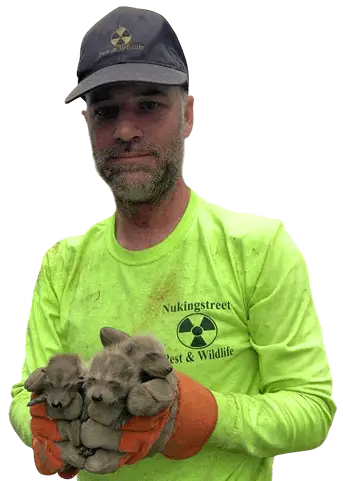
Raccoons and squirrels raise young in attics in late winter and spring. Removing a mother without her young leaves them to die in the house, so we check first and plan around them. Bats are protected in Connecticut and must be excluded, never killed, and we do not exclude a roost while flightless pups are inside, roughly June to mid-August. In that window we inspect and seal the minor gaps, then finish once the young can fly.
Health risks to take seriously
Raccoons are a rabies vector in Connecticut, and their droppings can carry raccoon roundworm. Bat guano can carry fungal spores, and a bat bite can be too small to notice. Do not handle wildlife or droppings yourself. If someone may have been bitten or scratched, or woke up with a bat in the room, contact a doctor or the health department right away.
After removal: sealing and cleanup
Sealing is what keeps the next animal out. See exclusion and sealing and bat guano and attic cleanup.
Wildlife removal near you
We remove wildlife throughout Hartford County, including wildlife removal in Simsbury and wildlife removal in Enfield, plus West Hartford, Canton and Windsor.
Frequently asked questions
Can I trap and move an animal myself in Connecticut?
Connecticut regulates how nuisance wildlife may be trapped and what happens to it afterward, and handling animals yourself carries real bite and disease risk. A licensed nuisance wildlife control operator knows the rules for each species. See CT DEEP’s nuisance wildlife guidance or call us.
How long does wildlife removal take?
Some jobs, like a skunk under a deck, take a few days of trapping. Bat exclusions keep one-way devices up for about a week. Sealing is usually done in the same visit or soon after.
Will my homeowner’s insurance cover the damage?
Some policies cover repairs from certain animals. We photograph entry points and damage so you have records for your insurer.
Do you remove dead animals?
Yes, from attics, walls, crawl spaces and under sheds where they can be reached, and we treat the area for odor.