Chimney Exclusion Enfield: Critter-Proof Your Home
By Nukingstreet Pest & Wildlife Control LLC Editorial Team · Updated 2026-08-07
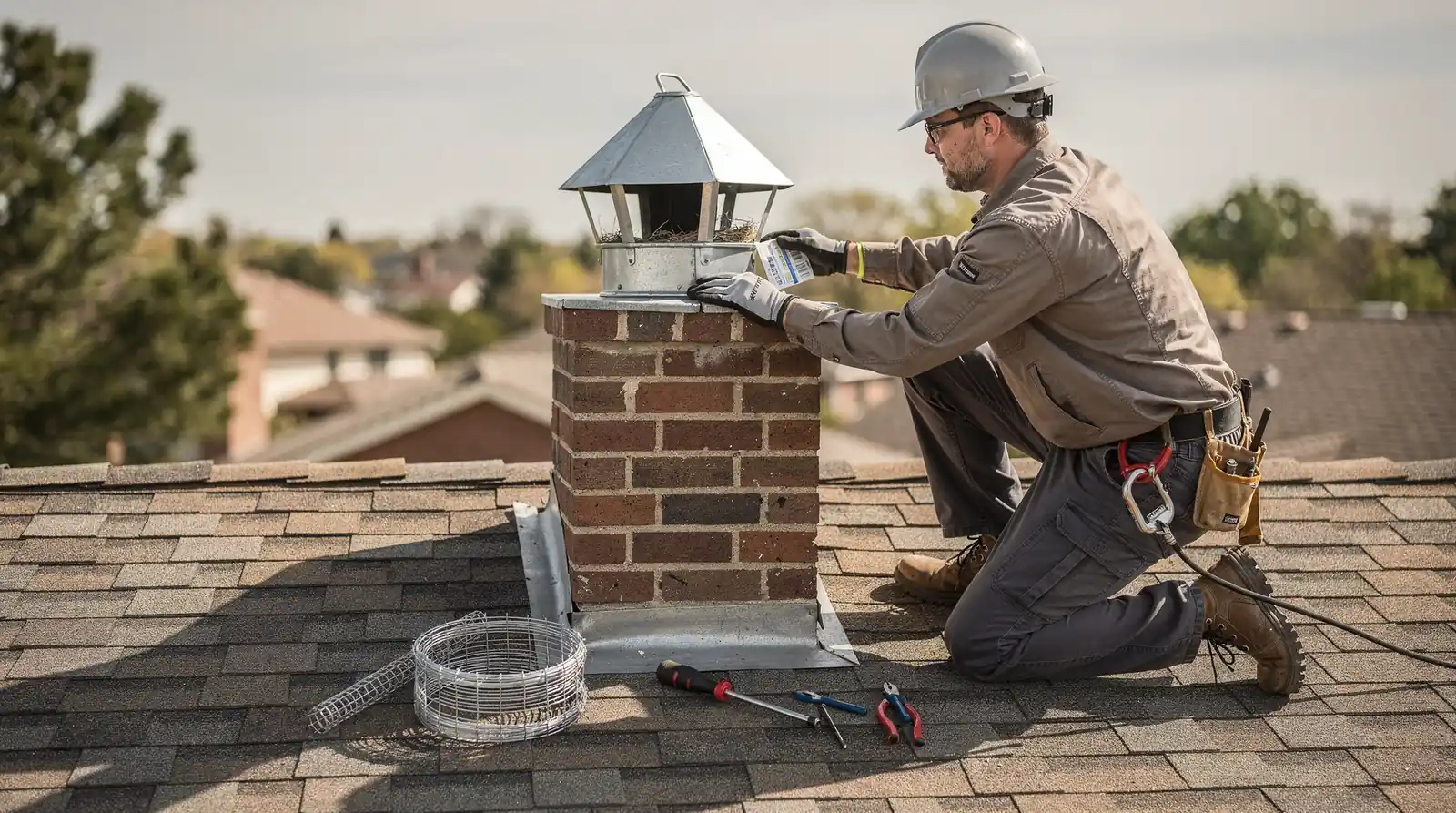
Chimney critter exclusion involves humane eviction of nesting animals—squirrels, raccoons, birds—followed by installation of a heavy-duty steel cap sized to the flue. Nukingstreet Pest & Wildlife Control, led by Associate Certified Entomologist Jeffrey Davis, uses mechanical-first methods, avoiding chemicals, to permanently seal entry points and prevent repeat intrusions.
Key Takeaways
- Squirrels exploit roof weaknesses to access chimneys, requiring professional exclusion techniques for removal.
- Stainless steel chimney screens prevent animal entry while maintaining proper smoke ventilation functionality.
- Chimney animal removal services address residential and commercial properties across multiple service areas.
- Professional installation of chimney caps blocks wildlife access and protects flue systems from damage.
What Will Chimney Exclusion Accomplish?
Chimney exclusion seals off active entry points so raccoons, squirrels, and birds cannot reuse a flue as a den. Chimney exclusion enfield work stops nuisance wildlife from denning, nesting, or dying inside the chimney, eliminating the scratching, chirping, and odor problems that follow. Left unaddressed, a single den site often attracts repeat animals season after season. Wildlife exploits the same structural weak points — chimneys, soffits, and roof gaps — again and again.
Nukingstreet Pest & Wildlife Control operates out of Enfield, CT, giving the team firsthand knowledge of the raccoon and squirrel pressure common across Northern CT and Western MA chimneys. That local footprint shapes how technicians approach every job, from flue inspection to final seal.
How Does the Process Actually Work?
Exclusion follows a mechanical-first sequence, meaning physical barriers come before any chemical treatment gets considered. A technician typically moves through the property in this order:
- Inspect the flue and surrounding structure for active animals, nests, or damage.
- Confirm the den is empty or facilitate humane one-way eviction.
- Install chimney cap hardware sized and fastened to the flue opening.
- Fit stainless steel screening around vulnerable joints and gaps.
- Verify the seal holds under weather and animal pressure.
Who Handles the Exclusion Work?
Owner Jeffrey Davis holds the Associate Certified Entomologist designation alongside NWCOA certification specific to exclusion product installation. That credential covers chimney and structural exclusion methods directly, not general pest work.
Homeowners hearing noise in the flue don’t have to wait weeks for relief. Same-day, fast-response service means a scratching sound heard tonight can mean an inspection tomorrow. A critical step to prevent wildlife chimney re-entry before another animal moves in.
What Are Signs Wildlife Is In Your Chimney?
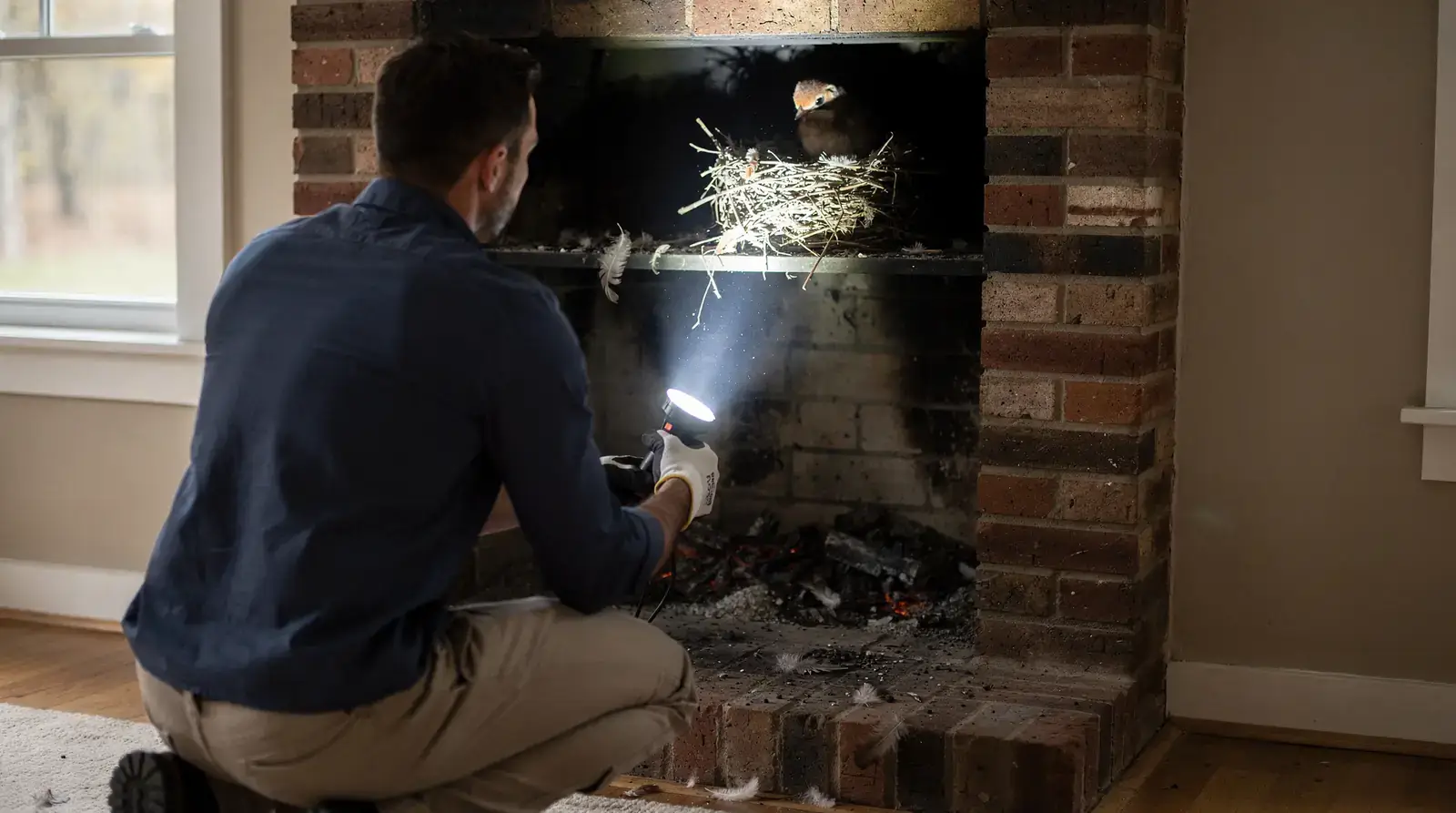
Scratching, chirping, or thumping noises from the flue signal an animal has moved in. Chimneys rank alongside attic fans, weakened roofing, fascia boards, and soffits as common access points wildlife exploit to escape weather and predators. Left unaddressed, a single nesting animal often becomes a family within weeks, and droppings inside the flue create odor and health hazards that spread into living spaces.
What noises or smells point to a chimney animal problem?
Scratching sounds during the day usually point to squirrels or chipmunks, while nighttime rustling suggests raccoons or bats. A strong, musty odor rising from the fireplace often means droppings have accumulated on the smoke shelf or damper. Homeowners who notice unusual sounds or odors from the flue should address the issue promptly to protect the household from bigger structural and sanitation problems.
Which animals commonly get trapped in Connecticut chimneys?
Raccoons, squirrels, and bats top the list of species routinely removed from homes across Northern CT and Western MA. Each behaves differently — raccoons often den for weeks with young. Bats roost in colonies that leave heavy droppings behind.
Confirming the exact culprit requires more than guesswork. Camera inspection of the chimney system lets technicians pinpoint the problem area before any removal begins, avoiding blind reaching or unnecessary demolition. A forensic-level inspection then identifies the structural root cause of the intrusion. A missing cap, a cracked crown, damaged flashing — rather than just treating the symptom homeowners hear or smell. Common warning signs include:
- Scratching, scurrying, or squeaking behind the firebox wall
- Persistent musty or ammonia-like odors
- Visible fur, droppings, or nesting material on the damper
- Flies or insects gathering near the fireplace opening
How Do You Safely Evict Chimney Wildlife?
Safe eviction starts with a professional inspection, then moves through humane removal, cleanup, and a permanent barrier. Trained technicians handle birds, squirrels, raccoons, and other animals without harming the creature or the chimney structure. Skipping any step risks re-entry, disease exposure, or a trapped animal dying inside the flue — a costly and unpleasant outcome for any household.
A structured chimney exclusion service in Enfield typically follows this sequence:
- Inspect the flue with a camera to confirm species and locate nests, young, or blockages.
- Apply a one-way door or hand-removal technique appropriate to the animal, never poison or fire.
- Confirm the chimney is empty before sealing any access point.
- Remove nesting debris that carries parasites or disease risk.
- Install a chimney cap rated for the flue size to close the entry permanently.
Technicians follow NWCOA Wildlife Zoonosis and Bat Standards protocols, which guide disease-safe handling around raccoons and bats known to carry zoonotic pathogens. Families with young children, cancer survivors, and pet owners benefit most from these standards. Eviction methods stay health-conscious near living spaces. Every removal method also protects pollinators and surrounding wildlife rather than treating the animal as disposable. A raccoon or squirrel gets displaced, not exterminated.
Second-generation anticoagulant rodenticides never enter the process. These chemicals travel up the food chain and poison owls, hawks, and other predators. That mechanical-first approach keeps eviction safer for pets and non-target wildlife alike.
Is It Safe to Remove a Chimney Animal Alone?
Homeowners risk bites, scratches, and disease exposure by attempting removal without training. Mother animals also defend nests aggressively, and a rushed capping job traps young inside the flue. Professional exclusion avoids both outcomes and confirms the chimney is fully vacant before sealing it.
How Do You Install A Chimney Cap Correctly?
Correct installation starts with full coverage. A cap that seals the entire flue opening, edge to edge, keeps raccoons, squirrels, and birds from re-entering the chimney once eviction is complete. Measurement matters as much as materials. A cap that fits loosely or leaves gaps along the crown defeats the purpose entirely.
Nukingstreet technicians follow a set sequence to get chimney exclusion enfield homeowners can rely on:
- Confirm the chimney is empty. Every animal must be humanely removed before sealing begins, since capping over a live occupant traps it inside.
- Measure the flue opening precisely, accounting for multi-flue chimneys and irregular masonry.
- Select a cap or mesh screen sized to cover the opening completely, with no exposed edges.
- Secure the cap using corrosion-resistant fasteners rated for outdoor exposure.
- Inspect the seal and hardware to confirm the cap sits flush and won’t shift in wind or under animal pressure.
Does a chimney cap really stop animals for good?
A properly fitted cap works long-term only when it stays well-designed and undamaged. Weather, rust, and persistent wildlife can bend mesh or loosen fasteners over time, so annual inspection matters as much as the initial install.
Why hire a certified technician instead of a DIY cap?
Technicians carrying AAC Ridgeguard, Bat Cone, and Bird Barrier certifications install exclusion products to manufacturer specifications, reducing failure points. This training supports Nukingstreet’s mechanical-first approach: technicians install chimney cap hardware and mesh barriers as the primary defense, reserving chemical treatments for situations where exclusion alone cannot resolve the problem. That sequencing is central to how the company works to prevent wildlife chimney intrusions from recurring.
What Mistakes Ruin Chimney Exclusion Results?
Two errors ruin most exclusion attempts: chemical shortcuts and generic patchwork repairs. Companies that reach for chemicals instead of solving the entry problem leave the opening untouched. Raccoons, squirrels, or birds simply return within days. A flue that keeps producing scratching sounds or foul odors after treatment almost always has an unaddressed gap somewhere in the system.
A blanket, cheapest-option approach causes the second major failure. Chimney exclusion Enfield homeowners can trust starts with a targeted plan matched to the species involved and the exact opening it uses. Squirrels need different barrier placement than raccoons. Treating every job the same way wastes time and money while leaving weak points exposed.
Why Does a Damaged Screen Undo Exclusion Work?
A cracked, rusted, or missing screen defeats even a well-executed removal. Technicians must assess chimney condition thoroughly, then repair or replace damaged screens so no gap remains for animals to exploit. Skipping this step is like locking the front door but leaving a window open.
Does a Chimney Cap Alone Solve the Problem?
Not on its own. To install a chimney cap without addressing screen damage, structural gaps, or species-specific behavior often leads to repeat intrusions.
Homeowners avoid these mistakes by combining several safeguards:
- Confirming full eviction before sealing any opening
- Repairing damaged screens as part of the same visit
- Choosing heavy-duty caps sized to the flue
- Scheduling monitoring to catch new attempts early
Nukingstreet serves properties within roughly 25 miles of Enfield, including Simsbury, Avon, and Glastonbury, and offers ongoing monitoring through cancel-anytime monthly billing to prevent wildlife chimney re-entry long after the initial repair.
Protecting your home from chimney critters requires a proactive approach combining proper exclusion techniques and quality cap installation. By addressing these vulnerabilities now, you prevent costly damage, health hazards, and the stress of wildlife intrusions. Professional installation ensures your chimney remains secure year-round, giving you peace of mind while safeguarding your family and property. Taking action today protects your investment for years to come.
Related Services in Connecticut
Homeowners and businesses who need chimney caps & animal exclusion often ask about these services too. See all humane wildlife removal services, or check our Hartford County service areas.
FAQ
How do I know if an animal is living in my chimney?
Daytime scratching points to squirrels or chipmunks. Nighttime rustling suggests raccoons, and a musty odor often means droppings have accumulated.
What does chimney exclusion involve?
Nukingstreet humanely evicts nesting squirrels, raccoons, or birds, then installs a heavy-duty steel cap sized to the flue. Technicians follow a mechanical-first sequence, fitting stainless steel screening around vulnerable joints before verifying the seal holds.
Who performs the chimney exclusion work in Enfield?
Owner Jeffrey Davis, an Associate Certified Entomologist with NWCOA certification in exclusion product installation, leads the work. Nukingstreet operates from Enfield, CT, and offers same-day, fast-response service for active chimney noises.
Facts
- Nukingstreet Pest & Wildlife Control, LLC is located in Enfield, CT.